What is CNC bending and how does it work?
Cold forming with high precision and full traceability
CNC bending is a cold forming process that converts flat metal sheets into three-dimensional parts using a numerically controlled press brake. The sheet is positioned between a punch and a die, and controlled force bends the material to the exact angle defined in the software. Digital control of angle, force, backgauge position, and bending sequence ensures consistent and repeatable results without manual adjustments.
In advanced manufacturing environments, bending can be automated with robotic systems or panel benders. This enables high-volume production with minimal operator intervention.
Integrated with CAD/CAM software and cutting techonologies such as laser, plasma, or CNC punching, bending becomes part of a connected manufacturing process where each operation is synchronized for traceability and production control.
Hydraulic press brakes
High tonnage capacity, suitable for thick materials and large parts. These machines are robust and suited for demanding applications, although cycle times are typically slower.
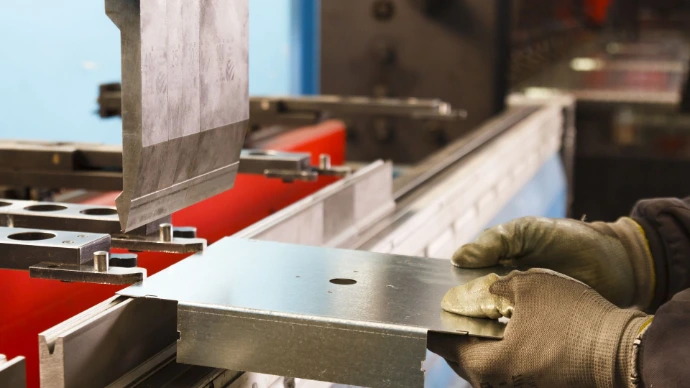
Electric press brakes
Faster, quieter, and with lower energy consumption. Ideal for thin sheet metal, medium production runs, and environments where precision and speed are priorities.
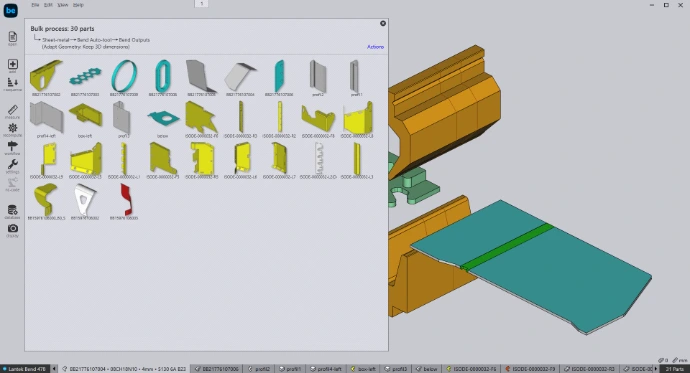
Hybrid press brakes
Combine hydraulic power with electric control. They provide a balance between force, speed, and energy consumption.
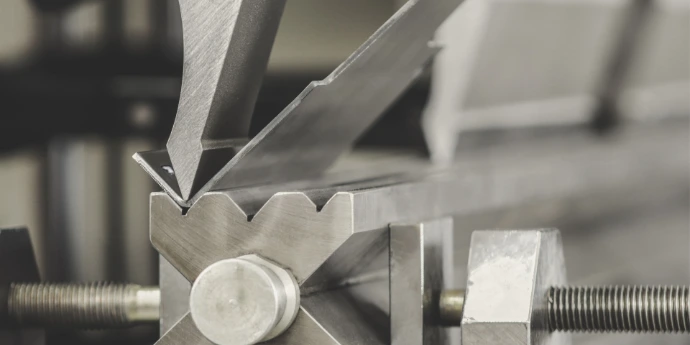
Robotic bending cells
Integrate a CNC press brake with a robot that handles positioning and rotation of parts. Suitable for repetitive production with reduced manual intervention.
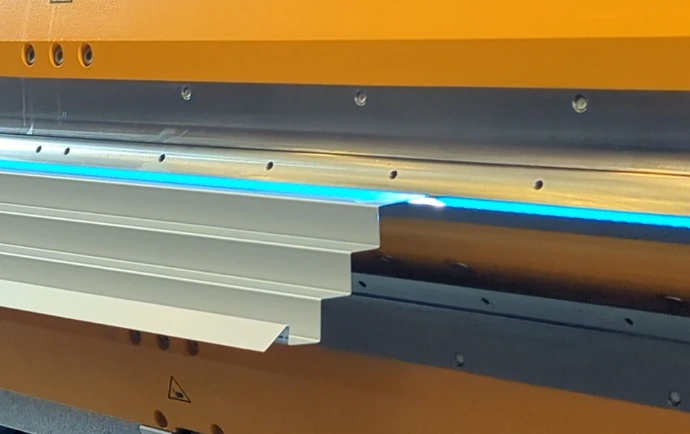
Automatic panel benders
Fully automated systems that manipulate the sheet using upper and lower tools. Designed for mass production of panels, electrical enclosures, and metal furniture with multiple bends.
Why bending software matters
Reduce costs, improve quality, and support production growth
Whether you already operate a CNC press brake or are planning to invest in one, software plays a key role in productivity, accuracy, and process control.
A CAD/CAM system for bending reduces programming time, improves part quality, and supports production growth.
Effective CNC bending software enables:
- Automatic flat pattern calculation with springback compensation.
- 3D simulation of bending sequences to prevent collisions.
- Synchronization with cutting processes to avoid inconsistencies.
- Tool management and reduced setup times.
- Integration with MES, ERP or PDM for full traceability.
Key factors when selecting bending software
What really matters when comparing options
Choosing software for a CNC bending machine goes beyond technical compatibility. It directly affects production performance, part quality, and operational costs. A well-designed system reduces errors, shortens programming time, minimizes material waste, and supports integration across the manufacturing environment. It also allows you to work with different machine brands and complex geometries within a unified workflow.
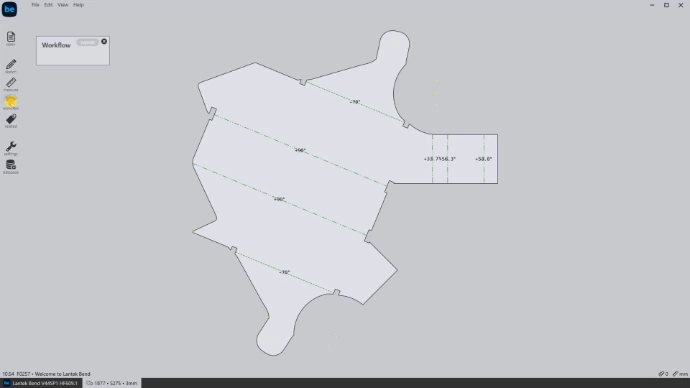
Precision and automatic flat pattern calculation
The right part from the first bend
Incorrect flat pattern calculation is a common issue in sheet metal bending. It leads to parts that do not fit, material waste, and additional manual adjustments. Bending software should automatically calculate flat developments based on material type, thickness, springback, tooling, and bending angles. This reduces trial and error and improves accuracy from the first part.
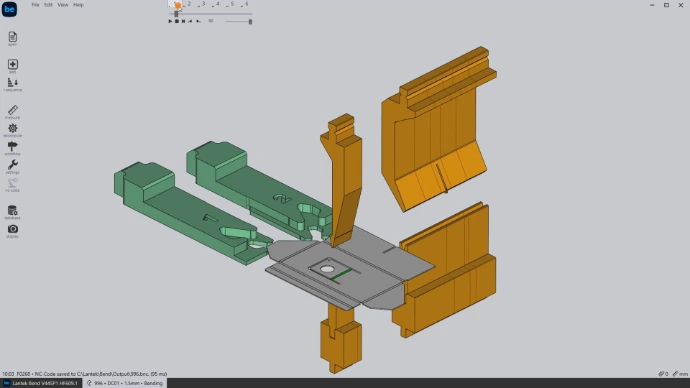
Bending simulation and collision prevention
Validate before production and avoid costly errors
Incorrect bending sequences can cause collisions between tools, machines, and parts. This can damage equipment and increase production costs. A 3D simulation environment detects interferences before production. It allows validation of bending sequences, optimization of operations, and safe execution on the machine.
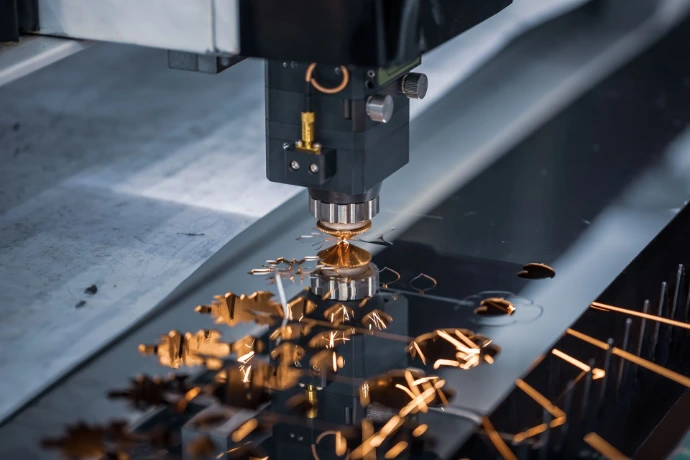
Integration with design and cutting
From design to bending without inconsistencies
Lack of synchronization between cutting and bending processes leads to errors in flat patterns and final parts. Integration with CAD/CAM software and cutting systems ensures consistency between design, cutting, and bending operations, maintaining accuracy across the entire manufacturing process.
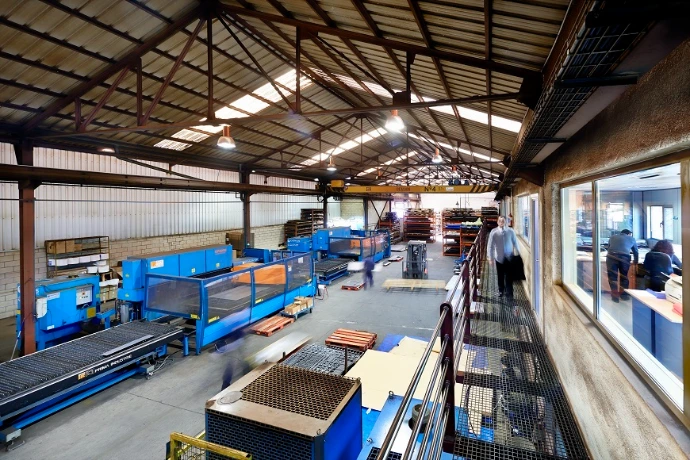
Compatibility with multiple machines
One platform for all your press brakes
Whether you operate a single hydraulic press brake, or multiple machines from different manufacturers, software must support a unified environment. A centralized system allows programming across all machines from one interface, reducing training requirements and avoiding data fragmentation.
A single system for all your machines

Connectivity and digital manufacturing
Traceable production and informed decision-making
Bending software connected to ERP, MES, and traceability systems provides visibility across production. You can track each operation, monitor tool usage, and identify operators involved in each process. Access to production data supports planning, reduces bottlenecks, and improves operational control.
Lantek solutions for sheet metal bending
Two specialized modules for sheet metal manufacturing
CAD/CAM for CNC sheet metal bending
Accurate bending for complex parts
Lantek Bend provides a flexible and robust solution that handles complex geometries and multiple radii.
- 3D design of bending sequences with multiple angles.
- Full process simulation to avoid collisions.
- Automatic flat pattern calculation based on material and tooling.
- Coordination of multiple machines from one environment.
- Integration with cutting processes such as laser, plasma, and punching.
CAD/CAM for tube and profile bending
Control complex geometries and multiple radii
With Lantek Bend, you can:
- Design and calculate developments for curved parts and structures.
- Simiulate collisions between tools and profiles.
- Manage sequential bending and punching operations.
- Integrate different machines within a connected manufacturing environment.
Case studies in sheet metal fabrication workshops
Frequently asked questions
Clear answers to the most common questions about our solutions, services, and technical compatibility.
CNC press brakes provide consistent precision, higher production speed, and repeatability. They allow the production of complex parts with reduced operator dependency, better material utilization, and fewer errors, improving return on investment (ROI).
3D simulation software validates bending sequences before production.
It detects potential collisions and prevents damage to tools and parts.
Lantek Bend simulates and validates the full process.
Integrating both processes ensures consistency between design and production.
The software transfers bending lines and offsets directly.
Lantek Bend + Expert connect 2D cutting with 3D bending simulation.
The system stores reusable configurations and programs, reducing setup time for repeat jobs.
This speeds up the production of short runs.
Lantek Bend adjusts setups automatically based on tools and material thickness.
CAD/CAM bending software, such as Lantek Bend, transforms the unfolding and bending sequence process by eliminating calculation errors and reducing processing time. It enables automatic adjustments according to material and tooling, improving quality and reducing machine downtime.
Yes. A multitechnology system allows you to program flat parts, tubes, or profiles from a single platform, avoiding duplicated workflows and simplifying scaling.
Radius compensation automatically adjusts the sheet metal unfolding to account for the bending radius and springback effect. Without it, parts may be produced with incorrect dimensions or edges that do not fit properly. The software must calculate these values accurately to avoid material waste.
Yes, 3D simulation detects collisions between punches, dies, and stops, and validates the bending sequence before execution. This avoids damage and rework.
Bending nesting organizes sequences of batched parts while optimizing material usage and avoiding collisions. The software should make it possible to group similar parts and reusable sequences in order to increase productivity and reduce waste.
Bending software assigns punches and dies based on the operation. Advanced systems include rules and macros to reduce tool changes and wear.
Yes. Integration with ERP, MES and traceability systems enables production monitoring, inventory control, and real-time data access.
Many systems support combined machines (bending + laser cutting or punching) and robotic bending. They generate specific programs without duplicating environments, improving flexibility.
Implementation should include training for operators and technicians, technical support, and access to documentation. This ensures efficient adoption.
Bending is suitable for enclosures, brackets, panels, tubular structures, and flat components. For complex geometries or combined processes, integrated CAD/CAM solutions for mixed bending (laser/punching/bending) are recommended.
Yes. Tube bending requires machines or 3D lines with multi-axis control, dedicated tooling and axis synchronization to bend profiles accurately. The software must generate multidimensional programs, manage radius compensation and simulate collisions throughout the process. Without these capabilities, results can become inaccurate or even unfeasible.
For deep shapes or complex curves, processes such as deep drawing or roll forming are more suitable. For large production volumes, progressive dies may be more cost-effective.
Regular maintenance includes lubrication, alignment checks, calibration, and inspection of hydraulic or electric systems. Software can support maintenance planning and reduce downtime.
Accurate flat pattern calculation and simulation reduce material waste and eliminate trial runs. Many users report up to 30% material savings and up to 50% reduction in setup times.
Beyond machine specifications, evaluate software capabilities such as programming, simulation, tool management, and integration with CAD, ERP, and MES.
Dedicated software provides accurate calculations, real simulation, and integration with the full manufacturing process. It reduces manual adjustments and improves consistency In contrast, Lantek Bend offers:
- Automatic calculations tailored to the machine, material, and tool.
- Advanced 3D simulation with collision prevention.
- Intelligent tool management and specific nesting.
- Native connectivity with CAD, laser cutting, punching, ERP, and MES.
- A modular environment that supports the growth of your plant and avoids information silos.
You will notice a real improvement in productivity, reliability, and integration capability from day one.
Consider tonnage, bending length, CNC accuracy, number of axes, and backgauge speed. Also evaluate machine type, tool compatibility, ergonomics, and integration with automation.