Elevator manufacturing software for sheet metal and lift production
An industrial production of millimeter precision.
Challenges in elevator and lift manufacturing for sheet metal production
Manufacturing an elevator is much more than assembling a cabin.
The production of elevators and lifts in the industrial sector involves sheet metal fabrication, machining, and assembly. Each project requires control of materials, components, and production stages to avoid errors, rework, and delays

Custom elevator manufacturing and project variability
Last-minute changes, variants, unique designs.
Many elevators are designed for specific buildings. This requires managing design variants, last-minute changes, and unique orders without losing production control. The management of multiple configurations without a structured system can lead to errors and delays in manufacturing and installation.

Safety and quality control in elevator production
No component can fail
Each component, including guides, frames, doors, and cabins, must meet strict quality requirements. Production errors affect compliance, safety, and delivery timelines in regulated markets such as the US, UK, and Australia.

Traceability in elevator manufacturing processes
From raw materials to maintenance
Each component must be tracked across its full lifecycle. This includes materials, batches, and production orders. Systems that allow to identify each component support compliance, audits, and long-term maintenance requirements.

CAD to production workflow in elevator manufacturing
From 3D design to machine programs.
Manufacturers work with complex CAD models that must be converted into cutting, punching, and bending programs without manual interpretation.

Multi-process sheet metal production environments
Laser, punching, bending, and machining in one plant.
Elevator production combines multiple technologies in one facility. Managing all machines from a single platform reduces setup times, coordination issues, and production errors.

Cost control in elevator manufacturing
Material usage and production efficiency.
Material cost is a major factor in elevator manufacturing. The optimization of material usage, reduction of scrap, and proper production planning are required to maintain margins in competitive markets.
Software for elevator manufacturing. CAD CAM MES ERP for sheet metal production
Software for elevator manufacturers must connect design, production, and business processes in a single system.
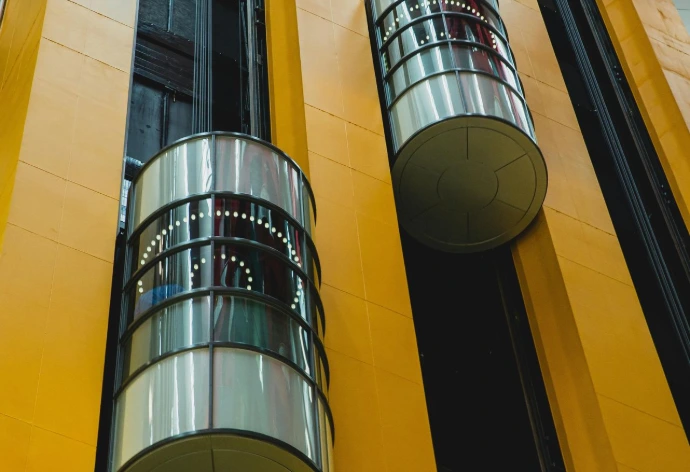
CAD CAM integration for elevator components
Direct import from 2D and 3D design systems allows converting cabins, doors, and structural components into cutting, punching, and bending programs ready for production.
Management of custom elevator projects and variants
Elevator manufacturing requires handling unique projects and multiple configurations. The system must control versions, manage design changes, and avoid production errors.
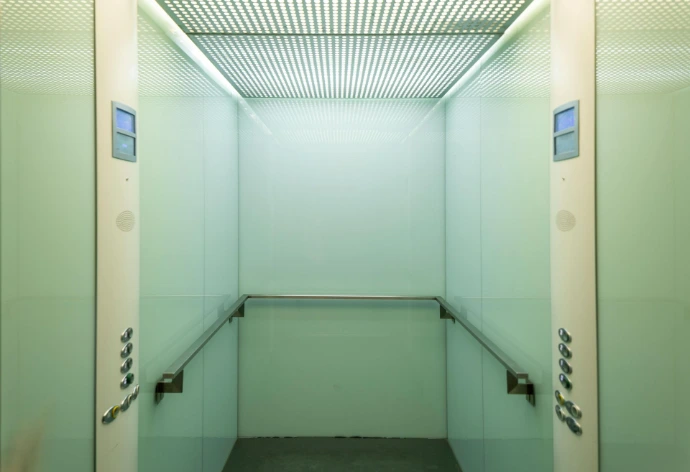
Material, cost, and stock control in sheet metal manufacturing
Control of sheets and metal profiles, reduction of scrap, and planning of stock requirements to maintain profitability across projects.

Full traceability in elevator production
Each part is linked to its material batch, drawing, and manufacturing order. This supports compliance with safety standards and audit processes.

Compatibility with cutting and forming technologies
The software must work with laser cutting, plasma cutting, oxy-fuel, punching, bending, and machining machines from different manufacturers.

Flexibility for series production and custom manufacturing
Suitable for both high-volume production and custom elevator projects, with the ability to manage different production scenarios.
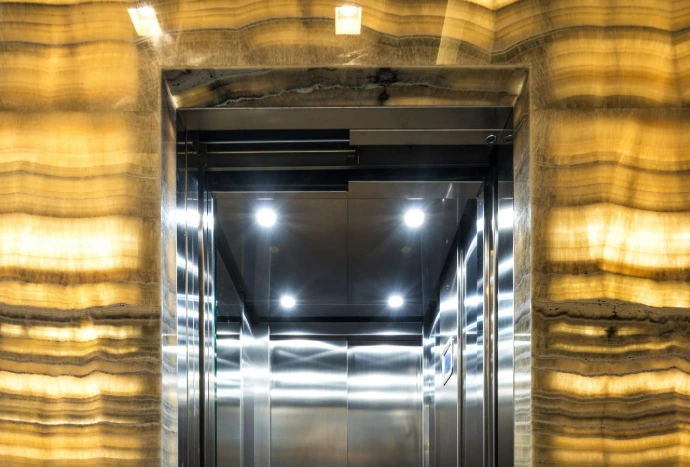
Digital systems for elevator manufacturing and production control
Industrial software for safety, efficiency, and profitability
Industrial software improves production control, reduces material waste, and provides visibility across sheet metal manufacturing processes. The production of elevators and lifting systems combines custom engineering with repetitive manufacturing of components such as doors, cabins, guides, and frames. Digital systems improve control of materials, reduce production time, and support compliance with safety regulations in global markets.
CAD CAM software for elevator components
Import of 2D and 3D designs, automatic nesting, and generation of cutting and forming programs for sheet metal parts.

MES software for shop floor control in elevator production
Monitoring of orders, machines, and operators. Detection of deviations and control of production phases to meet delivery deadlines.

ERP software for elevator manufacturers
Management of purchasing, stock, sales, and costs. Coordination of suppliers and production processes.
Manufacturing analytics for elevator production
Analysis of production data to control material usage, detect bottlenecks, and support operational decisions.
Cutting technologies used in elevator manufacturing
The manufacturing of elevators and industrial lifts requires working with sheet metal and structural profiles of various thicknesses and materials. From cabs and doors to frames, guide rails, and counterweights, each part must meet very strict tolerances to guarantee safety, durability, and reliability in the final installation.
Laser cutting for elevator doors and panels
Used for doors, cabins, panels, and visible components where precision, repeatability, and clean edges are required. It is suitable for thin and medium thickness materials and supports high production volumes.
It reduces secondary operations due to cutting quality and allows consistent results across batches, which is important for standardised elevator components.
Oxy-fuel cutting for heavy components
Used for thick plates and structural reinforcements that require deep penetration cutting. It is less common but still relevant in heavy elevator structures and industrial lift bases.
It is typically applied where material thickness exceeds the range of other cutting technologies.
Plasma cutting for structural elevator parts
Used for thicker components such as mounting plates, supports, and structural elements where speed and cost are more relevant than fine detail.
It is suitable for medium to high thickness materials and is commonly used in industrial lift structures and heavy-duty elevator components.
Punching of panels, trays, and metal profiles
Used for panels, trays, profiles, and housings with repetitive perforations, slots, and standard shapes. It combines cutting, marking, and forming operations in a single process.
This is common in high-volume production where speed and consistency are required, especially for internal components of elevator systems.
Water jet cutting for technical materials
Used for materials that require cutting without thermal deformation, including composites, rubber, and insulation elements used in elevator systems.It allows precise cutting without affecting material properties, which is important for components related to noise reduction or safety.
Bending and forming of elevator components
Used to shape doors, frames, guides, and structural elements with precise angles required for correct assembly.
Accuracy in bending is critical to avoid alignment issues during installation and to ensure that all components fit within defined tolerances.
Elevator manufacturing case studies
FAQs about elevator manufacturing software
An industrial software that integrates CAD/CAM, production control, variant management, and cost analysis. Elevator manufacturing requires managing both custom projects and repetitive production. The system must convert designs into machine programs, control traceability, and manage costs per order.
It must also support different manufacturing technologies and provide a connection between design, production, and business processes, especially in environments with high product variability.
Through systems that control versions, configurations, and design changes. Elevator projects often change during production due to building requirements or client specifications.
A structured system allows updating designs, adapting production orders, and maintaining control without generating errors or delays in manufacturing.
By linking each part to materials, drawings, and production orders. Traceability supports audits, safety requirements, and maintenance processes throughout the lifecycle of the elevator.
It also allows identifying affected components in case of issues, which is critical in regulated industries.
By connecting CAD design with automatic programming for cutting and bending. Removing manual interpretation reduces preparation time and avoids programming errors.
Nesting improves material usage and allows grouping of orders, reducing machine setup times and increasing throughput.
OEE, material consumption, cycle time, cost deviation, and delivery compliance. These metrics provide visibility into production performance and profitability.
Monitoring these indicators helps detect inefficiencies and adjust production planning based on real data.
By using nesting and structured production planning. Sheet metal represents a significant part of total manufacturing cost.
Efficient nesting reduces scrap and improves material utilisation, which directly impacts margins and competitiveness.
Yes, it must support multi-machine and multi-brand environments. Production plants combine laser, punching, bending, plasma, and machining technologies.
The software must generate machine-specific programs and adapt to different manufacturers without requiring separate systems.
By recording inspections and validations within the production system. Digital records allow tracking of quality checks, incidents, and corrective actions.
This reduces errors and ensures that each component meets safety and compliance requirements.
By integrating the 3D model with CAD CAM systems. This allows generating cutting and bending programs directly from the design without manual steps.
It reduces rework, improves accuracy, and ensures consistency between design and production.
Because elevator manufacturing requires specific production processes such as nesting, machine programming, and detailed traceability.
Generic ERP systems manage business data but do not cover the technical manufacturing layer required for sheet metal processing. Specialised software complements ERP and controls production.