Digitalization and industrial software for refrigeration equipment manufacturers
Commercial and industrial refrigeration with high standards.
Industrial refrigeration manufacturing for retail: sector context and real challenges
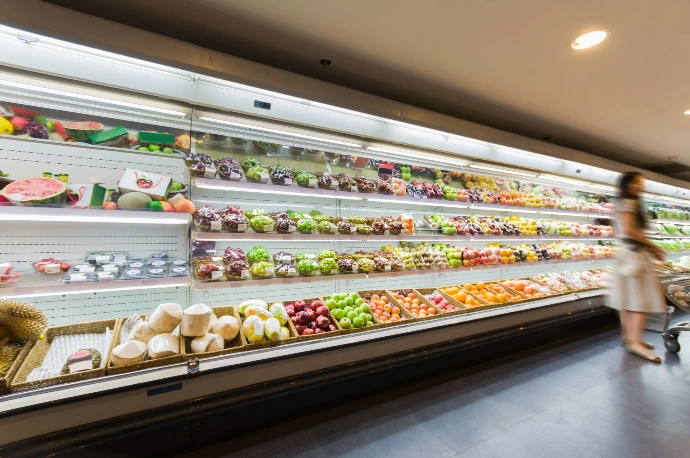
The industrial and commercial refrigeration sector includes manufacturers of refrigerated equipment for points of sale, such as refrigerated display cases, multideck cabinets, counters, gondolas, cold rooms, linear units, and technical furniture for supermarkets, specialty stores, and hospitality.
Unlike other industrial sectors, this environment combines serial production with a high degree of customization. A single model may vary in dimensions, temperature specifications, finishes, door types, lighting systems, shelving configurations, or regulatory requirements depending on the country and end customer.

Management of variants and versions
Manufacturers must handle hundreds of combinations by customer, sales channel, or country. They need to manage versions without duplicating processes, part numbers, or production flows.

Full traceability and after-sales maintenance
Each unit must be identified, tested, and certified to meet thermal, electrical, and safety requirements. Traceability is also necessary for maintenance, service, and spare parts management.

High product customization
Equipment must adapt to available space, aesthetic requirements, and functional needs. This creates multiple variants for each customer, channel, or market.

Efficient modular production
Each unit may include variants derived from a common base design. The system must support fast, controlled changes without disrupting production.

Cost control and operational performance
The cost of materials, components, and labor requires continuous KPI monitoring to protect margins and maintain competitiveness.
Multi-technology compatibility for industrial refrigeration
Industrial refrigeration manufacturing software must respond directly to the sector’s operational needs: high customization, cost control, full traceability, and efficient production.
A connected digital environment links design, production, and management. This reduces errors and improves margins.
Full traceability of equipment and components
Each manufactured unit is recorded with its serial number, materials, operators, and completed tests. This supports regulatory compliance and makes after-sales service easier.
Variant management without duplicating processes
It allows manufacturers to work with multiple product configurations, including dimensions, components, finishes, or regulatory requirements, without duplicating production structures. This improves control and reduces errors in high-customization environments.
Production control by order and phase
It allows each unit to be managed from the manufacturing order to final assembly. It provides real-time visibility into production status, workloads, and deviations.
CAD/CAM connection between design and production
Mechanical design systems generate complex geometries that must move directly into production. The CAD/CAM connection avoids interpretation errors and speeds up the move from design to machine.
Modular manufacturing and parametric design
It makes it easier to create products from common base models, adapting variants quickly without redesigning from scratch. This reduces engineering time and improves production performance.
Production cost analysis and KPI tracking
It calculates the real cost per unit by considering materials, processes, and times. Indicators make it easier to detect deviations, use resources better, and protect margins.
Digital solutions for professional refrigeration
Lantek, practical experience in industrial refrigeration

Automatic cutting and nesting
Generates optimized cutting paths from 2D CAD drawings. It improves sheet metal usage, reduces setup time, and connects directly with laser, plasma, or waterjet cutting machines.
Connected industrial ERP
Manages orders, purchases, inventory, and costs in sync with the plant and technical office. It is especially useful in environments with many models and versions.

Real-time production control
Tracks each unit from order entry to final assembly. It shows workloads, completed phases, and unproductive time.
KPIs and efficiency analysis
Provides reports on productivity, material consumption, time deviations, and efficiency by model or production line. This supports continuous improvement based on real production data.
Key processes in the manufacturing of industrial refrigeration equipment
Cutting, bending, and assembly must be precise. The manufacture of refrigerated equipment requires repeatable, flexible, multi-technology processes.
The production of display cases, refrigeration equipment, and industrial cooling systems combines metal components, insulated panels, and advanced electronics. It requires flexible and precise manufacturing technologies:
Precision laser cutting for refrigeration structures
Suitable for thin sheets of stainless steel, galvanized steel, or aluminum used in display case housings, doors, and structural profiles.
Waterjet cutting for sensitive materials
Suitable when it is necessary to avoid thermal deformation in insulated panels or special coatings.
CNC punching for repetitive perforations
Suitable for repeated perforations and combined marking and stamping operations on metal parts.
Automatic bending for enclosures and profiles
Ensures accurate angles in trays, supports, and internal structural profiles, reducing manual adjustments.
Industrial refrigeration manufacturing success stories
Frequently Asked Questions (FAQs)
A combination of industrial ERP and specialized vertical software for metal manufacturing and modular product management.
Refrigeration equipment manufacturers often use ERP systems such as SAP or Microsoft Dynamics for purchasing and logistics, but they also need software to manage CAD/CAM, nesting, serial-number traceability, and phase-based production control. Solutions like Lantek cover this specialized production layer in multi-technology environments.
Through parametric design and digital version control.
The same model can have multiple configurations depending on the customer or country. The system must allow variants to be created without duplicating references, drawings, or bills of materials, while keeping production consistent.
By identifying each unit with a serial number and recording its components and production phases.
This is important for regulatory compliance, thermal audits, and after-sales service in supermarkets and retail environments.
By keeping design, cutting, and assembly consistent.
A direct connection between CAD and production avoids dimensional errors and rework in critical stages such as insulation or electrical assembly.
By capturing real production data and analyzing it by order or reference.
The system must record sheet metal consumption, assembly time, rework, and planning deviations to calculate the real margin for each model.
By planning production by phases and tracking KPIs in real time.
Dividing manufacturing into functional blocks helps detect bottlenecks and reduce unproductive time.
Through automatic nesting and scrap reuse.
The software must maximize sheet metal usage, especially for stainless steel and galvanized steel, where material cost has a direct impact on margins.
By combining standard planning with make-to-order production.
The system must allow existing configurations to be repeated and special units to be adapted without creating unnecessary complexity.
Because refrigeration equipment manufacturing includes technical processes that a generic ERP does not cover.
Advanced nesting, multi-machine programming, variant management, and serial-number traceability are part of the production core. Specialized software complements the ERP and manages the technical manufacturing layer. In this area, solutions like Lantek are designed for industrial and commercial refrigeration manufacturers.