Metal Structure Manufacturing: Processes and Technologies.
Design and manufacture of metal structures for sectors such as construction, energy, logistics, and public infrastructure.
What is metal structure manufacturing?
This production environment creates specific operational demands that require digital tools suited to the sector.

Management of complex structural projects
Each metal structure project includes multiple stages of production, assembly, and delivery. Coordinating engineering, manufacturing, and logistics in real time is one of the main challenges in meeting deadlines and avoiding bottlenecks.

Precision control and dimensional tolerances
Metal structures must be manufactured within tight tolerances to ensure correct assembly on site. Any deviation in cutting, drilling, or welding can cause delays, rework, and extra cost.

Material usage and waste reduction
Steel and aluminum represent a large share of project cost. Making better use of sheet metal, reducing scrap, and improving nesting are key to protecting margins.

Management of engineering changes and drawing versions
Structural projects change constantly. Updates to drawings, added reinforcements, or design modifications must be reflected quickly in production without losing control or creating errors.

Full traceability of parts and processes
Identifying each component from cutting to final assembly is necessary to meet regulations, ensure quality, and respond to audits or technical incidents.

Connection between different technologies and machines
Workshops often operate with different cutting technologies and machines from different manufacturers. Coordinating all systems is a key requirement for stable production.
Industrial software for metal structure manufacturers
The manufacture of metal structures requires digital systems that can manage complex processes, connect design and production, and ensure full traceability. The right software must provide control, system connection, and the capacity to work in demanding and changing environments.
When choosing a solution, it should cover key areas such as project planning, connection with technical systems, and compatibility with different cutting technologies.
Advanced traceability by part and process
A system should record every operation, from cutting to final assembly. This includes materials, operators, machines, and inspection results, allowing any component to be audited quickly and accurately.
Management by project, area, or structural block
Software for manufacturing should allow production to be organized according to the structure of each project. Whether by area, construction phase, or functional block, the system must provide clear visibility of progress, costs, and allocated resources at each stage.
Adaptation to design and engineering changes
A production management environment must reflect changes in drawings, versions, or manufacturing priorities without delay. The software should allow these updates to be applied without losing traceability or affecting delivery dates.

Planning and production control in mixed environments
Metal structure plants often combine technologies such as plasma, oxy-fuel, and laser. The software must adapt to different machine types and processes, improve task planning, and avoid downtime caused by incompatibilities.
Connection with CAD, ERP, and engineering systems
Technical design and production must stay coordinated. The software must connect with CAD and ERP tools to import drawings, synchronize material data, and plan tasks without duplication or information loss.
Digital systems applied to metal structures
To address the sector’s demands, manufacturers need solutions that connect design, cutting, production, and assembly within one environment. Lantek offers tools that help control each stage of the structural project, improve traceability, reduce unproductive time, and support operational decisions.
These solutions are designed for both medium-sized workshops and large industrial plants, working with multiple cutting technologies, drawing formats, and distributed production environments.

Cutting automation and nesting improvement
The system imports drawings in different CAD formats and generates cutting paths automatically, improving material usage and reducing scrap in large sheets.
3D cutting programming for tubes and structural profiles
Metal structure manufacturing increasingly requires precise cutting of 3D profiles and tubes. Lantek provides tools to import complex geometries, calculate toolpaths, and generate programs for multi-axis machines working with round, rectangular, or H profiles.

Real-time production control
From order entry to final assembly, each part can be monitored on the shop floor. This makes it possible to know its current phase, who processed it, and which machine was used, improving traceability and resource control.
Structural planning by modules or zones
Projects can be organized by construction blocks or functional areas, making milestone planning, cost analysis by module, and phased progress control easier.
Production analysis for continuous improvement
The system collects key production data and generates reports that help identify bottlenecks, compare performance between projects, and support decisions based on real indicators.
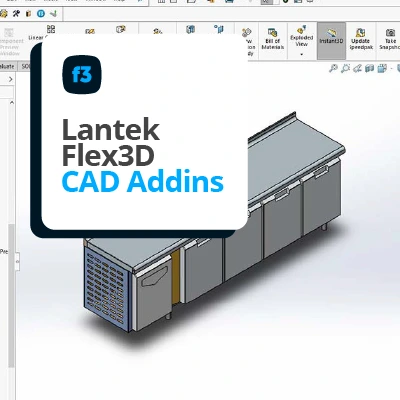
Connection with design and engineering platforms
Lantek connects with CAD, ERP, and customer technical systems, ensuring that information flows correctly between the technical office and the workshop, even when multiple drawing versions or last-minute changes are involved.
Cutting technologies in metal structure manufacturing
Sheet and profile cutting is a key stage in metal structure manufacturing. Depending on material type, thickness, geometry, and production volume, different technologies are used. They must combine accuracy, speed, and good use of resources.
Lantek is compatible with the common cutting processes used in the industry, working with machines from different manufacturers, mixed technologies, and multi-technology production environments. This allows workshops to work with technological freedom while maintaining control and traceability.
Laser cutting
Suitable for thin and medium-thickness sheets that require high accuracy and clean edge quality. It is used for detailed structural parts, reinforcements, and components with complex geometries.
Waterjet cutting
Used in applications where heat must be avoided, such as sensitive or multilayer materials. Although less common in general metal structure work, it is useful for special parts or combined elements.
Oxy-fuel cutting
Recommended for thick parts or high-strength carbon steel. It is a solid option for structural components that do not require very high precision.
Plasma cutting
Widely used in medium-thickness metal structures. It offers a good balance of speed, quality, and operating cost for carbon steel, stainless steel, and aluminum.
Success stories in metal structure manufacturing
Frequently asked questions (FAQs)
A suitable solution for metal structures combines CAD/CAM, production planning, and traceability from design to on-site assembly, making cutting scheduling and shop floor control easier.
Traceability improves when each part and process is digitized and linked to drawings, materials, machines, and operators in one central system with real-time monitoring.
For thick structural steel, plasma and oxy-fuel cutting offer a good combination of production capacity and process consistency.
Waste is reduced through automatic nesting, which arranges parts on the sheet to make better use of material.
Metal structure manufacturing uses laser, plasma, oxy-fuel, and waterjet cutting machines, depending on material, thickness, and required finish.
CAD drawings are connected to production by importing technical files directly into a CAD/CAM system that generates machine programs without manual interpretation errors.
Digitization improves process visibility, reduces errors, speeds up decision-making, and allows more precise planning and resource control.
Planning by blocks or zones is done by dividing the project into modules, assigning resources, and sequencing tasks according to priorities and dependencies.
Laser cutting stands out for precision and edge quality. Plasma cutting offers a good balance between speed and range of use. Oxy-fuel cutting is suited to very thick steel.
Yes. Multi-technology software allows different cutting machines to be programmed and controlled from one platform while keeping production consistent.
Cost control requires linking times, materials, and resources to each work order and analyzing that information to identify areas for improvement.
CAD/CAM is important because it converts engineering drawings into machine programs, reducing interpretation errors and improving production flow.
Metal structures are manufactured under structural engineering standards that define strength, tolerances, and compliance requirements for each project.