Advanced Nesting for sheet cutting
Maximize material utilization with high-performance nesting software for industrial manufacturing
Nesting. The core of sheet metal cutting.
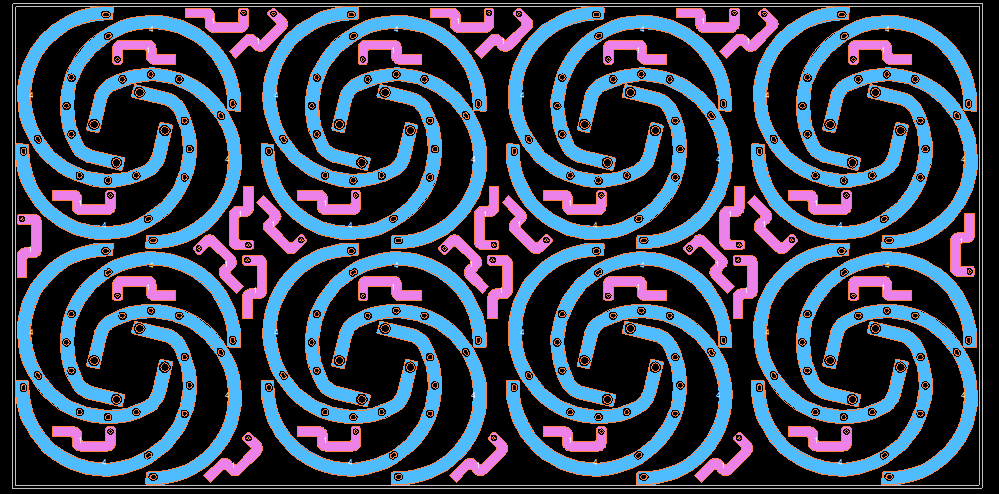
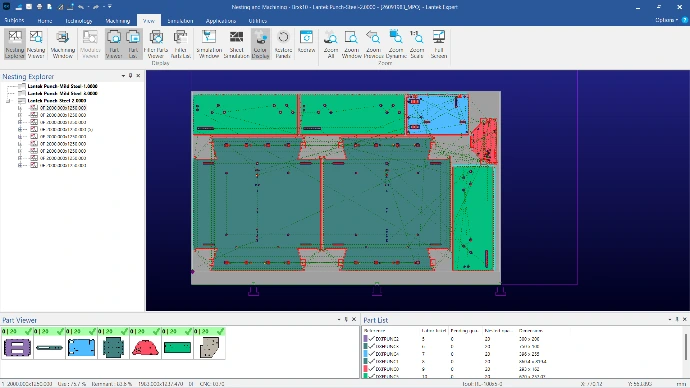
Nesting is the process of arranging parts on a metal sheet, tube, or profile for cutting, with the objective of maximizing material usage and ensuring efficient CNC machine execution.
In sheet metal manufacturing, nesting directly impacts material consumption, cutting time, and overall production stability. Nesting software goes beyond placing geometries. It considers materials, thicknesses, cutting technologies, and production constraints to generate results that work in real factory conditions.
Why nesting is critical in sheet metal manufacturing
Nesting is a key factor in cost per part and production control. It influences not only material usage, but also machine performance, workflow efficiency, and planning accuracy.
Direct impact on material consumption
Efficient nesting reduces scrap and improves sheet utilization without relying on impractical layouts. With rising raw material costs, even small improvements generate measurable savings over time.
Influence on cutting times
Part distribution affects toolpaths, cutting sequences, and machine behavior. Well-structured nesting reduces unnecessary movements, avoids interruptions, and stabilizes CNC execution.
Production stability
Consistent nesting ensures predictable machine performance. Programs run as expected, reducing unplanned stops and improving shop floor control.
Foundation for manufacturing efficiency
Nesting is the starting point of the production workflow. Poor decisions at this stage affect downstream processes such as cutting, sorting, and delivery.
How to choose nesting software
Selecting CAD/CAM nesting software requires evaluating performance in real production scenarios. Test results must reflect actual conditions, including mixed geometries, variable workloads, and delivery constraints.
Consistency across all geometries
Nesting algorithms must deliver stable results with simple and complex parts, as well as mixed combinations. Performance should not depend on ideal conditions.
Practical configurations for daily use
Some demonstrations rely on unrealistic parameters. In production, nesting must operate with configurations that are maintainable and suitable for continuous use.
Adaptation to cutting technologies
Nesting must support laser cutting, plasma, oxy-fuel, waterjet, and punching processes. Each technology has specific requirements that must be considered during calculation.
Connection with MES and ERP systems
Nesting should not operate in isolation. Integration with MES and ERP systems ensures that nesting decisions reflect production priorities, material availability, and delivery schedules.
Why choose Lantek nesting
Lantek provides nesting solutions based on four decades of experience in sheet metal software, CAD/CAM, MES, and ERP integration. The system evolves continuously based on real production use across thousands of factories.

Technological leadership and continuous innovation
Lantek develops its own nesting algorithms and improves them regularly. New technologies, including artificial intelligence, are applied to analyze production data and refine results.

Stable performance in real production
The system is designed to deliver consistent results across different geometries, batch sizes, and production conditions. It prioritizes overall performance instead of isolated scenarios.

Proven use in industrial environments
Lantek nesting software is widely used in sheet metal manufacturing. Its adoption reflects consistent performance in daily production operations.

40 years managing real manufacturing cases
Decades of collaboration with manufacturers have translated into practical functionality built into the software. The focus is on real use, not theoretical scenarios.

Connection across the manufacturing workflow
Nesting is part of a connected environment that links CAD/CAM, MES, and ERP systems. This ensures that nesting decisions are aligned with planning, execution, and cost control.

Adaptation to each production environment
Lantek analyzes each customer’s manufacturing setup and adjusts nesting strategies accordingly. This allows better alignment with specific production requirements.
Everything connected.
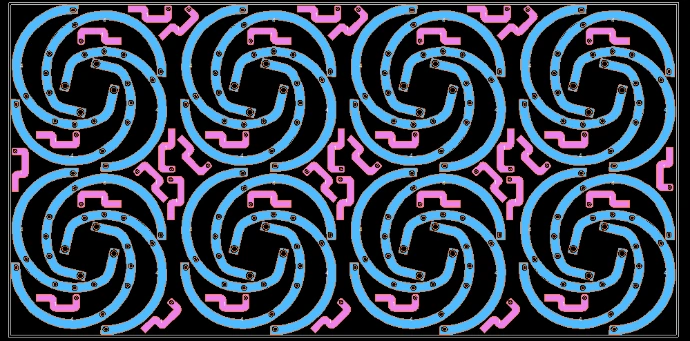
2D Sheet Metal Cutting & Nesting - Lantek Expert
CAD/CAM software for 2D sheet metal processing, including laser, plasma, waterjet, oxyfuel, punching, shearing and combined machines.
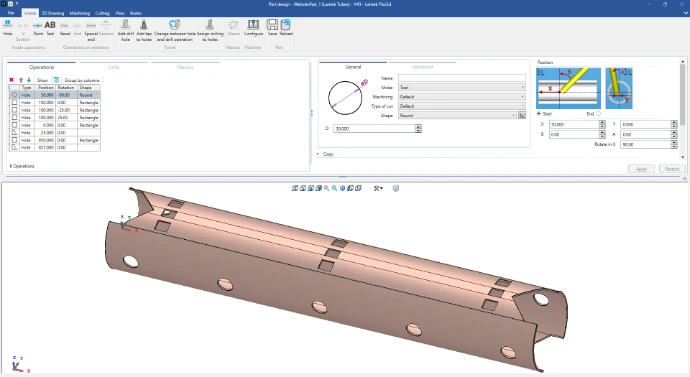
Tube, Profile & Structural Steel Cutting - Lantek Flex3D
Advanced CAD/CAM software for cutting tubes, profiles and structural steel, including 3D laser cutting and complex geometries.
Frequently asked questions
Here are some common questions about our company.
Automatic nesting organizes parts on a sheet based on geometry, quantity, and material.
The system calculates the best arrangement to reduce waste and generate efficient cutting programs.
Lantek Expert Cut uses automatic nesting that adapts to different thicknesses.
Static nesting works on predefined sheets.
Dynamic nesting adjusts part placement based on priorities, allowing parts to be added or removed during planning.
Lantek Nesting Engine manages both modes according to the workload.
Each nesting generates data on time, material consumption, and performance.
This information can be used by ERP systems for cost calculation and by MES systems for production control.
Lantek iQuoting + MES leverage that information to optimize planning and pricing.
Combining parts from different orders and using rotation and grouping strategies improves sheet utilization.
Nesting software calculates the best configuration based on available material.
Lantek Nesting Engine improves material performance by up to 10–15% compared to manual.
Predefined rules, material libraries, and automated calculations allow nesting to be generated quickly while maintaining precision in production results.
Lantek Expert automates scheduling and reduces setup times.
Nesting data is transferred to MES for execution control and to ERP for cost tracking.
This creates a continuous data flow between engineering, production, and management.
Lantek Expert + MES Manager + Integra ERP create that closed flow of information.
AI evaluates multiple nesting scenarios and learns from historical production data.
This improves material usage and adapts results over time.
Lantek KAI incorporates AI algorithms to optimize nesting with each version.
Multi-order nesting groups compatible parts from different jobs while maintaining traceability.
Each part retains its identification throughout the process.
Lantek A2N (Assembly to Nesting) automates that grouping while maintaining individual identification.
Each part keeps its ID, batch, and project reference.
The system records its position and tracks it through MES systems.
Lantek Expert + MES Capture ensure complete traceability of the nesting.
Usable remnants are stored with their geometry.
The system reuses them in future nestings when dimensions match new requirements.
Lantek Expert manages a library of scraps and prioritizes their use in subsequent nestings.
Each nesting generates time, consumption, and performance data that can be used to calculate actual costs.
Integrating that information with the ERP or budgeting system allows for more accurate and faster quotes.
Lantek iQuoting uses nesting data to generate automatic quotes based on actual production.
The system analyzes utilization rates, cutting times, and repetition patterns.
It identifies deviations and suggests improved configurations.
Lantek Manufacturing Analytics provides utilization and performance reports by machine or shift.
An advanced system analyzes the results of each sheet: utilization percentage, times, and repetitions.
If it finds deviations, it suggests more suitable configurations to improve the next execution.
Lantek KAI, the artificial intelligence engine, identifies patterns of inefficiency and recommends automatic adjustments.
2D nesting arranges flat parts on sheets. 3D nesting applies to tubes, profiles, and structural components.
Both can be managed within the same production environment.
Lantek Flex3D + Expert allow working in 2D and 3D from a single connected platform.
Adaptive nesting adjusts parameters based on production load, material availability, and real-time data from MES and ERP systems.
It is fed with real-time data from the MES and the ERP.
Lantek Nesting Engine + Lantek KAI AI make this type of dynamic and self-adjusting nesting possible.