Automotive industry: digitized manufacturing for sheet metal production
Connected manufacturing for automotive suppliers. Scale production with full control.
Operational challenges in the automotive industry
The automotive sector is a core pillar of the global economy and one of the most technologically demanding manufacturing environments. From engineering design to final delivery, each vehicle involves a complex network of synchronized processes and thousands of components produced with high precision.
Automotive manufacturing goes beyond assembly. It requires strict coordination across design, production, and logistics. Even minor disruptions can impact the entire supply chain. Shorter product lifecycles and tight margins increase pressure on manufacturers and suppliers, making manual or disconnected processes unsustainable.

Pressure for productivity and consistency
Thousands of sheet metal parts must be produced daily with minimal tolerance for error. Standardized workflows and plant efficiency are essential to maintain output and quality.

Complexity from variants and models
Each order includes multiple versions of the same component. Without proper management of configurations, drawings, and production orders, the risk of errors increases.

Strict traceability requirements from OEMs
Knowing which operator, machine, and batch were involved in each part is essential to comply with regulations such as IATF 16949.

Gap between design and manufacturing
Production relies on 3D CAD models that must be converted into cutting, punching, or bending operations without data loss. Lack of integration creates delays and inefficiencies.

Just-in-time production with zero margin for error
Automotive production operates in synchronized workflows. A delayed order can stop an entire assembly line and affect global delivery commitments.

Digitalization as an industrial requirement
Integrated MES, ERP, and CAD/CAM systems are essential to control costs, meet deadlines, and ensure traceability across distributed manufacturing environments.
What software must offer for automotive manufacturing
Modern automotive suppliers require software that connects design, production, and business processes. Digital manufacturing systems must respond accurately to operational, technical, and logistical demands.
Management of variants and versions
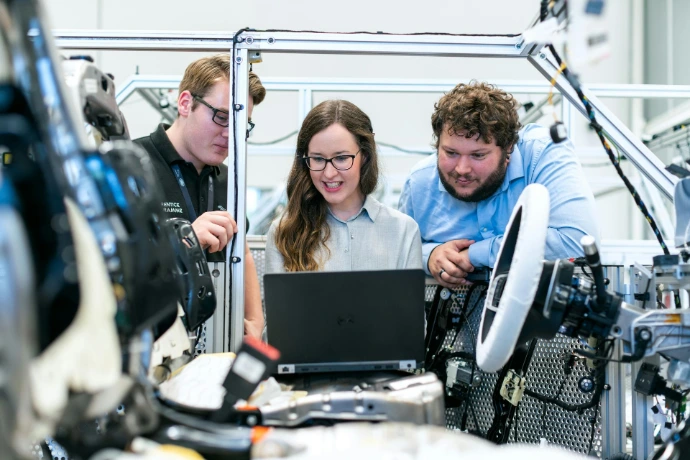
Control multiple part configurations across models, series, and batches. Ensure consistency between engineering and production while avoiding duplication.
Native CAD/CAM for automotive design
Direct compatibility with 2D and 3D CAD systems such as CATIA, SolidWorks, and Siemens NX. Convert complex geometries into manufacturing processes for cutting, punching, or bending.
Real-time traceability
Unique identification of parts and batches, with access to materials, drawings, operators, and production status. Required for OEM audits and compliance.
Synchronized production and full visibility
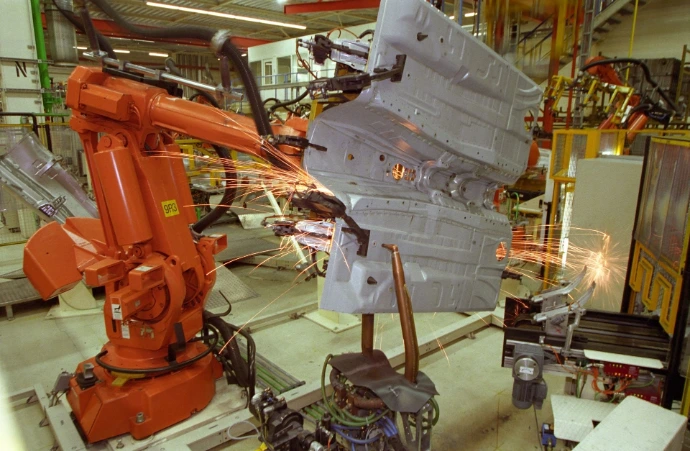
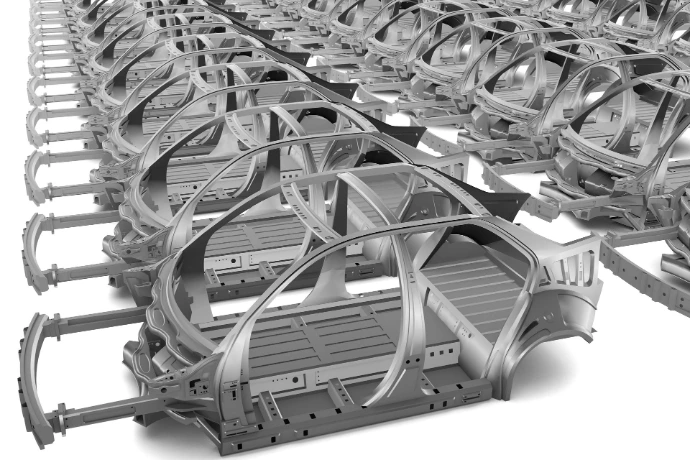
Complete visibility of orders, costs, and deadlines, aligned with just-in-time manufacturing requirements.
Multi-technology and multi-brand compatibility
Support for laser cutting, punching, bending, plasma, waterjet, and machining, regardless of machine manufacturer. Compatibility across equipment is essential in mixed production environments.
Management software for automotive parts manufacturers
A manufacturing platform designed to connect CAD/CAM, MES, and ERP processes across the automotive supply chain.
With over 35 years of experience in sheet metal manufacturing, Lantek provides a software suite tailored to the needs of automotive component suppliers.
Industrial CAD/CAM with native 2D and 3D import
Direct integration with automotive CAD systems, automatic nesting, and fast generation of programs for cutting, punching, or bending.

Connected ERP and MES for real-time control
Manage costs, materials, suppliers, and delivery deadlines in a unified system. Visibility by reference, model, and production line.

Production monitoring and downtime control
Track machines, operators, and orders in real time. Detect deviations that may impact just-in-time production.

Manufacturing analytics and performance control
Access metrics on efficiency, cycle times, and material usage. Identify bottlenecks and support operational decision-making.
Cutting technologies for automotive metal components
Automotive sheet metal manufacturing combines precision, speed, and quality control. Different cutting technologies are used depending on material, geometry, and production volume.
Laser cutting for high-precision parts
Widely used for thin and medium sheet metal. Offers high speed, excellent edge quality, and efficient material usage. Common in structural components and body parts.
Waterjet cutting for sensitive materials
Suitable for heat-sensitive or composite materials such as insulation, gaskets, or multilayer components.
Industrial shearing for straight cuts
Used to cut flat sheets before further processing such as laser cutting or punching.
CNC punching for repetitive parts
Efficient for parts with repeated geometries, drilling, or marking. Common in panels and fastening components.
Automatic bending of metal structures
Shapes flat sheet metal into final geometries. Used in frames, reinforcements, and assemblies.
Oxy-fuel cutting for thick parts
Applied to very thick materials such as dies or heavy structural components.
Plasma cutting for medium thickness materials
Used for steel or aluminum parts where speed and strength are required.
Automotive success stories
Frequently asked questions about automotive software (FAQs)
Automated scheduling and digital production orders reduce downtime between batches.
MES systems coordinate priorities based on availability and deadlines.
Lantek MES WOS Live helps reduce setup times and unplanned stops.
Manufacturing analytics combines production and sales data to detect risks early.
This enables adjustments in resources or delivery commitments.
Lantek Analytics centralizes KPIs and performance alerts.
It connects planning, production, and quality control in a single workflow.
Production data is reflected in management systems in real time.
Lantek Integra and MES Manager ensure consistency and traceability.
Suitable for Tier 1 and Tier 2 suppliers, as well as specialized metal workshops producing components for OEMs.They adapt to different production volumes and integrate with other MES and ERP systems.
Yes. It connects with robotic cells for cutting, punching, bending, or welding, centralizing programming and traceability.
Yes. It supports synchronized production and logistics, helping prioritize orders and maintain continuous flow.
The system supports multiple technologies and machine brands, enabling centralized management in mixed environments.
Improved material usage, reduced setup times, cost control, and compliance with OEM audits without production interruptions.
CAD/CAM converts 2D and 3D designs into cutting, punching, or bending programs.It integrates with systems such as CATIA, SolidWorks, and Siemens NX, improving material use and reducing setup times.
Yes. It connects with punching, bending, machining, and secondary operations such as marking or welding, ensuring full traceability.
The system includes specialized technical support and continuous updates aligned with industry standards and technologies