Sheet metal software for home appliance manufacturing
From ovens and refrigerators to industrial kitchens and HVAC equipment, manage every sheet metal component and optimize your production with advanced sheet metal fabrication software.
Key challenges in sheet metal fabrication for home appliance manufacturing
Appliance manufacturing takes place in a highly competitive environment, where margins are tight and delivery times are critical. Manufacturers must produce millions of parts per year while complying with international safety regulations. What are their biggest challenges?

Mass production with strict tolerances
Every day, thousands of identical parts, doors, trays, panels, and housings must be manufactured within very tight tolerances. A single process error can lead to delays, high rework costs, and quality issues across a full product line.

Aesthetic and functional finishes
Appliances must be functional, attractive, and durable. Precision in cutting, punching, and CNC bending is essential to achieve flawless finishes, perfect fit, and surfaces ready for painting or decorative treatments.

Management of multiple variants
The same appliance model can have multiple configurations depending on the market, features, or design. Managing digital versions ensures that each variant is correctly manufactured and assembled, reducing errors across the shop floor.

Optimization of material usage and scrap reduction
Material optimization is critical in sheet metal fabrication. Efficient nesting strategies, remnant management, and accurate planning reduce scrap and improve profitability in cost-sensitive environments.

Certifications and traceability by part
Each sheet metal component must be linked to its batch, drawing, and production order. Traceability ensures compliance with safety regulations and supports audits and after-sales processes.

Connection between engineering and production
Sheet metal production starts from CAD designs that must be converted into CNC programs. Seamless integration between engineering and manufacturing reduces errors and preparation times.
What software for appliance manufacturing should include
Software for appliance and HVAC manufacturing must support high-volume sheet metal production, multiple product variants, and full integration between CAD/CAM, MES, and ERP systems.
CAD/CAM Integration
Direct import of 2D and 3D drawings from industrial design systems. It enables the generation of cutting, punching, and bending programs for panels, doors, trays, and enclosures without errors or rework.
Compatible with product variants and markets
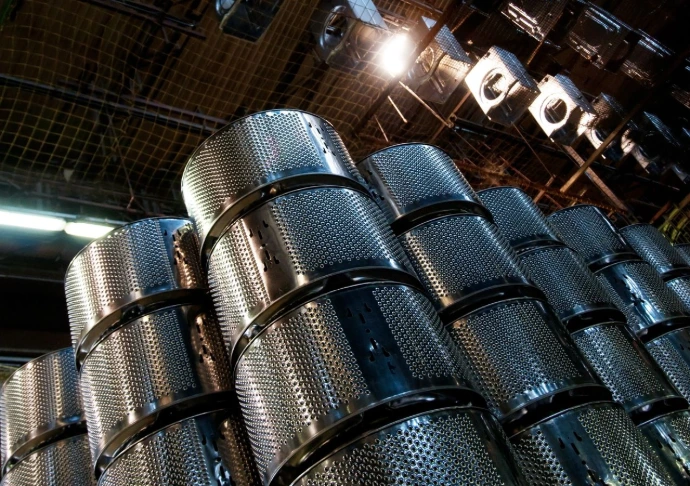
The same oven, washing machine, or refrigerator model can have multiple configurations. The software must control digital versions and ensure consistency in production for each market.
Shop floor MES monitoring
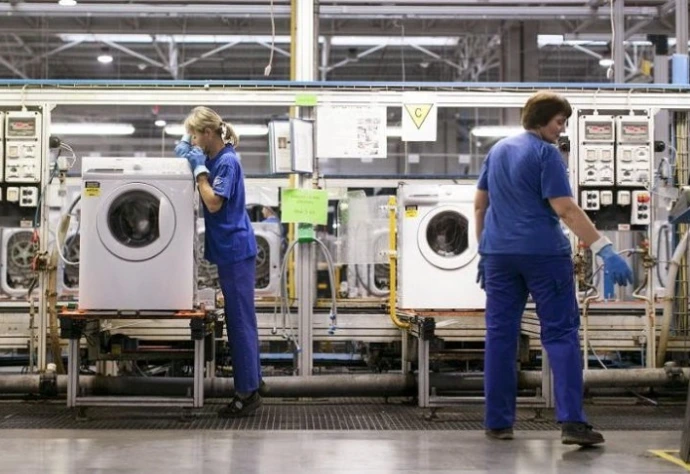
Real-time monitoring of orders, machines, and materials. A specialized MES allows detecting shop floor deviations and ensuring deliveries within critical deadlines.
Full batch and part traceability
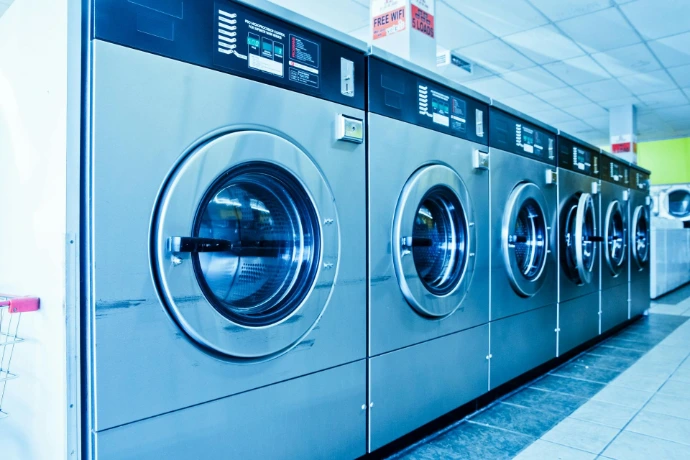
Each part must be linked to its batch, drawing, and work order. Traceability ensures regulatory compliance, quality control, and a reliable after-sales service.
Integrated with industrial planning (ERP)
Modular planning that connects purchasing, stock, manufacturing, and costs. Key to coordinating mass production with global suppliers and international supply chains.
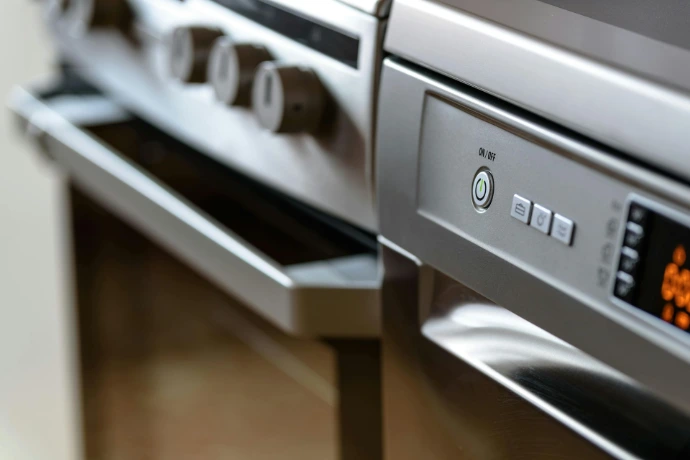
Resource and material optimization
Automatic nesting tools and digital remnant management allow for reduced waste and maintain competitive margins in a high-pressure pricing market.
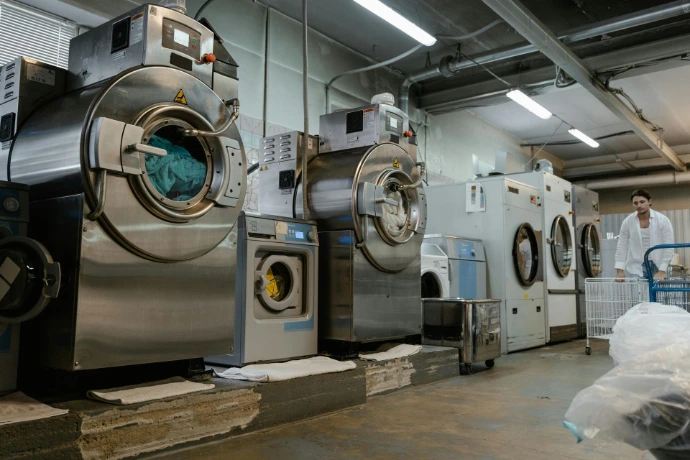
Digital transformation in appliance and HVAC manufacturing
Digital transformation in sheet metal manufacturing improves production efficiency, reduces scrap, and provides full visibility across the factory.
The production of home appliances and HVAC systems requires strict control over processes, materials, and costs. Digital solutions improve traceability, increase OEE, reduce changeover times, and provide real cost visibility per product.
Integrating CAD/CAM, MES, and ERP systems allows manufacturers to connect design, production, and planning in a single workflow. This is essential to remain competitive in global and automated environments..

Digital management of variants in home appliance production
Appliance manufacturing requires managing multiple product variants. Structured digital control of versions by market or configuration reduces changeover times, prevents assembly errors, and ensures consistency between design and production.

CAD/CAM software for appliance manufacturing
CAD/CAM software for sheet metal fabrication enables direct import of 2D and 3D models and automatic generation of cutting, punching, and bending programs.
Optimized nesting reduces waste in high-volume production and improves repeatability. The connection between engineering and machines eliminates manual errors and reprocessing.

Integrated industrial ERP in the production of household appliances
ERP software connects purchasing, inventory, planning, and real production costs. It allows measuring margins by reference, anticipating supply needs, and coordinating production across multiple plants.

MES to improve OEE in home appliance manufacturing lines
MES software provides real-time visibility into machines, orders, and materials. It helps analyze efficiency, detect downtime, and reduce bottlenecks. This is critical for companies searching for MES for sheet metal manufacturing.
Sheet metal cutting and forming technologies used in appliance manufacturing
The production of household appliances requires cutting and forming processes adapted to thin sheet metal and lightweight metal components, with high precision in finishes and high repeatability for long production runs. The combination of different technologies allows both mass production and the manufacture of customized components for domestic and industrial appliances. Appliance manufacturing requires cutting and forming processes adapted to thin sheet metal, high-quality finishes, and repeatable production.
Laser cutting
The production of household appliances requires cutting and forming processes adapted to thin sheet metal and lightweight metal components, with high precision in finishes and high repeatability for long production runs. The combination of different technologies allows both mass production and the manufacture of customized components for domestic and industrial appliances.
Water jet cutting
Used for composite materials, technical plastics, and heat-sensitive parts where it is important to avoid thermal deformation. Its precision makes it an ideal option for special components and high value-added parts.
Punching
Ideal for trays, housings, and parts with multiple perforations or slots, combining speed and repeatability. It also allows the integration of marking operations and small forming features, reducing intermediate steps in manufacturing.
Automatic folding
Essential for shaping frames, reinforcements, guides, and internal structures of appliances. Precision in bending angles ensures accurate assembly, reduces manual adjustments, and improves assembly efficiency.
Sheet metal manufacturing success stories in appliances
Frequently Asked Questions (FAQs)
Improve OEE requires real visibility into machine availability, performance, and quality in sheet metal manufacturing. Without real-time shop floor data, efficiency losses are detected too late MES system enables continuous monitoring of machines, orders, and production processes, helping identify downtime, micro-stoppages, and inefficiencies by line or by product.
In high-volume appliance and HVAC manufacturing, this visibility is essential to improve productivity and meet delivery deadlines.
Scrap reduction in sheet metal fabrication depends on optimized nesting, accurate CNC programming, and proper material planning.
A CAD/CAM system with advanced nesting allows for optimizing material according to actual stock and reducing accumulated waste. In vertical solutions like Lantek, this optimization is part of the standard manufacturing flow.
In mass production environments, even small improvements in nesting efficiency have a significant impact on overall manufacturing costs.
Reducing changeover times depends on how product variants and production programs are managed.
A structured environment like Lantek MES allows for the reuse of configurations, automatic recalculation of programs, and reorganization of orders without having to redo the entire planning.
This is critical in appliance manufacturing, where multiple product variants must be produced efficiently.
Managing product variants requires structured digital control of versions across design and manufacturing.
Centralized systems ensure that each configuration is correctly transferred to production, avoiding mismatches between engineering and the shop floor.
This reduces assembly errors, prevents rework, and improves consistency in high-volume sheet metal manufacturing.
Traceability by batch and by piece is key to responding effectively to incidents. The system must make it possible to identify the material batch, production line and manufacturing order involved.
Each part must be linked to its material batch, production order, and process history. This allows manufacturers to respond quickly to audits, quality issues, or product recalls.
Integrating CAD design with production requires converting engineering models into CNC programs automatically.
CAD/CAM software connects design with machines, eliminating manual interpretation errors and reducing preparation time in sheet metal fabrication.
This integration ensures that parts are manufactured accurately and consistently.
Measuring real production costs requires linking material consumption, machine time, and operational efficiency to each product.
The integration between the production system and ERP allows manufacturers to calculate real costs per part, order, or series, improving decision-making and margin control.
Yes, production can be coordinated across multiple plants using centralized manufacturing systems.
Standardized processes and shared data allow manufacturers to maintain consistency in design, programming, and planning across different locations.
This is essential for companies operating in global sheet metal manufacturing environments.
Sheet metal manufacturing requires specific capabilities such as CAD/CAM, nesting optimization, and shop floor control.
Generic ERP systems do not cover these processes. Specialized sheet metal software ensures better efficiency, accuracy, and production performance.
Digital transformation should be implemented in phases to avoid disruption. Manufacturers typically start with CAD/CAM and nesting, then implement MES for shop floor data capture, and finally integrate ERP systems for full production control.
This phased approach allows continuous operation while improving efficiency and visibility.