CNC combined machine: productivity in a single process
Integrated punching, laser cutting, and shearing for more efficient manufacturing
In these environments, software is key. A specialized CAD/CAM system automatically coordinates which areas are punched, which are cut, and in what sequence, optimizing paths, tool changes, and material utilization. The result is a more agile, stable process tailored to mixed production or medium series with high variability.
Combined machines aare especially valued by manufacturers looking for versatility, space savings and a higher return on investment, while also needing to integrate production with MES or ERP systems to ensure traceability, control and long-term scalability.
Software for combined machines: coordination of hybrid processes
The system that defines how each technology works together
Integration with MES and control systems completes the process. It provides traceability, real-time monitoring, and performance control across hybrid production.
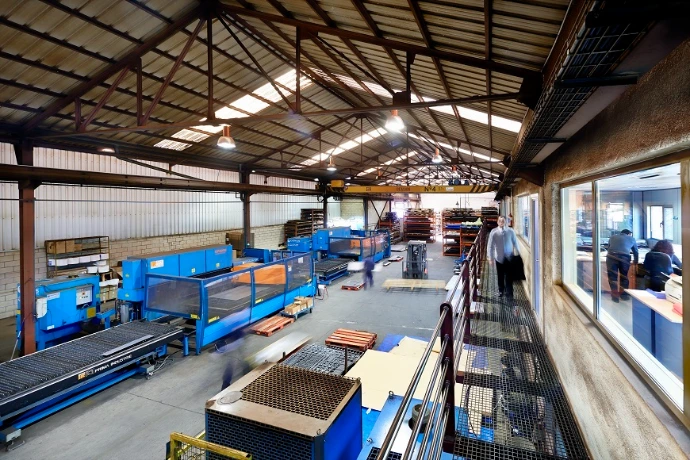
Hybrid automation and process optimization
The system decides the best cutting method for each part
One of the main challenges in combined machines is deciding which process to use for each geometry. Advanced software evaluates complexity, tolerances, speed, and cost per operation. It assigns each feature to punching or laser cutting accordingly. This reduces manual decisions, shortens programming time, and improves machine performance.
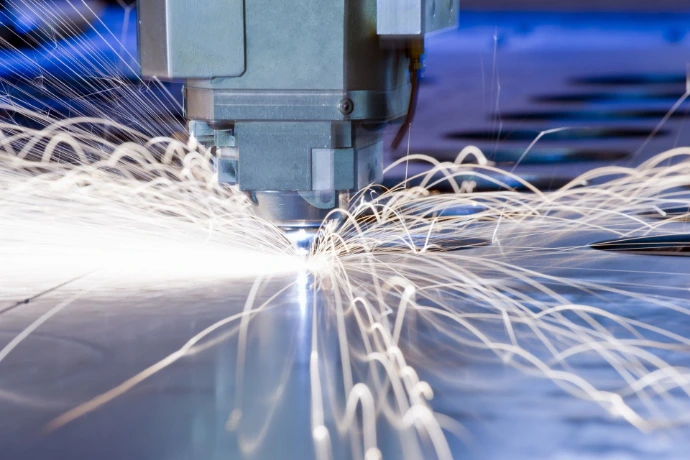
Unified control of turrets, tools, and laser heads
All operations managed from one system
Controlling multiple punching turrets, drilling or tapping stations, and laser heads from a single platform is essential to avoid errors and downtime. The software must take into account the number of available tools, intelligent assignment according to the type of operation, such as punching, milling or marking, and synchronization with the machine axes. It should also support zone nesting, axis-based machining sequences and pre-piercing, which is especially useful in mixed-operation environments.
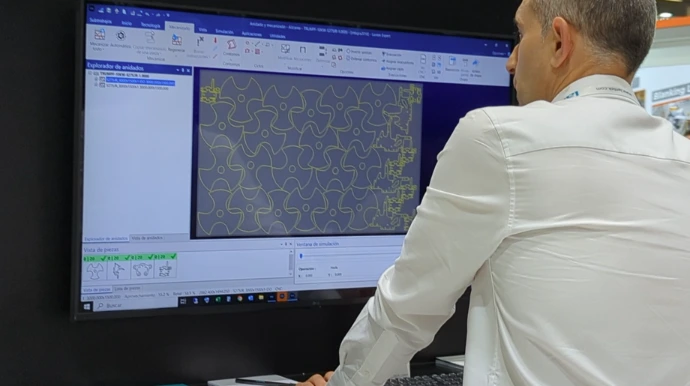
3D simulation and collision prevention
Validate machining before production
Combined machines involve complex tool paths and multiple interactions. The software must provide a complete 3D simulation to validate cutting, drilling, marking, and part evacuation.
This helps detect potential collisions between heads, clamps, or supports before production starts. It reduces scrap, avoids machine damage, and improves operator confidence.
The same approach applies to processes such as laser cutting and waterjet cutting.
Prevents errors and unexpected stops
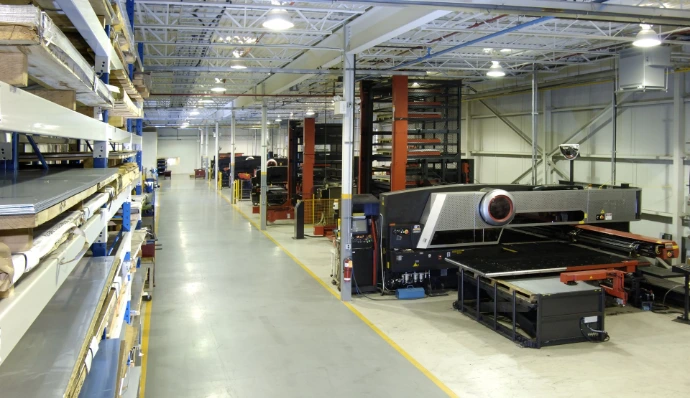
Integration with design, production, and traceability
From CAD to delivery with full process control
The programming environment must connect with CAD systems to import complex geometries without loss. It must also integrate with MES, ERP, or PDM systems to manage work orders, check material availability, and track each part.
This is required in project-based or serial production where strict process control is needed.
Connect your combined machine to the entire production
Scalability and compatibility with different technologies
Support for evolving manufacturing environments
A production setup can change over time. A system may start with punch and laser, then add shearing or automation. Software must support new technologies, machine brands,
Lantek solutions for combined machines
Two modules focused on sheet metal processing
CAD/CAM for sheet metal cutting with combined machines
Control, precision, and production efficiency
For sheet metal cutting with combined machines, CAD/CAM software defines productivity and cost control. It interprets CAD designs, assigns punching or cutting operations, and defines machining sequences.
It also manages mixed nesting, grouping operations to reduce machine movement and improve material usage.
The nesting engine uses Assembly to Nesting (A2N) to convert 3D assemblies into parts ready for cutting.
CAD/CAM for cutting tubes and profiles in combined machines
Control of complex 3D geometries
When working with tubes or structural profiles, CNC programming becomes more complex. CAD/CAM software must interpret 3D geometries and generate machining paths for each process.
It imports designs from 3D CAD, identifies punching, cutting, or drilling areas, and organizes operations efficiently.
These capabilities are available in solutions such as Lantek Flex3D Steelwork, designed for structural cutting of tubes and profiles.
Success stories in process optimization with combined machines
Frequently Asked Questions
These are some common questions about our company.
A combined machine integrates technologies such as punching, laser cutting, and shearing in one system. It allows switching between operations without changing machines, reducing handling time and errors.
CAD/CAM software defines how operations are executed. It automates tool selection, manages mixed tool paths, optimizes combined nesting, and generates CNC programs. This improves material usage and production time.
The software assigns each operation to the most suitable technology.
This improves speed and tool life.
Lantek Expert generates hybrid tool paths automatically.
Connection with MES enables planning, monitoring, and performance analysis.
ERP manages orders and materials.
Together, they provide full traceability.
Yes. CAD/CAM software identifies punching, cutting, and marking areas and organizes operations. 3D simulation checks for collisions and ensures quality.
Combined nesting groups punching, laser, and shearing operations in one layout. It reduces waste, setup time, and machine stops.
Yes. It connects design, production, and management systems. Orders are received from ERP, production is tracked in MES, and stock is updated automatically.
Yes. Modular systems allow adding punching, marking, drilling, or cutting functions without replacing the platform.
It depends on the provider. Modular systems allow activating functions and adding machines as needed.
It maps tools automatically and manages tool libraries. It selects tools based on the operation and reduces unnecessary changes.
Yes. Advanced systems support tubes and profiles with 3D programming, contour detection, beveling, and multi-axis machining.
Look for providers that offer training, remote support, updates, and documentation to ensure correct use of the system.