Sheet metal software for heavy fabrication and HVAC manufacturing
From tanks and pressure vessels to HVAC duct systems
Challenges in sheet metal fabrication and pressure vessel manufacturing
Sheet metal fabrication includes the manufacturing of boilers, pressure vessels, tanks, heat exchangers, and large industrial structures, as well as HVAC ducts, air handling units, and ventilation systems.
This sector combines different production environments. Heavy fabrication focuses on thick plate processing and large-scale structures for industrial projects. Light fabrication, especially linked to HVAC duct manufacturing, focuses on the production of lighter, repetitive sheet metal components. Each environment requires strict control of safety, precision, and costs. In all cases, manufacturers must comply with international standards and manage high-value materials with full part traceability. Regulatory compliance and pressure vessel certifications.
Pressure equipment must comply with standards such as ASME, PED, or EN. This requires full traceability of each part, weld, and inspection process. It ensures audit readiness and certification in sectors such as energy, oil and gas, and petrochemicals.

Manufacturing of large-format sheet metal structures
Storage tanks, boilers, and pressure vessels require processing thick plates and handling large dimensions. This demands suitable cutting machines, lifting systems, and precise logistics for transport and assembly.

Digital control of welding and inspections
Each weld must pass inspections such as radiography, ultrasound, or pressure testing. Digital recording of welding data and inspections ensures reliability and reduces operational risk.

Energy efficiency and HVAC manufacturing requirements
In HVAC duct manufacturing, systems must comply with energy efficiency and environmental regulations. Digital tools help reduce material waste, improve airflow design, and support compliance with building standards.

Energy efficiency and HVAC regulations
In light metalwork for ventilation and air conditioning, systems must meet energy efficiency and environmental standards. Digitalization helps reduce consumption and comply with sustainability regulations..

Optimization of high-cost materials
Stainless steels, special alloys, and technical insulation carry a high cost. Maximizing the yield of every sheet through advanced nesting and remnant management is essential to improving margins.

Project planning and delivery control
Heavy fabrication projects often have long execution cycles, while HVAC manufacturing requires short delivery times. Digital production planning and shop floor control help manage both scenarios and reduce delays and cost deviations.
Software for sheet metal fabrication and HVAC manufacturers
The sheet metal industry includes companies with very different production models. Some focus on heavy fabrication with long, regulated projects. Others specialize in HVAC duct manufacturing with higher volumes and faster turnaround times.
Real-time shop floor tracking with MES
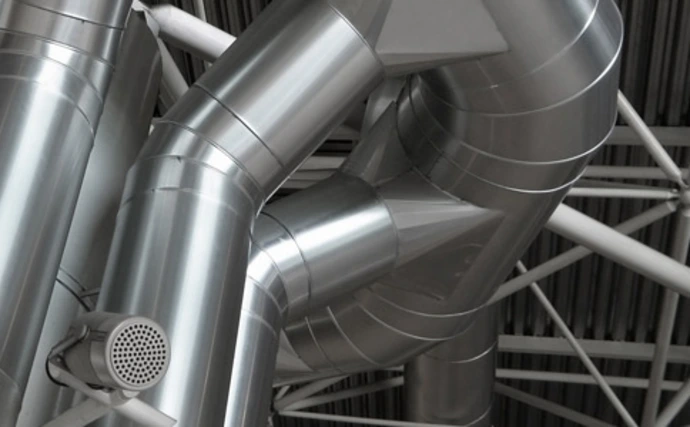
Full part traceability must be ensured from cutting to welding and assembly. Shop floor monitoring helps detect deviations early and maintain delivery schedules.
Software for HVAC duct design and tank development
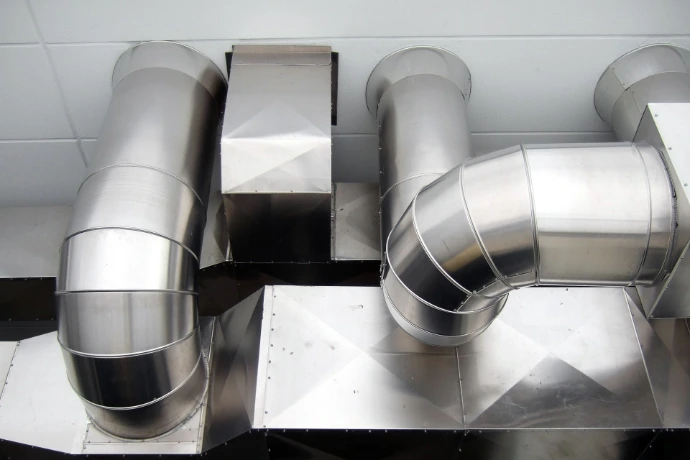
Essential for HVAC duct fabrication and light sheet metal production. These tools automatically calculate duct developments, elbows, and transitions, reducing design time and errors. They integrate with 2D CAD systems for fast geometry updates.
Document management and regulatory compliance
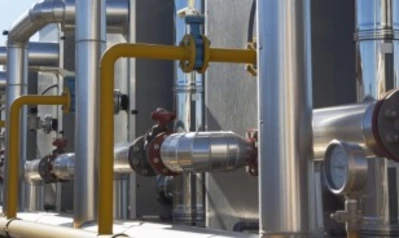
Digital records for each part, weld, and quality test ensure compliance with standards such as ASME or PED. This documentation simplifies audits and supports quality control processes.
Sheet metal nesting and material management
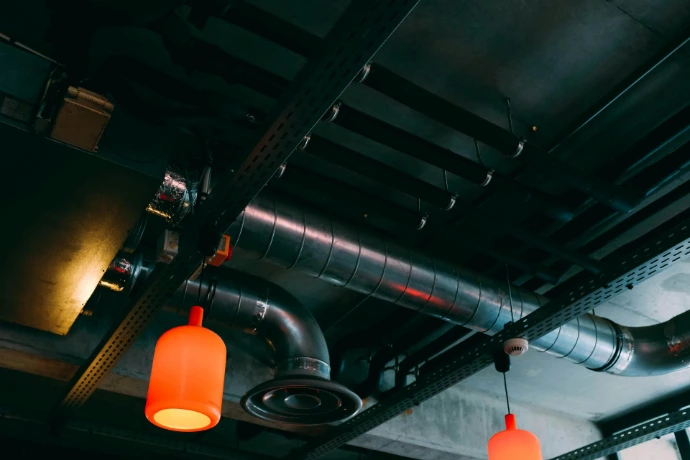
Optimizing sheet metal usage is critical, especially for expensive materials and thick plates. The system must support automatic nesting, scrap reuse, and material tracking by batch or project.
ERP connection for production planning and cost control
Manufacturing software must connect purchasing, inventory, and production. This enables accurate planning of long fabrication projects and supports fast deliveries in HVAC installations.
Digital solutions for sheet metal fabrication
Technology designed for industrial environments where precision, traceability, and production control are essential
With more than 40 years of experience working with sheet metal manufacturers, heavy fabrication companies, and HVAC producers, Lantek provides a modular platform adapted to different production environments.
CAD/CAM software for sheet metal fabrication
From large pressure vessel components to HVAC ducts, the software imports CAD drawings, generates flat patterns, and creates CNC cutting programs for different cutting technologies.
Lantek Expert Duct for HVAC duct fabrication
Widely used in HVAC manufacturing, this module automatically calculates duct developments, reduces preparation time, and ensures accurate installation on site.

MES software for real-time production control
Provides full traceability of manufacturing orders, from cutting to welding and assembly. This visibility supports delivery reliability in complex fabrication projects.

Industrial ERP for manufacturing planning and cost control
Manages costs, purchasing, inventory, and suppliers. In heavy fabrication, it supports long and complex projects. In HVAC manufacturing, it helps meet short delivery times.
Sheet metal cutting technologies used in fabrication and HVAC
Sheet metal fabrication combines high-capacity processes with precision cutting technologies, adapted to both large industrial structures and HVAC component production.
Laser cutting for sheet metal and HVAC components
Used in light fabrication where precision and surface quality are critical. It enables complex geometries, fine details, and reduced rework.
Oxy-fuel cutting for thick plate fabrication
Used for cutting thick plates in pressure vessels, tanks, and structural components. Suitable for high-thickness applications and weld preparation.
Waterjet cutting for heat-sensitive materials
Ideal for materials that cannot be affected by heat. It avoids thermal deformation and preserves mechanical properties.
Plasma cutting for structural sheet metal parts
Used in heavy fabrication for carbon and stainless steel. Provides fast cutting with good quality for structural components.
CNC punching for perforated sheet metal parts
Used for flanges, panels, and HVAC components with multiple perforations. Allows punching, marking, and light forming in a single process.
CNC bending for sheet metal parts
Essential for ducts, pressure vessel components, and structural parts. Ensures repeatability and accuracy in cylindrical and angular shapes.
Success Stories: Heavy Fabrication & HVAC
Frequently asked questions about HVAC software (FAQs)
Manufacturing tanks, pressure vessels, and heat exchangers requires CAD/CAM software capable of importing 2D drawings and 3D models, generating flat patterns, and programming different cutting technologies. It must also support thick plates, bevel cutting, and welding preparation.
In regulated environments such as ASME or PED, the software must include document traceability and project control. Solutions such as Lantek Expert Duct support these requirements within sheet metal fabrication workflows.
Traceability links each part to its material batch, certification, welder, procedure, and inspection results. Without a structured system, this information is often scattered across documents and spreadsheets.
A digital environment connects each operation to the project and maintains a complete audit trail. In systems like Lantek MES, this traceability is managed from cutting to final assembly.
Projects require tracking materials, cutting time, welding hours, and assembly by project or contract. Without real data, margins are estimated and deviations are detected too late.
An integrated system compares planned versus actual costs at each stage, linking shop floor data with financial control.
Welding control must record the joint, procedure (WPS), operator, and inspection results such as radiography or ultrasound.
Digital systems reduce risk, simplify audits, and ensure compliance. This information can be integrated into production workflows with platforms like Lantek.
HVAC duct manufacturing requires software that automatically calculates duct developments, elbows, transitions, and custom geometries. Accuracy is critical to avoid adjustments during installation.
These systems integrate with CAD and generate CNC cutting programs directly. Solutions such as Lantek Expert Duct are designed for this type of production.
Optimization depends on automatic nesting that considers thickness, available materials, and production priorities. Small improvements in repetitive production generate significant cost savings.
Scrap management also reduces long-term costs. CAD/CAM systems for sheet metal, such as Lantek nesting, integrate this functionality into daily workflows.
Manual quoting from drawings is slow and error-prone. Software can calculate material usage, processing times, and operations automatically based on geometry.
This improves consistency between quotes and actual production, especially in environments with high order volumes.
Yes. ERP systems manage finance, purchasing, and accounting, while production software manages planning, scheduling, and shop floor data.
Integration avoids duplication and ensures consistency between production and business processes. Lantek ERP
acts as the technical layer for manufacturing.
The process usually starts by connecting CAD/CAM and cutting to improve material usage and reduce errors. Then, companies add shop floor data capture, traceability, and cost control.
A phased approach avoids disruption. Modular systems such as Lantek support gradual implementation.
Sheet metal manufacturing requires specific capabilities such as flat pattern development, cutting of thick materials, welding control, and compliance management.
Generic software manages business processes but does not address these technical needs.
Specialized software includes CAD/CAM, nesting, production planning, and traceability tailored to sheet metal fabrication. It complements ERP systems and manages the core of production.
It is a module for HVAC duct fabrication that automatically calculates duct developments. It reduces design time, improves material usage, and ensures accurate installation.