A2N: Assembly to Nesting
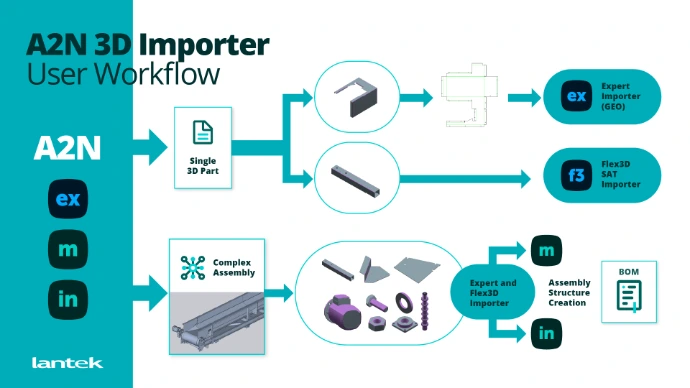
Import, process, and convert 3D CAD assemblies into manufacturing-ready data. Lantek Assembly to Nesting (A2N) enables the transformation of 3D designs into production workflows, connecting design, CAD/CAM, and shop floor operations. It is designed for sheet metal manufacturers working with multiple CAD formats who need consistency from engineering to cutting.
Automated and accurate 3D import for sheet metal manufacturing
A2N imports standard 3D CAD files and converts them into parts ready for nesting, quoting, and production.
Assembly to Nesting capabilities include:
- Automatic detection of materials and assembly structures
- Accurate calculation.
- Recognition of complex geometries without manual intervention.
The solution is part of the Lantek software ecosystem and connects with CAD/CAM, MES, and ERP modules such as Lantek Expert, Lantek Flex3D, Lantek Bend, and Lantek Integra.
What problems does this technology solve?
Many workshops spend time correcting incompatible files, requesting specific formats, or manually unfolding parts. These tasks increase lead times, introduce errors, and generate hidden costs. A2N removes these inefficiencies by automating the import and preparation of 3D assemblies, ensuring a consistent workflow from design to production.
Incompatibilities between design systems
Different CAD environments complicate interoperability. A2N centralizes the import of multiple CAD formats within the Lantek platform, reducing dependence on external tools.
Manual rework and errors in unfolding
Traditional unfolding requires expertise and multiple manual steps. A2N automates this process using configurable parameters such as DIN standards, K-factor, and historical production data.
Disconnection between engineering and production
Data related to materials, geometry, and structure is often lost between departments. A2N maintains data continuity from the 3D model to cutting, including bending lines, markings, and material assignment.
Hidden costs due to inefficiencies
Manual preparation, errors, and lack of traceability affect profitability. A2N reduces preparation time and improves accuracy in quoting and production planning.
Technical and operational advantages
Accurate and automated data input improves the entire manufacturing process. A2N reduces preparation time in the technical office and ensures consistent production results.

Native 3D import
Supports major 3D CAD formats such as STEP, SolidWorks®, Solid Edge™, CATIA®, Inventor®, among others

Automated unfolding
Identifies bends, calculates deductions, and validates geometry for cutting or punching

Structural recognition
Detects materials, subassemblies, profiles, tubes, and part types. Automatically generates bill of materials (BOM)

Detection of industrial geometries
Recognizes chamfers (V, X, Y, K), bending lines, cutting features, grooves, and machining requirements

High performance with large assemblies
Processes assemblies with dozens or hundreds of parts in seconds

Full connectivity
Works with Lantek Expert, Flex3D, Bend, Integra, and iQuoting to support the complete CAD–CAM–MES–ERP workflow
Where A2N fits within the Lantek ecosystem
A2N is part of an integrated sheet metal software environment. It connects design data with manufacturing processes, ensuring traceability and continuity across CAD/CAM, MES, and ERP systems.

Lantek Expert
The CAD/CAM nesting engine uses parts generated by A2N directly. This ensures a continuous workflow from 3D design to nesting without manual intervention, reducing errors and preparation time.
Lantek Flex3D Addins
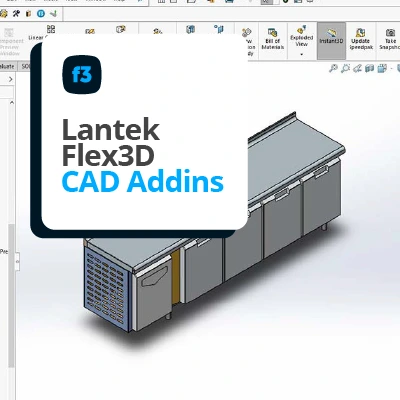
Extends CAD integration capabilities by enabling full assembly import from systems such as SolidWorks® and Inventor®. Allows users to work with complete assemblies without prior disassembly.

Lantek Integra Quotes
Provides accurate data on materials, geometry, and structure for faster and more reliable quoting. Reduces quoting time and improves cost estimation accuracy.
Lantek Bend
Validates unfolded parts for bending operations. Interprets bending lines, calculates tooling, and simulates collisions to prevent production errors.
Automation is a requirement for modern manufacturing
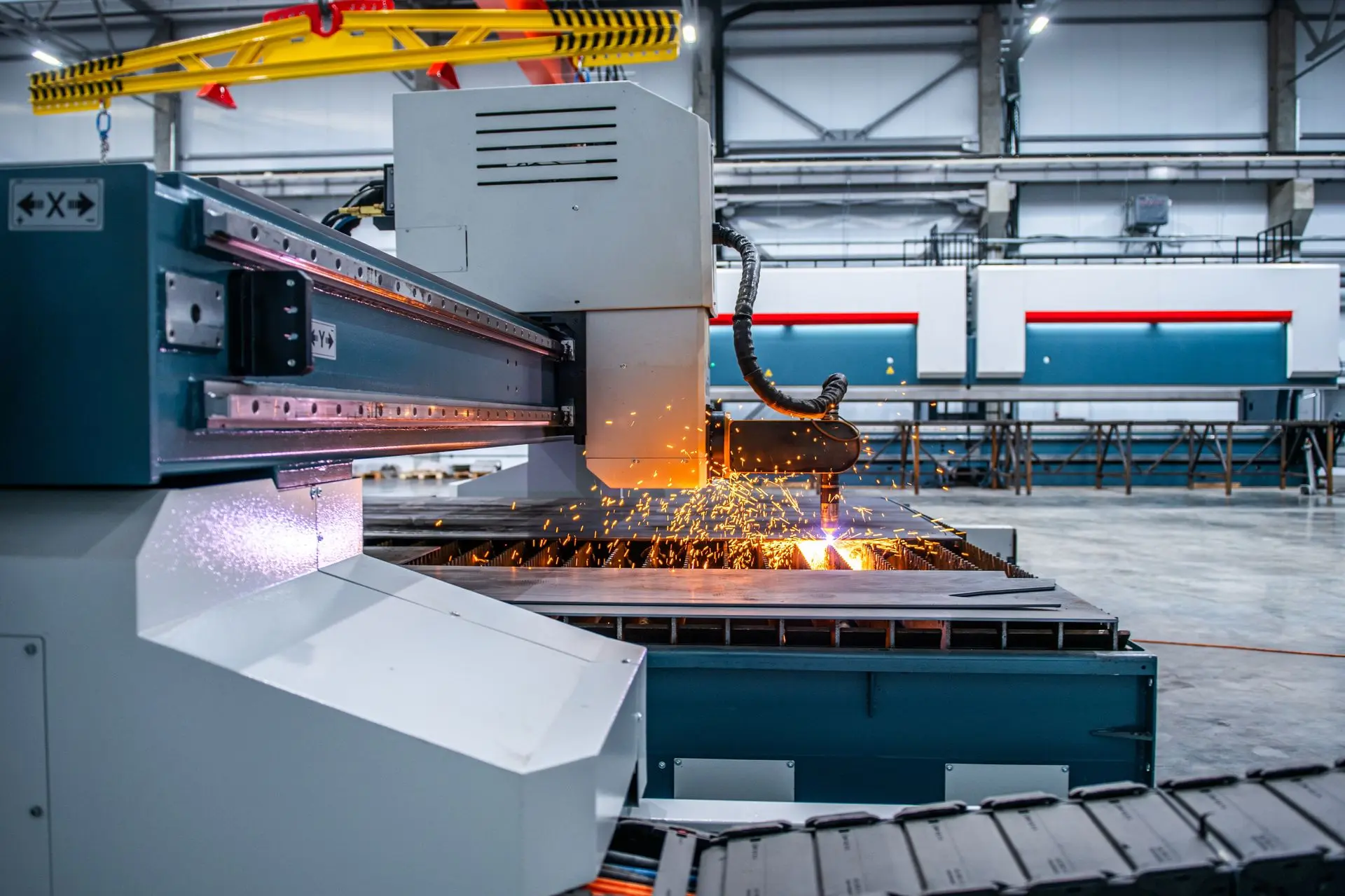
Short delivery times, multiple CAD formats, and the need to avoid errors make manual processes unsustainable. A2N automates the preparation of 3D assemblies and connects engineering directly with production, reducing intermediate steps and improving workflow consistency.
Frequently Asked Questions (FAQs)
No. A2N does not design parts. It interprets 3D CAD assemblies and prepares them for manufacturing without manual conversion.
Traditional nesting works at sheet level. A2N works at assembly level, reducing material changes and improving planning. It also allows simultaneous optimization of parts from multiple orders.
No. It operates within the Lantek environment and follows the same workflow logic used in other modules.
STEP, SolidWorks®, CATIA®, Inventor®, Solid Edge™, and other and other standard industry formats.
A2N can detect subsets, decompose structures, and recognize parts even in complex or partially defined models.
Yes, provided they are already connected to Lantek Expert or Flex3D. A2N operates in the CAD to CAM stage and maintains existing programming workflows.
No. A2N is an import and preparation module that complements CAD/CAM, MES, and ERP systems within the Lantek suite.
Savings depend on workload and assembly complexity. Most companies experience reduced preparation time, fewer errors, and lower material waste.
It connects with Lantek modules such as Expert, Flex3D, Bend, and Integra, ensuring continuity from design to manufacturing without disrupting existing workflows.
Yes. Existing 3D CAD files can be imported and processed in the same way as new projects.
A2N supports multiple formats, eliminating the need for additional software licenses for file conversion.
The system processes large assemblies by identifying subassemblies and automatically generating individual parts for manufacturing.
Yes. Supports standard methods such as DIN and K-factor, as well as company-specific parameters based on production data.
A2N identifies materials, subassemblies, and bending data, generating BOMs and ensuring traceability from CAD design to production.
Implementation is fast, as A2N integrates into the existing Lantek environment with minimal configuration.