Software for manufacturing aerospace components
Metal fabrication for the aerospace and auxiliary industry
Metal technology for sectors where error is not tolerated. From boarding bridges to transport structures, every part matters.
Aerospace auxiliary industry: manufacturing challenges and technical requirements
Ladders, telescopic boarding bridges, frames, structural supports.
The manufacturing of aerospace components requires tight tolerances, advanced materials, and strict regulatory compliance. From metal structures and frames to boarding systems, supports, housings, and auxiliary equipment, each part must be manufactured under full control.
Digitalization in the aerospace sector is not optional. It supports traceability, quality control, and compliance in environments with no margin for error.
Key challenges in aerospace manufacturing
Aerospace manufacturing requires meeting technical, regulatory, and traceability standards that exceed most industrial sectors. Each part must be produced with tight tolerances, strict documentation control, and full visibility from design to final assembly.

Advanced engineering and complex geometries
Manufacturers work with 3D CAD models of high complexity in aluminum, titanium, and composite materials. The transition from engineering to production must avoid data loss and ensure precise conversion into cutting and machining paths.

Strict regulations and continuous audits
Each component must be identified from raw material batch to final assembly. It is necessary to record drawing, version, operator, machine, and work order to meet audit and validation requirements.

Extreme quality control
Production takes place in controlled environments with strict thermal and structural conditions. Systems must allow real-time monitoring and continuous process recording to prevent deviations.

Project-based production
Aerospace manufacturing is not repetitive. Each assembly belongs to a structured program with critical deadlines and penalties for delays. It requires phase tracking, cost control and full visibility of progress.

High-value materials
Titanium, aerospace aluminum, and technical composites require strict material usage control to maintain margins.

Multi-technology environments
Laser, waterjet, plasma, milling, and hybrid processes coexist in the same plant. Digital coordination is required.
What should aerospace manufacturing software include?
Scalability and operational stability
Grows without losing control.
- Designed to manage multiple production sites and external suppliers.
- Supports growth without compromising traceability or reliability.
- Handles complex flows, concurrent production, and on-demand manufacturing.
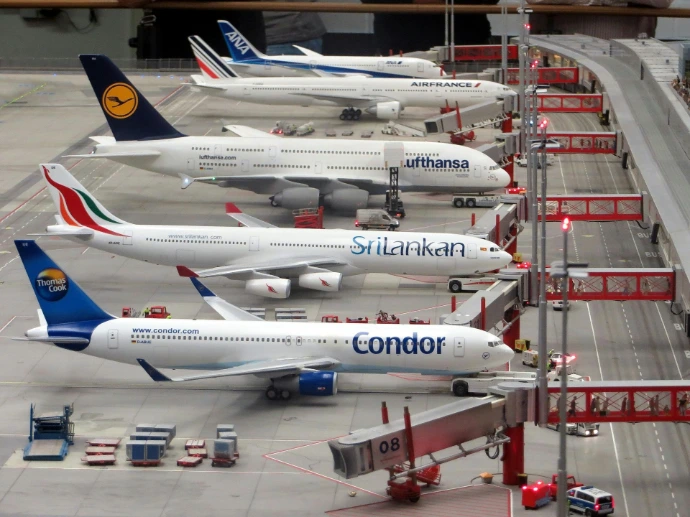
Project-based planning
Organizes by modules, phases, and deliveries.
- Suitable for non-repetitive and project-based production.
- Provides visibility by phase, margin control, and bottleneck anticipation.
- Designed for environments with strict delivery deadlines.
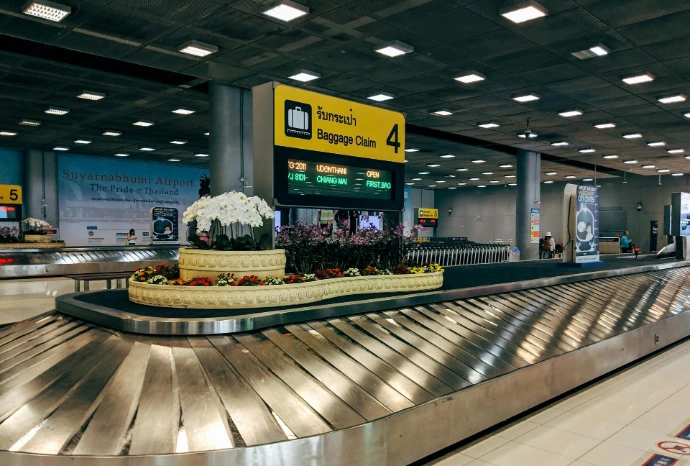
Real-time unit traceability
Never lose track.
- Tracks part, drawing, order, operator, machine, and status.
- Centralized and auditable information.
-
Supports compliance with AS9100.EN9100.
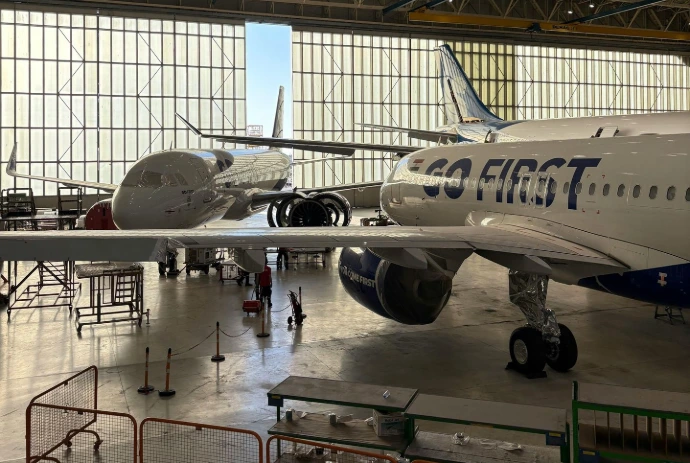

Advanced CAD/CAM for complex geometries
From 3D to cutting with precision.
- Imports files from CATIA, SolidWorks, NX, Inventor, and others.
- Interprets complex geometries and generates accurate toolpaths.
- Adapts to materials such as titanium and composites.
Support for multiple manufacturing technologies
Coordinates cutting, machining, and more.
- Supports laser, plasma, waterjet, milling, and hybrid processes.
- Synchronizes multiple processes from a single platform.
- Suitable for plants with mixed technologies and materials.
Integration with ERP, MES, PLM, and quality systems
Quality requires connection across systems.
- Continuous data flow from engineering to the shop floor.
- Connects with enterprise systems to avoid data silos
- Compatible with aerospace IT environments and standards
Digital solutions for aerospace manufacturers
Process optimization in aerospace auxiliary manufacturing and industrial logistics.
Solutions support every phase of the process, from CAD design to final assembly. They ensure traceability, operational control, and consistency in execution.

Intelligent nesting for raw material usage
Optimizes sheet metal without compromising quality.
- Automatic nesting for aluminum, titanium, and composites.
- Reduces waste and supports certification requirements.
- Adapts cutting strategies to complex geometries.
Parametric design for aerospace structures
Complex geometries managed efficiently.
- Models profiles, housings, and structural components.
- Handles variants without redesign from scratch.
- Connects with CAD/CAM for direct manufacturing.

Modular production and real-time traceability
Phase-by-phase control.
- Tracks progress across sections such as beams, panels, and supports.
- Identifies bottlenecks and ensures delivery deadlines.
- Maintains unit traceability for each component.

Project-based industrial ERP
Orders, inventory, and costs under control.
- Manages orders, purchasing, materials, and costs.
- Links with project planning and execution.
- Supports multi-plant and supplier environments.

Operational efficiency analysis
Identify losses and deviations.
- Measures downtime, deviations, and bottlenecks.
- Analyzes performance by machine, operator, part, or project.
- Supports environments with strict delivery requirements.
Apply the right cutting technology for each material
Combined machines (punching + laser)
Flexibility for aerospace sheet metal fabrication.
Combined machines integrate punching and laser cutting in a single system, reducing machine changes and improving production flow in high-mix environments.
- Suitable for complex parts with multiple operations
- Reduce setup time and material handling.
- Suitable for parts with perforations, complex shapes, and cutting requirements.
- Improve efficiency in short runs and flexible production
- Direct CAD/CAM integration for better accuracy.
Laser cutting
Precision for aerospace sheet metal fabrication.
Laser cutting is widely used in aerospace sheet metal manufacturing due to its accuracy, repeatability, and compatibility with automated production environments.
- Suitable for complex parts with multiple operations.
- High precision and clean edges for structural components.
- Reduces production time and intermediate handling.
- Efficient in short runs and flexible production.
- Improves accuracy and reduces errors through CAD/CAM integration.
Waterjet cutting
Waterjet cutting is used when material properties must be preserved. It avoids heat-affected zones and maintains structural integrity.
- Suitable for titanium, aluminum, stainless steel, and composite materials.
- No thermal distortion or metallurgical changes.
- Ideal for critical components and sensitive materials.
- Reduces material waste
- Integrates with CAD/CAM and MES systems.
Plasma cutting
Efficiency for thicker sheet metal
Plasma cutting is used in aerospace for parts that require high productivity and controlled quality in medium-thickness materials.
- Suitable for steel and aluminum.
- Balanced cost and quality.
- Used for tooling and auxiliary structures.
- Improves productivity in fabrication processes.
- Connects with nesting and production control systems.
Aerospace and auxiliary manufacturing success stories
Frequently asked questions (FAQs)
These questions address the most common inquiries from companies in the sector.
Specialized software combines CAD/CAM, production management, and resource optimization.
Aerospace manufacturing requires converting complex 3D models into executable production processes while maintaining full traceability and document control.
By recording each part from raw material to final assembly.
The system must track batch, plan, engineering version, machine, operator, and production phase.
Through CAD/CAM solutions that can interpret complex geometries without manual reprocessing.
Direct connection between engineering and production reduces errors and speeds up program generation.
Through advanced nesting and control of the actual material consumption.
Small improvements in high-value materials have a strong financial impact.
Real-time visibility and structured control.
It monitors machines, orders, and times while maintaining records required for audits.
Yes, through planning systems connected to execution.
They allow production to be divided into modules and tracked by phase.
Yes. It must support multi-technology and multi-machine environments.
Aerospace plants require coordination across different processes from a single system.
By capturing real production data and tracking projects.
Key indicators include downtime, material usage, and deviations.
Because aerospace manufacturing requires specific capabilities such as nesting, multi-machine programming, traceability, and project control.By capturing real production data and tracking projects.