Energy manufacturing software for renewable energy and metal fabrication.
Software for renewable energy manufacturing, sheet metal fabrication, CAD/CAM, MES, and ERP integration
Energy manufacturing industry: challenges in metal fabrication and production control.
The energy industry brings together all the sectors responsible for generating, transforming, and distributing energy. It includes renewable energy such as solar, wind, hydro, geothermal, and biomass, as well as nuclear and hydrogen technologies.

Managing large-scale energy projects and complex production workflows
Projects such as wind farms, solar plants, or hydroelectric installations involve thousands of parts and multiple production phases. Coordinating deliveries and assembly is essential to avoid delays and cost deviations in EPC energy projects.

Full traceability in energy manufacturing and metal fabrication
Each structure, support, pipe, or casing must be identified and tracked across production. Traceability is required for audits, maintenance, and compliance with energy industry regulations.

Processing different materials, thicknesses, and metal types
From thin sheets used in solar structures to thick plates in wind towers or hydraulic components. Flexibility in multitechnology cutting is required to adapt to different materials and fabrication processes.

Manufacturing for extreme operating conditions in energy projects
Energy components must perform in demanding environments such as offshore wind, high-temperature geothermal plants, or nuclear facilities. Manufacturing quality and material control are critical..

Integration between engineering (CAD) and production (CAM and MES)
The CAD designs must be converted into cutting programs and manufacturing orders without errors. Integration between engineering and production reduces rework and improves delivery reliability.

Cost control and profitability in energy manufacturing projects
Energy projects involve high investment and long timelines. Controlling time, materials, and deviations is necessary to compare planned costs with actual production costs and maintain margins.
Types of renewable energy and manufacturing requirements for metal components
The manufacturing of energy components varies depending on the type of energy. Each sector requires different materials, tolerances, and production processes. Adapting CAD/CAM software, nesting, and production control to each case is essential.
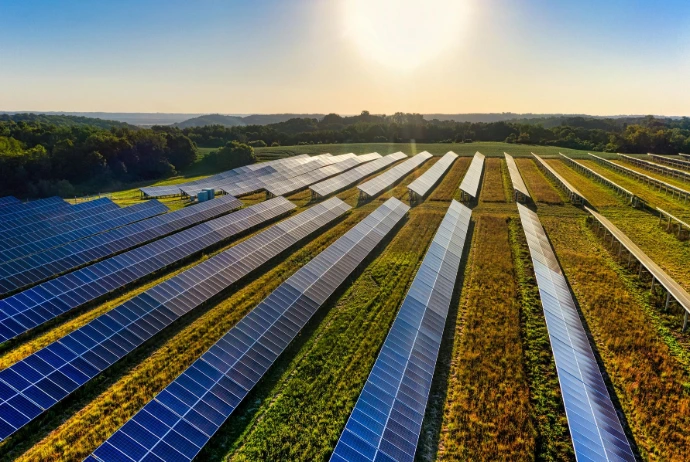
Solar energy manufacturing (photovoltaic structures and frames)
High volume. Constant precision. Controlled margins.
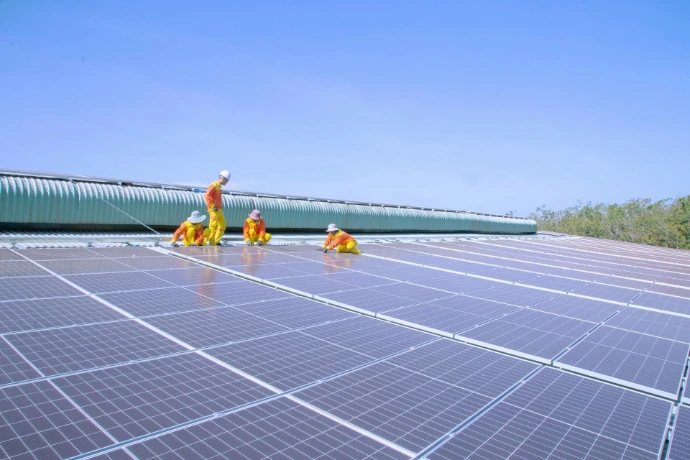
High-volume production of frames, supports, and mounting structures using nesting software, batch production, and material optimization. Precision and repeatability are required to maintain margins and ensure consistent quality in large production runs.
Wind energy manufacturing (onshore and offshore structures)
Giant structures. Zero errors. Phase traceability.
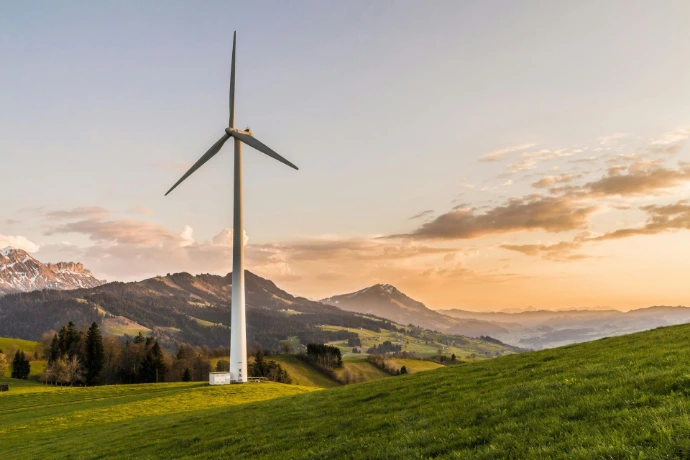
Production of towers, sections, and large metal structures using thick plate cutting, welding control, and full traceability. Offshore wind projects require stricter quality control, certification, and process documentation.
Hydraulic energy component manufacturing
Extreme resistance under constant pressure.
Components such as turbines, gates, and structural elements require high mechanical resistance, precision machining, and control of large formats for long-term operation under pressure.
Geothermal energy manufacturing processes
When the heat does not forgive.
Parts must withstand high temperatures, pressure, and corrosive environments. Material control, process stability, and full traceability are required to avoid failures.
Hydrogen energy manufacturing and pressure systems
Total safety. Absolute documentation.
Production of tanks, pipes, heat exchangers, and pressure systems with strict safety requirements. Full documentation, inspection control, and traceability are mandatory.
Nuclear energy manufacturing and compliance requirements
Nothing is improvised. Everything is documented.
Critical components with strict regulatory requirements. Full traceability, inspection control, and documentation are required to comply with audits and international standards.
Requirements for energy manufacturing software: CAD/CAM, MES, and ERP integration.
More than control: a complete view of the energy project.
Software for energy manufacturing must support sheet metal fabrication processes, production planning, and traceability across the entire lifecycle, from engineering to shopfloor execution.
CAD/CAM software for metal cutting and fabrication
Compatibility with 2D and 3D models to generate cutting programs, nesting, and manufacturing data directly from engineering designs, reducing manual work and errors.

Production planning and project management for energy manufacturing
Control of times, costs, and deviations at each stage of the project to ensure deadlines, resource allocation, and profitability.
Full traceability and compliance in energy production
Each part must be tracked. Traceability ensures compliance with standards, audits, certifications, and lifecycle control of components.
Scalable production management for multi-plant environments
Support for multiple plants, suppliers, and distributed manufacturing environments, ensuring centralized visibility and standardized processes.
Multi-technology and multi-machine compatibility in metal fabrication
All cutting and fabrication processes managed on a single platform, independent of machine type, cutting technology, or manufacturer.
Cost control, analytics, and production performance
Production data converted into strategic decisions to control margins, monitor performance, and improve operational efficiency. Cost control, analytics, and production performance.
Software solutions for renewable energy manufacturing and metal fabrication
Digital solutions connect engineering, production, and planning to control manufacturing processes, improve traceability, and ensure delivery compliance in energy projects.
CAD/CAM software for sheet metal cutting and nesting
Automatic preparation of parts from 2D and 3D models. Nesting optimized for large sheets and compatible with laser, plasma, oxy-fuel, waterjet, and punching technologies.

MES software for real-time production control in energy manufacturing
Real-time control of orders, materials, machines, and operators. Supports phase-based production, shopfloor visibility, and early detection of delays.

ERP software for energy manufacturing companies and project control
Planning and control of purchasing, inventory, production, and project costs across the entire organization, aligned with manufacturing data.
Traceability, quality control, and regulatory compliance
Each part is identified by batch, order, and phase. Ready for audits, certifications, and compliance with energy industry standards.
Cutting technologies and fabrication processes in energy manufacturing
Energy manufacturing combines multiple cutting and fabrication processes depending on material, thickness, and precision requirements. These processes must be managed together to ensure production control, cost efficiency, and delivery reliability.
Laser cutting for precision metal parts in energy manufacturing
Laser cutting is widely used in energy manufacturing for thin and medium thickness sheet metal parts that require high precision and repeatability. It is commonly applied in photovoltaic structures, electrical enclosures, brackets, and lightweight structural components. It provides clean edges, tight tolerances, and reduces the need for secondary operations such as machining or finishing. It is also suitable for automated production lines where consistency and speed are required.
Industrial shearing and sawing for material preparation
Shearing and sawing are used as initial processes to prepare raw material before cutting, machining, or forming operations. These processes are essential for handling large sheets, profiles, and bars, ensuring correct dimensions before entering downstream fabrication stages. They are commonly used in workshops that process structural components for energy projects.
Plasma cutting for medium and thick metal structures
Plasma cutting is one of the most widely used technologies in energy manufacturing for medium and thick plates in carbon steel, stainless steel, and aluminum. It offers a balance between speed, cost, and cut quality, making it suitable for structural components such as supports, frames, and sections used in wind towers and industrial installations. It is often used in high-productivity environments.
Oxy-fuel cutting for thick plate processing in heavy structures
Oxy-fuel cutting is used for very thick carbon steel plates, especially in heavy structures such as wind towers, large supports, and industrial equipment. It is slower than plasma or laser cutting but remains essential when working with extreme thicknesses where other technologies are not efficient. It is commonly used in large-scale fabrication environments.
Punching and forming processes in metal fabrication
Punching is used for high-volume production of sheet metal parts with holes, slots, and repetitive geometries. It is widely applied in components for solar structures, electrical cabinets, and lightweight assemblies. Combined with forming operations, it allows fast and cost-effective production with consistent quality across large batches.
Bending and forming operations for structural accuracy
Bending processes are used to achieve the final geometry of metal parts after cutting. These operations are critical to ensure dimensional accuracy, correct assembly, and proper fit between components. In energy manufacturing, bending is applied to structural elements, supports, and enclosures, reducing rework and improving assembly efficiency.
Waterjet cutting for heat-sensitive materials and composites
Waterjet cutting is used for materials that cannot be affected by heat, such as composites, insulation materials, and multilayer components. It avoids thermal distortion and preserves the mechanical properties of the material. It is commonly used in specific energy applications where material integrity is critical.
Success stories in energy manufacturing
Frequently Asked Questions (FAQs)
Manufacturers use industrial platforms that integrate CAD/CAM to manage design, sheet metal cutting, nesting, and production processes.
These solutions connect engineering with shopfloor execution and production planning. Solutions such as Lantek Expert (CAD/CAM), Lantek MES and Lantek Integra (industrial ERP) support energy manufacturing workflows from quoting to production control.
They are controlled through a system that imputes real costs by phase and by contract in real time.
EPC energy projects involve multiple phases, large structures, and complex supply chains. It is essential to compare the budgeted cost against the executed cost as the project progresses. Capturing data on materials, machine hours, and manufacturing times allows for detecting deviations before they affect the final margin.
Full traceability requires tracking materials, parts, welds, inspections, and operators across the entire production lifecycle. Each component must be linked to its batch, production order, and process history to ensure visibility.
This level of control is essential to comply with audits, certifications, and industry regulations, especially in sectors such as wind, nuclear, or hydrogen, where documentation and quality control are critical.
Full traceability requires tracking materials, parts, welds, inspections, and operators across the entire production lifecycle. Each component must be linked to its batch, production order, and process history to ensure visibility.
This level of control is essential to comply with audits, certifications, and industry regulations, especially in sectors such as wind, nuclear, or hydrogen, where documentation and quality control are critical.
Key performance indicators include OEE, material usage, production cost, machine utilization, and delivery deadlines. These KPIs provide visibility into production performance and efficiency.
Monitoring these metrics allows manufacturers to identify inefficiencies, optimize resource usage, and improve decision-making across production, planning, and cost control.
Material optimization is achieved through automatic nesting software that arranges parts efficiently on sheets based on geometry, thickness, and production priorities. This reduces scrap and improves yield.
Optimized nesting is especially important in energy manufacturing, where large plates and expensive materials are common. It helps reduce material costs and improve overall production efficiency.
Energy manufacturing often involves multiple plants, subcontractors, and suppliers working on different parts of the same project. This creates challenges in coordination and data consistency.
Centralizing production data and standardizing processes across locations allows manufacturers to maintain visibility, control progress, and ensure that all parts of the project stay aligned with deadlines.
Solar structures are typically produced using laser cutting or punching combined with CAD/CAM and nesting software. These technologies allow high-volume production with precision and repeatability.
The choice of technology depends on material thickness, production volume, and required tolerances, but both laser and punching are widely used for efficient manufacturing of photovoltaic components.
Quality control can be digitalized by integrating inspections, validations, and test results into the production system. This allows each part to be verified and documented throughout the process.
Digital quality control improves traceability, reduces manual errors, and simplifies audits by ensuring that all data is recorded and accessible across the production lifecycle.
ERP systems manage finance, purchasing, and high-level planning, but do not control shopfloor processes such as nesting, cutting, or machine programming. This creates gaps between planning and execution.
Specialized manufacturing software complements ERP by managing production operations, connecting machines, and providing real production data, which is essential for accurate control in energy manufacturing.