Shear cutting for sheet metal: what it is and how to optimize it.
Fast, cost-effective, and heat-free cutting for metal sheets.
What is industrial shear cutting?
Separating materials without heat or burrs
Industrial shear cutting is a mechanical process used to cut sheet metal without applying heat to the material. Unlike thermal cutting technologies such as laser or plasma, the shear separates the sheet using mechanical force between two blades. This avoids heat-affected zones and allows for fast and precise straight cuts.
This process is very common in steel service centers, boiler making, metal structure manufacturing, and sheet preparation before operations such as laser cutting or bending. Its main advantage is the high productivity in straight cuts, especially when working with large volumes of sheet metal or standard formats.
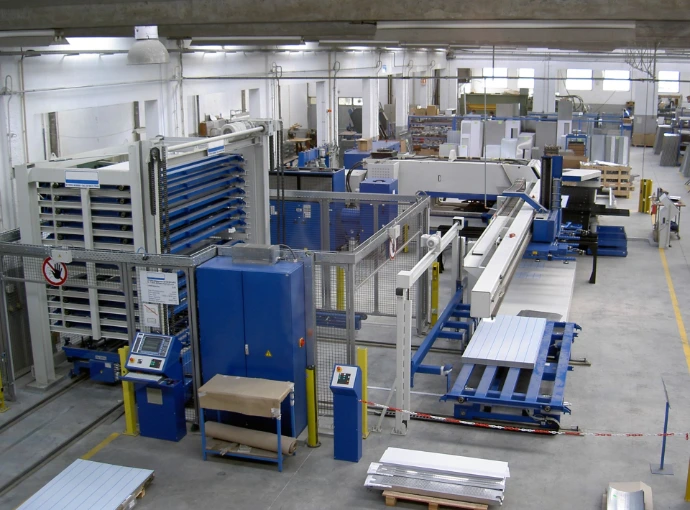
An industrial shear, typically hydraulic, operates with a movable upper blade that descends onto a fixed lower blade, producing the cut by shearing the material without melting or abrasion. Modern shears incorporate CNC control, programmable backstops, and automatic adjustment of the blade separation, enabling for repetitive cuts with high precision.
These machines can work with carbon steel, stainless steel, and aluminum, making it an efficient solution for cutting processes, and sheet metal preparation in the manufacturing environments.
Types of cutting with shears and saws
Choose according to material, production volume, and required precision. We inform you of the different cutting methods according to your manufacturing needs.
CNC hydraulic shear
The most common solution in industrial environments.
Allows cutting large format sheets with high repeatability and automatic positioning control.
Widely used in sheet processing centers and production lines.
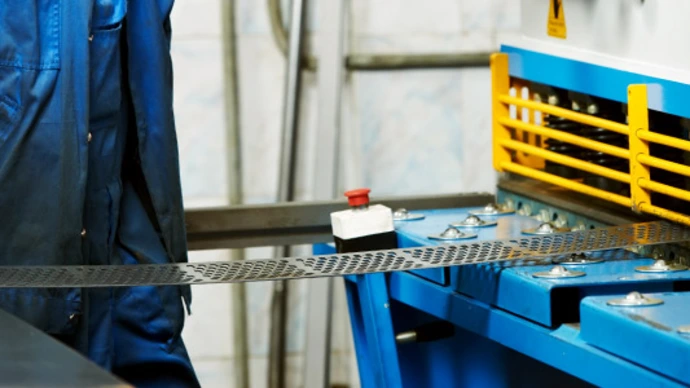
Guillotine shear
Uses a straight descending blade to perform linear cuts.
It is very common in:
boiler shops
sheet metal workshops
service centers
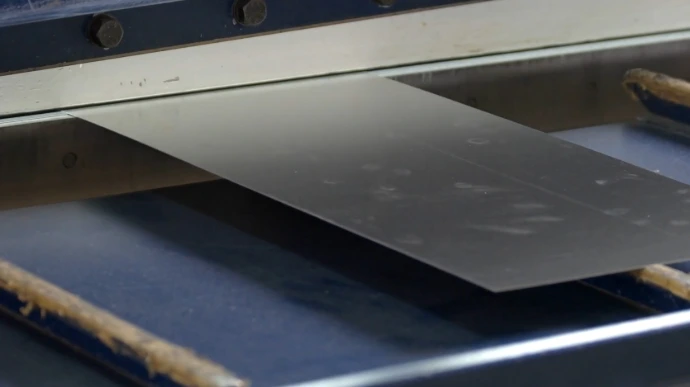
Swing beam shear
Uses a curved motion of the upper blade.
This system reduces cutting force and is suitable for medium thickness sheets.
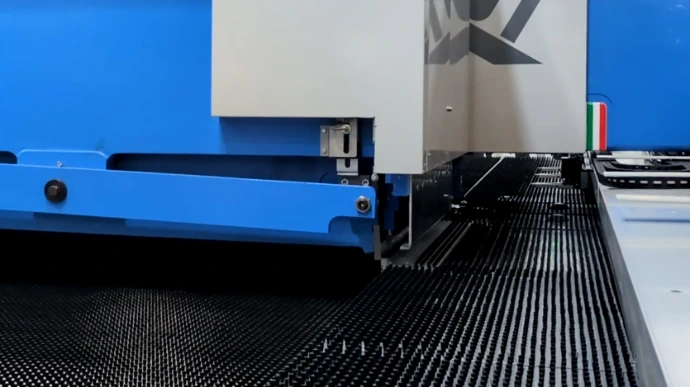
Shear integrated into punch presses
Some CNC punching machines incorporate shear modules to cut sheet metal directly at the same station.
This allows combining:
punching
marking
linear cutting
without moving the part to another machine.
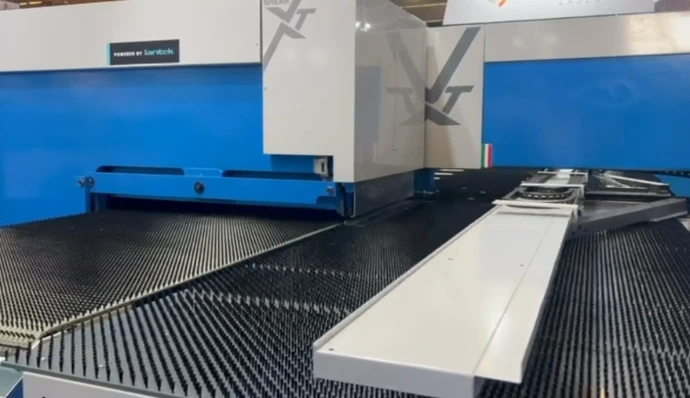
Software for shears: optimization of rectangular cutting and process management
Selecting software to optimize the sheet metal shear cutting involves more than task automation. The solution must be designed specifically for linear cutting processes in sheet metal, where the arrangement of rectangular parts, material utilization, and integration with other systems directly affect workshop productivity.
When evaluating a software for industrial shears, it is advisable to consider the following aspects.
Rectangular nesting for shears: maximize each sheet
Turn each cut into material savings
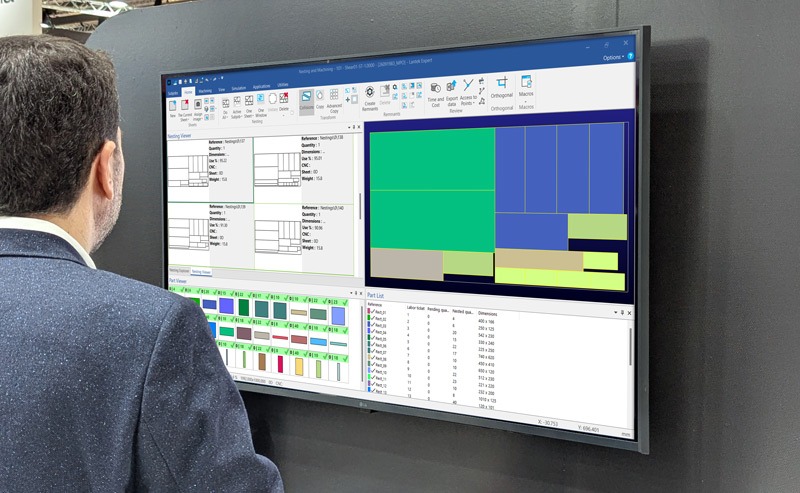
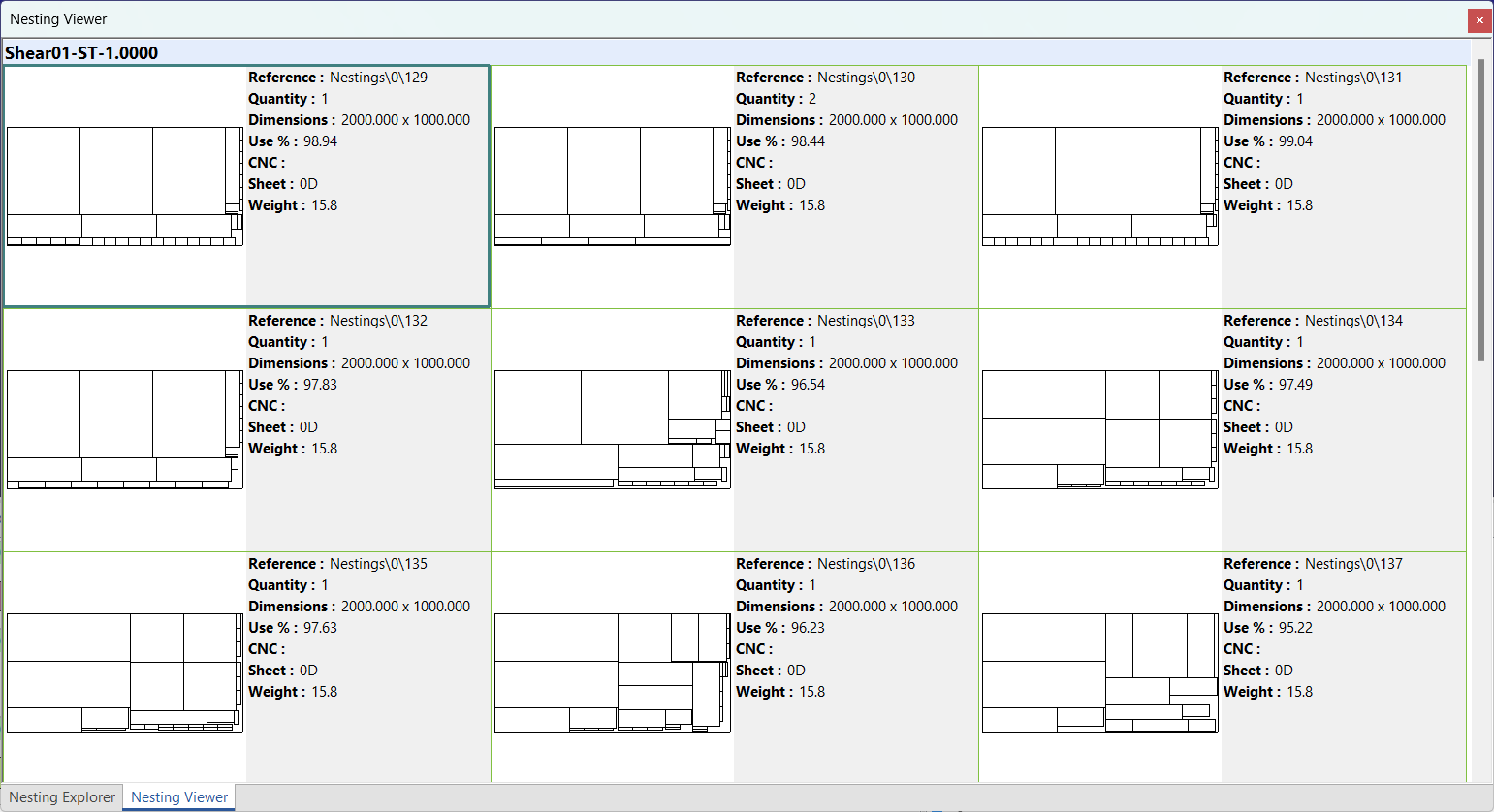
One of the most important aspects of software for shears is the ability to perform rectangular nesting or linear nesting, a method of optimization specifically designed to organize rectangular parts efficiently on sheet metal.
Unlike the nesting used in thermal cutting technologies such as laser or plasma cutting, shear cutting relies on straight and sequential cuts. So the software must organize the parts linearly to maximize material utilization.
An effective nesting system for shears allows:
reducing sheet waste
maximizing usable material length
minimizing sheet repositioning
speeding up job preparation
In intensive production environments, proper nesting optimization can generate significant savings in material consumption and preparation times.
Sheet and scrap management: reduce waste and control material
Every scrap matters in sheet metal processing
Material control is essential in any shearing process.
For this reason, the software should include tools to manage the stock of sheets and scraps, ensuring full use of available material.
An advanced system should allow:
registering available sheet formats in stock
storing scraps generated from previous jobs
reusing remnants in new production orders
tracking actual material consumption
This intelligent material management allows to reduce raw material costs and improve purchasing planning, which is especially important when working with large volumes of sheet metal.
Quick part input: prepare jobs in seconds
Less time preparing cuts, more time producing
In many workshops, shearing is used to quickly prepare material before other processes such as bending, welding, or machining.
Therefore, the software should support fast input of rectangular parts without without requiring full CAD design.
The best solutions include:
entering parts using dimension lists
using dedicated modules for rectangular parts
importing parts from CAD or ERP systems
This simplifies job preparation and allows operators to generate cutting plans in just a few minutes, even without advanced programming knowledge.
Machine constraint control: prevent production errors
Plan feasible cuts from the start
Each shear has physical limitations that must be considered when generating the cutting plans.
Specialized software should automatically take into account parameters such as:
maximum cutting length
maximum sheet thickness
minimum distance between cuts
machine-specific characteristics
This prevents the generation of cutting plans that are impossible to execute and reduces errors in the workshop.
Additionally, this control improves process safety and ensures that the generated nests are completely viable on the machine.
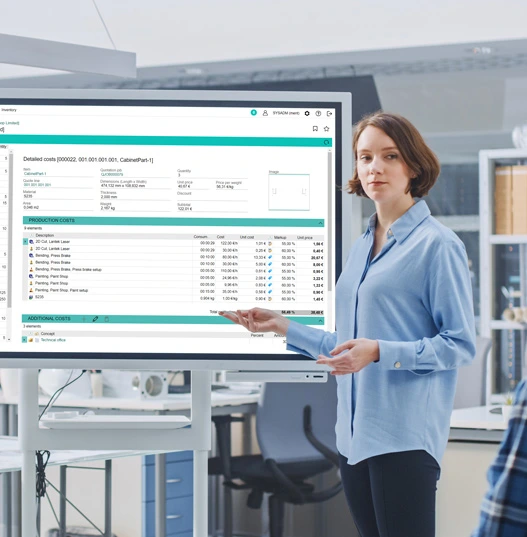
Integration with CAD, MES, and ERP systems: connect shear cutting with your digital production environment
From design to cutting without intermediate steps
In a modern industrial environment, shear software should not operate in isolation.
Integration with other systems allows connecting the cutting process with the rest of production, creating a continuous digital workflow.
Advanced solutions integrate with:
CAD/CAM, to import designs and parts lists
MES, to manage production orders and shop floor operations
ERP, for material planning and order management
Thanks to this integration, it is possible to:
link cutting with production orders
improve material traceability
support production planning
The result is a more connected, efficient, and controlled manufacturing process, where information flows between departments without errors or duplications.
Lantek offers
A specialized module for sheet metal shear cutting.
Lantek Expert Quattro: software for optimizing shear cutting
Lantek Expert Quattro, a specialized solution for optimizing rectangular cutting with shearing machines.
The system supports automatic nesting of multiple rectangular parts across different sheets, manages reusable scraps, and simplifies job preparation.
Among its main advantages are:
up to a 10% material savings through optimized nesting
automatic nesting in seconds
management of sheets and reusable scraps
fast part input with a rectangle editor
The system is designed for both manual and automatic shears, so it does not require CNC programming or post-processing.
If you want to know more details, you can visit the dedicated page for shearing cutting software with Lantek Expert Quattro.

Case studies in shear cutting process optimization
Frequently asked questions about shear cutting
We address some common questions you may have about our software.
Shear cutting software is used to plan and optimize the linear cutting of sheet metal. Its main function is to organize rectangular parts to maximize material use, generate efficient cutting sequences, and reduce errors during job preparation.
Additionally, this type of software can also integrate with CAD, ERP or MES systems.
Using specialized software for shears significantly improves the efficiency of the cutting process.
Among the main advantages are:
improved sheet utilization
reduced material waste
faster job preparation
fewer production errors
better control of sheets and scraps
In many cases, proper optimization of the cut can generate significant savings in material consumption.
The nesting for shear organizes rectangular parts on a sheet using linear cutting logic.
Unlike other cutting technologies, shear uses linear nesting, which distributes the pieces sequentially while respecting the straight cuts of the machine.
The goal is to reduce leftover scraps, minimize the number of sheets needed, and improve the efficiency of the cutting process.
Shear software is primarily designed for rectangular or square parts cut along straight lines.
It is commonly used to prepare sheets intended for subsequent processes such as:
bending
welding
machining
structural manufacturing
It is also common in steel service centers and metalworking shops.
Yes. Advanced shear software systems allow to record and manage scraps generated from previous jobs.
These scraps can be stored in the system and automatically reused in future cutting plans, improving material utilization and reducing sheet waste.
Not necessarily.
Many systems include specific tools to input parts using rectangular dimensions, without the need to design them beforehand in CAD software.
This allows operators or production managers to prepare cutting jobs quickly and easily.
Yes. Modern cutting optimization systems are usually integrated with ERP, MES, or CAD/CAM systems.
This integration allows for importing production orders, managing materials, and maintaining complete traceability of the cutting process within the company's production system.
Material utilization depends on several factors, including:
part layout on the sheet
scrap reuse
cutting sequence
part dimensions
Optimization software helps automatically calculate the best layout to reduce waste.
Shear is common in industries that work with flat metal sheets.
Some sectors where it is frequently used include:
boiler making
metal structures
steel service centers
machinery manufacturing
industrial vehicles
In these environments, the shear is often used to prepare material before subsequent processes.
To choose good software, it is important to evaluate whether the solution is specifically designed to optimize the linear cutting of sheet metal.
Some key features it should include are:
automatic optimization of rectangular nesting
management of sheets and scraps
control of machine limitations
fast input of parts
integration with CAD, ERP, or MES systems.
These functionalities allow for improved efficiency in the cutting process and optimize material usage.
Shear cutting is used for straight cuts in sheet metal without heat and is suitable for rectangular parts and pre-processing.
Laser cutting, on the other hand, uses thermal energy to make complex cuts and irregular geometries with great precision.
In general,
the shear cutting is faster and more economical for straight cuts
than the laser cutting is more flexible for complex shapes
Both processes are often used together in the same production environment.
Material savings in shear cutting processes depend on factors such as the type of parts, the sheet format used, and the planning method.
When cutting plans are made manually, it is common to generate unnecessary sheet waste or for scraps not to be reused properly, which increases material consumption.
By using specialized software to optimize the rectangular nesting in shear cutting, it is possible to:
reduce the number of sheets needed
better utilize available scraps
decrease material waste
In many cases, optimized planning can result in up to a 10% material savings thanks to optimized nesting, in addition to improving process efficiency and reducing costs associated with sheet consumption.