Industrial laser cutting: precision and productivity for sheet metal manufacturing
Cutting speed and quality depend on using laser technology with the right software
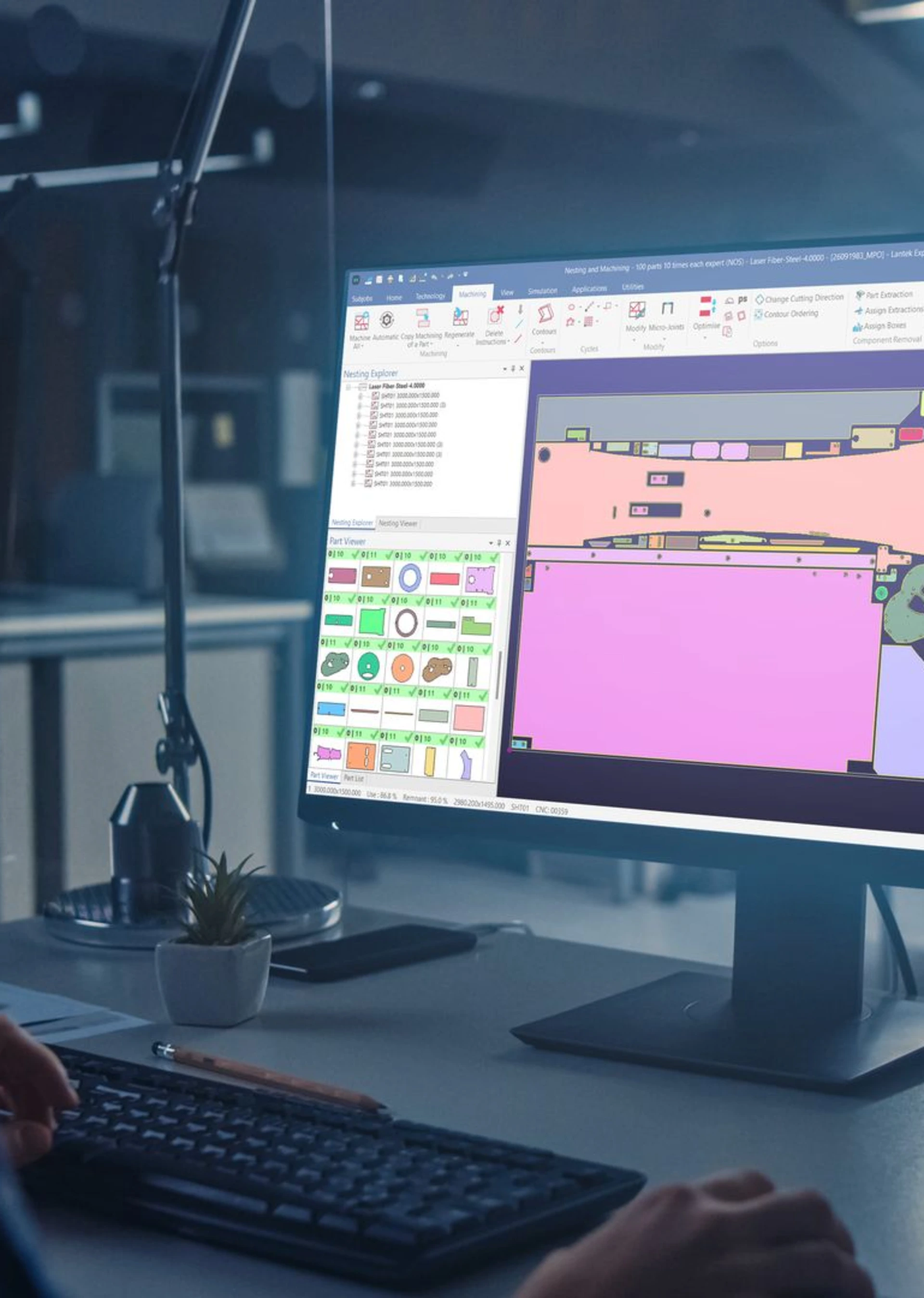
What is laser cutting and how is it used in industrial production
Beam, assist gas, and synchronized motion for precise cuts
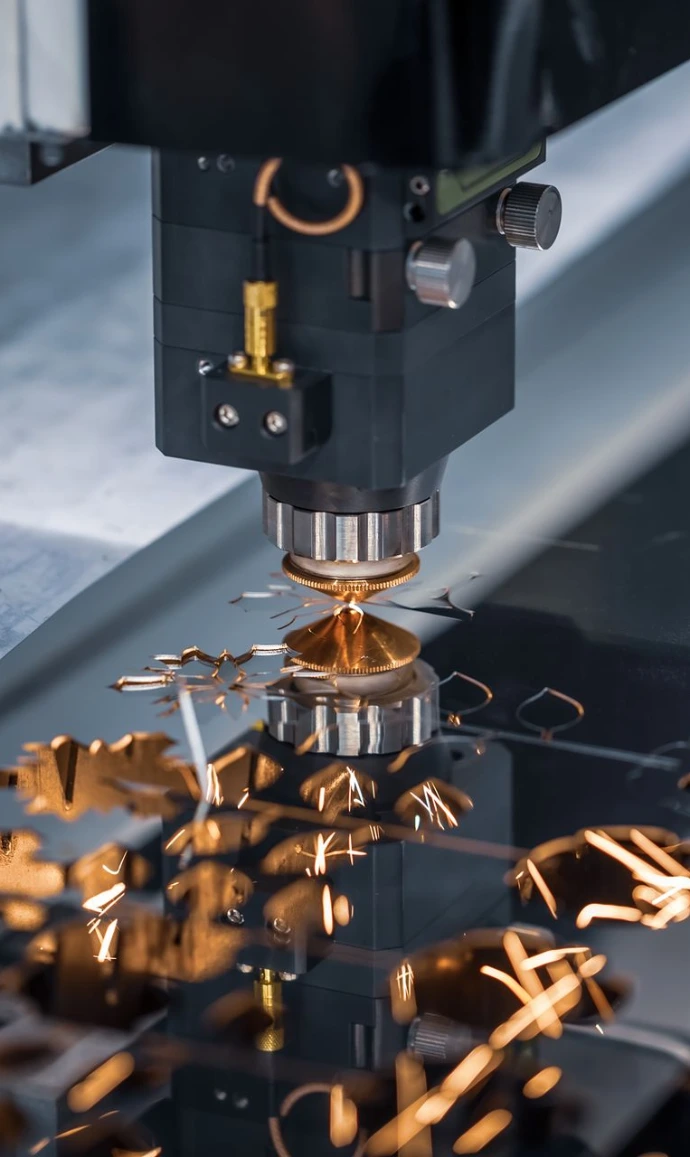
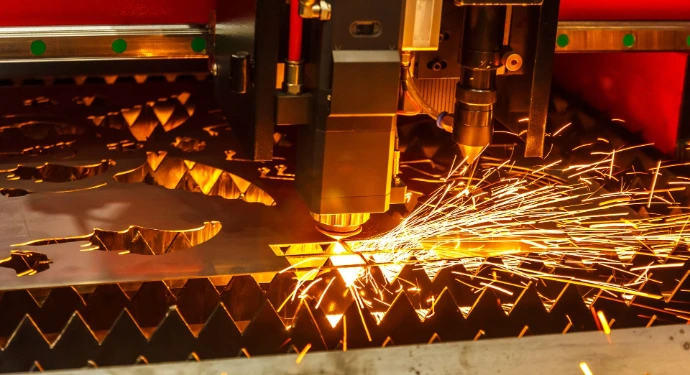
CNC laser cutting is one of the most widely used technologies in industrial metal processing due to its precision, speed, and finish quality. By using a high-energy-density beam guided by numerical control, it allows for complex cuts without physical contact and with minimal thermal effect on the material.
This technology was traditionally based on CO₂ lasers, mainly for sheet metal cutting. The introduction of fiber laser systems changed the market by increasing cutting speed, reducing energy consumption, and improving performance across different metals.
As a result, laser cutting is widely used in industrial sectors such as:
Machine performance does not depend on hardware alone. Results also depend on how the design, CNC programming, nesting, production planning, and shop floor control are connected in the same digital environment.
Software guide for laser cutting
How to choose a CAD/CAM software for laser cutting
What laser cutting brings to daily workshop operations
Clean edges that reduce secondary operations.
High repeatability in both short and long production runs.
Less thermal distortion in critical parts.
The ability to to process different materials and thicknesses.
However, for thick plate or when cost per part is the main factor, plasma cutting can be a more economical option. For that reason, both technologies often coexist in the same workshop.
Where problems usually appear
Manual programming that depends on specific individuals.
Limited visibility into the real status of machines.
Disconnection between design, production, and planning.
Difficulty reacting to changes, urgent jobs, or incidents.
Specialized sheet metal software helps manufacturers get more from laser technology. Lantek's laser cutting software works across digital production environments and its flexibility adapts it to different business structures, machine fleets, and production volumes. Here are the key aspects that a CAD/CAM software for laser cutting should cover to support current manufacturing needs.
Full compatibility with your current laser machine and future equipment
Avoid changing software every time you change machines
One of the main requirements when choosing CNC laser cutting software is native compatibility with your current machinery. Long-term planning matters just as much. If you expect to add new machines, brands or processes such as punching, plasma or fiber laser, you need one software environment that supports multiple technologies. This helps reduce duplicate systems, lower licensing costs, and keep a consistent production workflow across sheet metal manufacturing operations.
Precision, cutting quality, and production flexibility
Consistent cuts for every thickness, shape, and material
Each type of sheet, thickness or geometry requires specific machine settings. Laser cutting software should let you adjust parameters such as power, speed, gas and frequency for each job without constant manual input. Functions that help reduce waste and improve edge quality include:
- Automatic nesting for better sheet utilization
- Micro-joint and micro-cut management
- Lead-ins and lead-outs adapted to the part geometry

Process safety and production control
Safer production with fewer collisions and less downtime
Reducing risk and idle time is essential, especially in demanding or highly automated environments. The software should provide simulation, collision detection and automatic head adjustment.
Lantek helps automate tasks such as:
- Part removal
- Skeleton handling
- Cutting sequence management
These functions improve shop floor safety increase machine performance and optimize overall efficiency.
See solutions for sheet metal production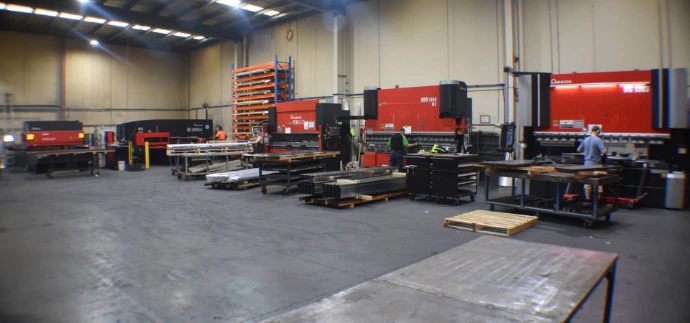
CAD/CAM integration and full connectivity
From design to cutting, all production data connected
What supports a connected factory?
- Error-free CAD file import
- Optimal CNC programming
- Connection between the workshop and ERP, MES or PDM systems
Connecting design, planning, and production reduces manual errors, improves traceability, enhances decision-making, and accelerates production.
How to connect laser cutting with the workshop

Software adapted to serial production and custom manufacturing
One software environment for repetitive jobs, custom orders, or mixed production
Every company works differently. Whether you manufacture to order or run repeat production, the software must fit your production model.
- In custom manufacturing, users need to modify toolpaths, reorder parts, and adjust cutting parameters without interrupting operations.
- In serial production, the focus is on repeatability, cycle control, and automated process flow.
The right software for laser cutting machines must support both approaches while maintaining precision, speed, and material control.

Real-time traceability and material management
Track every part from planning to delivery
Knowing what has been cut, how much material has been consumed, and where each part is located is essential for reducing losses and meeting production requirements. Software with real-time traceability and remnant inventory management improves planning, reduces scrap, and supports process improvement through production indicators and historical data.

Training, technical support, and specialist knowledge
Expert support throughout the software lifecycle
Introducing new software requires training and ongoing support. Lantek provides:
- Tailored training
- Specialist technical support
- An active user community that shares practical knowledge.
This helps shorten the learning process, prevents mistakes and maximizes the return on software investment.
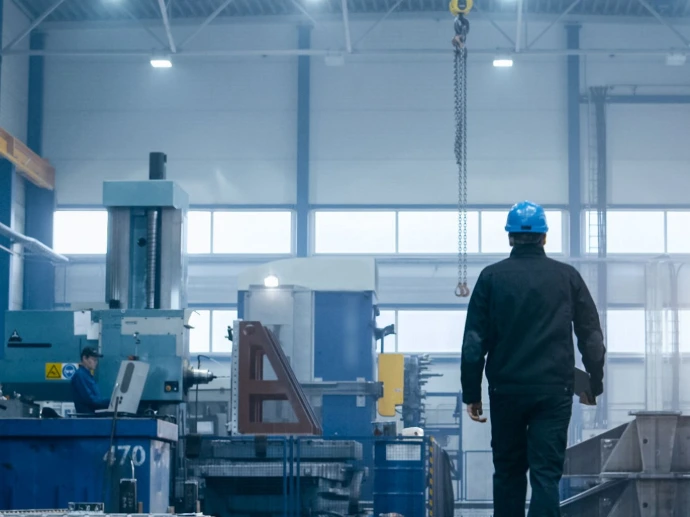
Software for laser machines that grows with your business
Multi-machine, multi-user, and multi-site management
Laser cutting software should be able to support business growth. The ability to manage multiple machines, users, or production facilities—combined with advanced features like IoT, predictive maintenance, and cloud analytics—prepares you for the challenges of Industry 4.0. Choosing a scalable platform today means securing your plant's competitiveness tomorrow.
Lantek offers:
Two specialized modules for optimizing the sheet metal process.
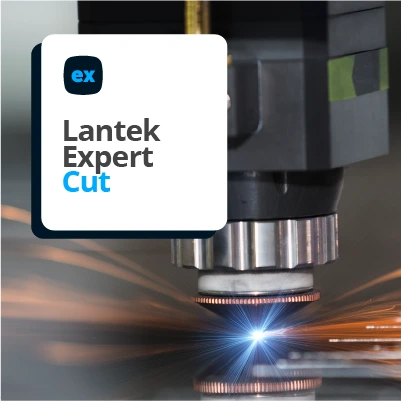
Specialized CAD/CAM for laser cutting in sheet metal
Consistent process control and repeatable cutting quality
Lantek Expert Cut is a CAD/CAM software solution for laser cutting machines in sheet metal manufacturing. It is designed to support precision, process stability, and productivity in demanding industrial environments.
The system uses machine-specific technology tables that define up to twelve cutting qualities for each material and thickness. These settings automatically control power, speed, frequency, gas, and piercing strategy.
It includes advanced functions such as:
Management of reduced lead-ins and backtracking lead-ins.
Custom piercings, fast piercing, and rapid penetration.
Micro-joints, tabs, and microsoldering for small part control.
Automatic and manual loops for sharp corners.
Skeleton handling, manual or automatic evacuation and hole destruction.
Head management, with collision detection and correction.
A 3D simulation of the real cutting sequence allows validation before the program reaches the machine, reducing errors, downtime, and unexpected behavior.
The result is a clean and repeatable cut for both serial production and custom manufacturing, with full integration across CAD/CAM, MES, and ERP environments.
CAD/CAM for laser cutting of tubes and light profiles
Complex geometries, precise bevels, and multi-axis control
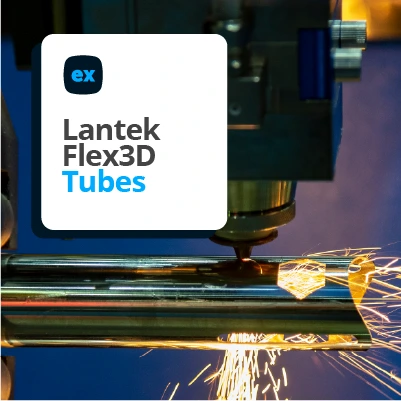
Lantek Flex3D Tubes is a CAD/CAM solution for laser cutting of light and thin-walled tubes, whether on dedicated tube machines or on hybrid machines that process both sheet metal and tube.
The system makes it possible to:
Program round, square, rectangular tubes, as well as open profiles.
Create full or partial chamfers on one or both ends.
Generate projected contours on one or more faces at any angle.
Manage tube intersections with automatic visual calculation.
Copy operations in linear, circular, or grid patterns.
Work with clamping systems based on rollers or spindle solutions..
Full process simulation and collision control support stable and accurate production. This is especially useful in sectors such as automotive, light metal structures, industrial furniture, and HVAC systems.
Success stories in manufacturing workshops using laser cutting machines
Frequently asked questions
These are some common questions about our company.
2D laser cutting is used for flat sheet metal. 3D laser cutting is used for tubes, profiles, bevels, and angled geometries.
Lantek supports a wide range of laser cutting machines from many manufacturers. Contact us to confirm compatibility for your specific machine model.
The software plans the cutting sequence automatically and avoids unnecessary repositioning. This reduces idle time and improves productivity.
Lantek MES Manager also manages work queues and prioritizes orders in real time.
It depends on the type of material and the result you are looking for. CO₂ laser technology is ideal for clean cuts in steel and aluminum. If you work with reflective materials, fiber laser technology offers very high efficiency. For micro-cutting applications where precision is critical, Nd:YAG laser technology is the best option. Choosing the right technology can improve cut quality and reduce energy consumption.
Automatic nesting reduces sheet waste, saves programming time, and improves material usage.
Yes, A compatible CAD/CAM platform can work with machines from different manufacturers and support multiple production technologies within one environment.
Laser cutting offers high precision, clean edges, and less finishing work.
It is particularly suitable for thin sheets and jobs that require tight tolerances and good surface quality.
Lantek Expert Cut adjusts parameters and cutting paths according to the material.
Cutting quality depends on settings such as power, speed, gas, focal position, material type, thickness, lead-ins, piercing strategy, and machine condition.
It depends on the part. 2D cutting is suitable for flat sheet metal. 3D cutting is used for tubes, structural profiles, and more complex geometries.
Maintenance depends on the laser technology, but it usually includes cleaning optics, checking gases, calibration, and inspection of cutting heads and related components.
Yes, Fiber laser technology is particularly suitable for reflective materials such as aluminum, copper, and brass.
Good software reduces setup times, improves cutting paths, limits rework and supports faster production cycles.
Automation can include batch nesting, automatic NC code generation, machine connection, ERP and MES integration, part traceability, and production monitoring.
You should evaluate laser power, laser source type, material range, maximum thickness, cutting speed, maintenance needs, and how easily the machine connects with CAD/CAM, MES, and ERP systems. Hardware and software should be assessed together.
Specialized software for industrial laser cutting is designed to get the maximum performance from every machine: it optimizes cutting paths, automatically adjusts parameters according to material and thickness, and integrates with production systems such as ERP and MES. In contrast, generic software can lead to precision errors, material waste, and synchronization issues with the machinery.
A company that runs repeat batches does not have the same needs as one that handles custom jobs. CNC laser cutting software must be able to adapt to both models, allowing operational efficiency and profitability by automating repetitive tasks, as the case may be. This flexibility directly impacts the operational efficiency and profitability.
Digitalizing the laser cutting process makes it possible to integrate design, planning and production into a single platform, with real-time traceability, fewer human errors and greater analytical capabilities. In addition, by choosing software compatible with different machine manufacturers and capable of managing multiple processes, you can simplify training, reduce complexity levels and maintain a single data model.