CNC Punching: speed, precision, and productivity for series production.
Cold cutting with low operating cost and maximum repeatability
What is CNC punching and how does it work?
Precise mechanical cutting for continuous production
CNC punching is one of the main industrial cutting technologies used for sheet metal processing. It is based on a cold mechanical cutting process where a tool called a punch presses the material against a die until it separates by shearing. This method offers high speed and a low cost per part, making it ideal for the mass production of steel, aluminum, or stainless steel sheets.
Unlike other cutting technologies, CNC punching allows additional operations during the same process, including embossing, threading, and marking. These capabilities enable the creation of features such as reliefs, housings, and fastening points directly on the part, reducing the need for secondary machining or forming.
As a result, CNC punching helps reduce production time, minimize handling, and simplify manufacturing workflows for many metal components.
It is widely used in sectors such as automotive, HVAC, industrial metal fabrication, and metal furniture, where productivity and process consistency are key.
Types of punch presses and applications
Choose based on speed, precision, or flexibility
Traditional CNC punch presses
Suitable for holes, simple geometries, and repetitive perforations in sheet metal.
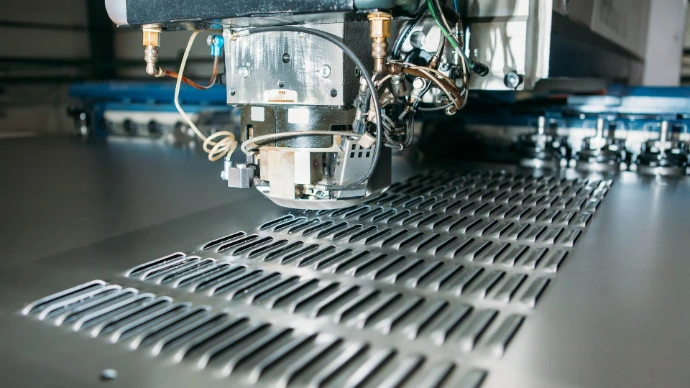
Hybrid punching, shearing, and cutting systems:
Combine multiple processes in a single cycle, reducing handling and production steps.
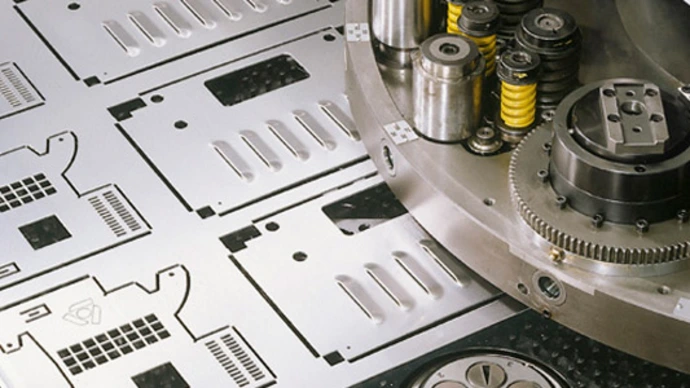
Precision punching
Designed for thin sheets and components requiring tight tolerances. Common in electronics, automotive, and technical manufacturing.
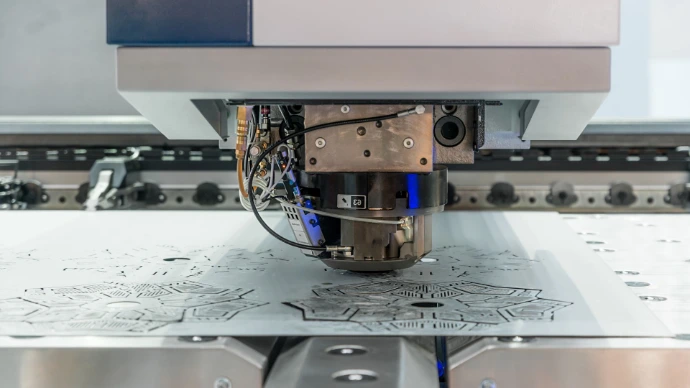
Machines with multi-tool systems
Allow the use of different punches and forming tools, including threading and marking, expanding production capabilities without additional operations.
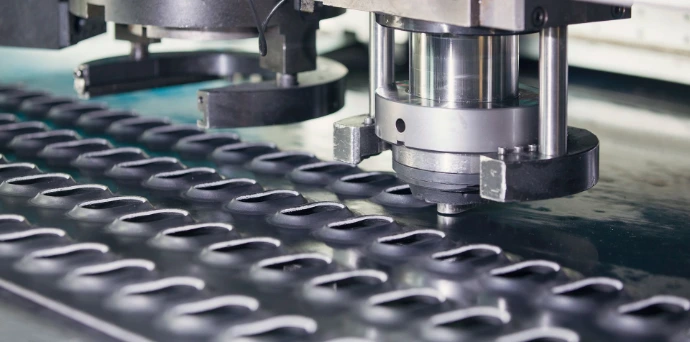
Complete guide to punch presses
Punching requires specialized software to scale production
- Reducing programming errors through simulation and validation.
- Extending tool life with optimized punching strategies.
- Managing combined processes such as punching, cutting, marking, and threading.
- Ensuring full traceability through integration with ERP systems and MES systems.
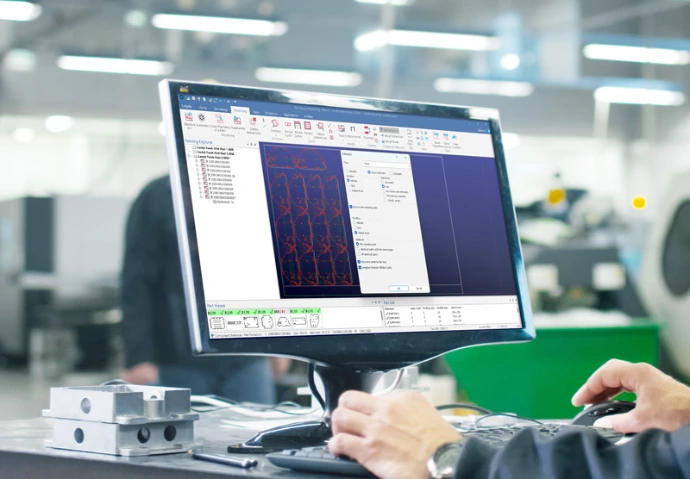
Automation of complex operations
Less manual programming. More stable and productive cycles
Manual programming of embossing, threading, or micro-perforation reduces efficiency. A CAD/CAM system should automate these operations using configurable rules adapted to machine constraints. This reduces errors and speeds up production preparation.

Tool and turret management
Correct tool selection with controlled wear
Incorrect tool selection can lead to premature wear or production failures. The software should automatically assign tools based on geometry, material, and thickness. It should also manage:
- Autoindex configurations
- Multitool stations
- Turret setups by product or material
All of this to optimize their use and extend the lifespan of each tool.
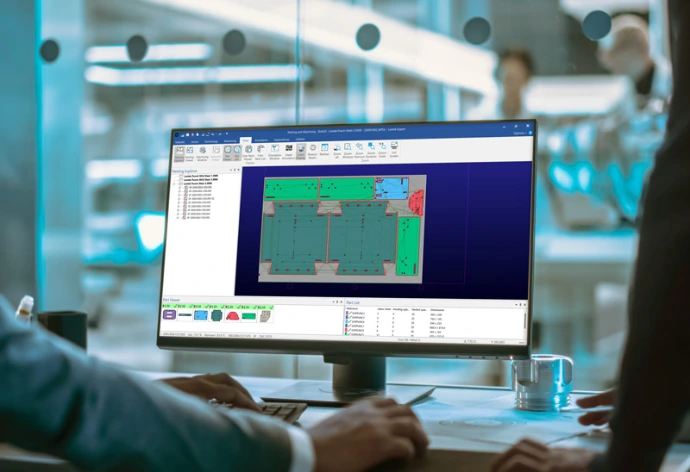
Advanced nesting for punching
Better material usage with process-specific rules
Punching requires consideration of physical constraints such as:
- Repositioning zones
- Minimum distances between tools
- Common punching strategies.
Advanced nesting technology must adapt to these conditions to ensure material efficiency while maintaining machine safety and tool durability.
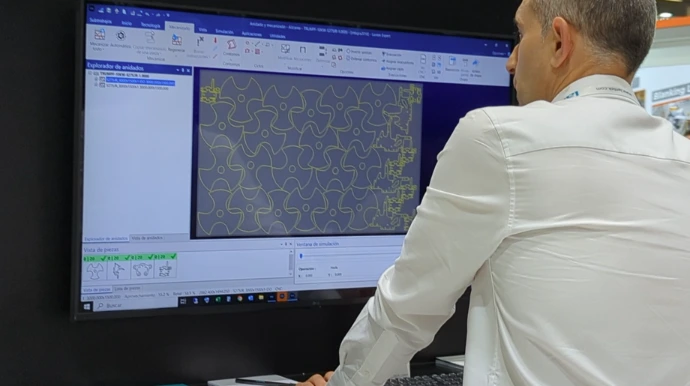
Simulation with collision prevention
Validation before production
Unexpected collisions can cause costly downtime. CAD/CAM software should include 3D simulation to validate tool paths, sequences, and sheet behavior before execution.
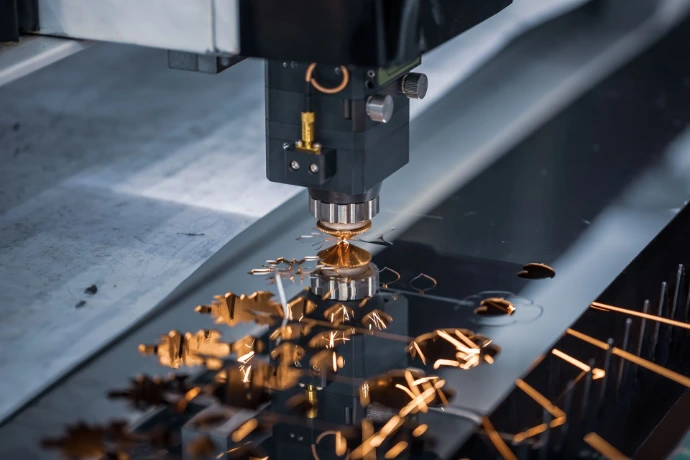
Compatibility with combined machines
Coordinated processes in a single environment
For punch-laser or punch-shear systems (combined machines) the software must define which operations are assigned to each technology. This avoids duplication and ensures consistent production.
Integration with industrial systems
Connected manufacturing environment
The software should integrate with:
- ERP or MES systems
- Sorting systems
- Part evacuation systems
- Automated storage
- Robotics
This avoids isolated data and supports consistent production management.
Learn more about machine connectivity

Training and technical support
Faster adoption and stable operations
Implementing new software involves a learning process that should not be underestimated. That is why it is crucial to have specialized technical assistance, structured training, and access to an active user community. These resources not only accelerate the learning curve but also reduce downtime, minimize errors, and allow you to get the maximum performance from your laser cutting machines. A solid community connects you with best practices, real-world case studies, and continuous updates so that your operation keeps pace with industrial innovation.
Scalable software for production growth
Prepared for evolving manufacturing needs
Scalable software:
- As production grows, software must support multiple machines, users, and workflows from a single platform.
- It should also be ready for Industry 4.0 environments, including IoT connectivity, cloud systems, and advanced analytics.
These capabilities allow you to anticipate failures, optimize resources, and respond in real time to changes in demand. Betting on a solution that enables this evolution is key to maintaining competitiveness in the current industrial context.
Lantek offers
Two specialized modules for optimizing the sheet metal process.
CAD/CAM for sheet metal punching
Design, simulation, and production in a single environment
A CAD/CAM software for punching should address daily production challenges, including tool changes, nesting, and sheet repositioning. Key capabilities include:
- Import of CAD files and direct design in the CAM environment.
- Automatic nesting with efficient tool paths.
- Advanced turret and tool management.
- 3D simulation for validation and collision avoidance.
- Automatic part evacuation systems.
Essential in sectors such as boiler making, metal structures, metal furniture, and industrial components. The software that drives real production.
CAD/CAM for profile punching
3D design and processing of metal profiles
Punching is also used in tubular and structural components. A dedicated solution should provide:
- Parametric design of tubular structures.
- Multi-face punching operations.
- Advanced simulation and collision control. With collision control, toolpaths, and evacuation points.
- Support for combined machines. (punching + laser/plasma/shear), eliminating the need to duplicate processes.
- Integration with MES and ERP systems. (MES, ERP) for traceability, planning, and stock control.
Especially useful in the manufacturing of HVAC, industrial racks, tubular metal furniture, or welded structures.
Success stories in manufacturing workshops using punching machines
Frequently asked questions
Clear answers to what matters most about CNC punching.
The order and direction of operations affect part flatness.
CAD/CAM software defines optimal sequences based on material and tooling
Lantek Expert Punch automates this logic according to the type of punch and material.
Typically from 0.5 mm up to 6 mm or more, depending on machine capacity and material.
Punching offers higher speed and lower cost per part, without heat-affected zones. Laser cutting provides greater flexibility for complex geometries.
Yes. Advanced software allows combined punching and cutting within a single nesting strategy.
Common formats include DXF, DWG, STEP, and IGES.
Yes, if both the machine and software support appropriate force and sequencing.
Digital tool libraries define geometry, position, and wear, enabling automatic selection and reducing manual errors.
Lantek Expert Punch integrates automatic tool management and quick tool change.
Regular tool replacement, lubrication, force checks, and cleaning. Software can support maintenance planning.
Yes. Parts can be marked during punching and integrated with ERP and MES systems.
Yes. Hybrid machines combine punching with shearing, laser cutting, or forming operation.
It assigns operations to each technology automatically, improving programming efficiency.
This reduces programming time and improves quality.
Lantek Expert Quattro coordinates punching and laser cutting on the same part.
It prevents collisions between parts, tools, and guides, reducing downtime due to errors and mechanical damage.
Punching is ideal for parts with multiple holes or geometric details, as it offers higher cycle speed, low cost per part, and no heat-affected zones. For complex contours or areas requiring high surface precision, technologies like laser or plasma may be more suitable.
Advanced nesting for punching considers common punching between parts, avoids collisions, and optimizes paths. This allows for maximum utilization of the sheet, reduces waste, and minimizes turret movements, improving overall efficiency.
Yes. A good CAD/CAM system for punching automatically manages operations of punching, laser cutting, and shearing on combined machines, eliminating process duplication and maintaining a single source of programming.
It prevents collisions and validates processes before production, reducing downtime
Yes. It should allow for automatic punch selection (Autoindex, Multitool), optimize tool changes, and prioritize their use based on shape, material, and usage, reducing setup times and unnecessary wear.
Integration with CAD, MES, ERP, and production systems ensures traceability and workflow control.
Yes. It adapts to both compact machines and large, high-speed punch presses.