Skip to Content

A specialized production process used across many industries

The role of sheet metal and metal processing across industries

Sheet metal and metal processing plays a key role in many industries. Each sector has different requirements, such as full traceability in aerospace, production flexibility in automotive, durability in agricultural machinery, or regulatory compliance in medical manufacturing.

Metal workshops

High variety of orders, short runs, urgent orders, operational flexibility.

HVAC

Heavy structures, tanks, thick materials, and demanding welding processes.

Appliances

Series production, high-quality finishes, and compliance with consumption and efficiency standards.

Shipyards

Large metal structures, demanding welds, and resistance to marine environments.

Energy

Solar structures, wind towers, hydraulic components, and other metal parts for the energy sector.

Elevators

Mechanical precision, safe mechanisms, and consistent finishes.

Heavy machinery

Components for demanding use, chassis, hydraulic arms, and wear parts.

Agricultural machinery

High resistance requirements, vibration, moving parts, and exposure to dust and wear.

Aerospace

Components and structures with tight tolerances and certified traceability.

Industrial vehicles

Trucks, buses, and trailers with strict safety standards, emissions requirements, and modular assemblies.

Industrial refrigeration 

Equipment with varied production needs, short runs, urgent orders, and the need for flexible operations.

Automotive

Parts, body components, and assembly sets that require fast, controlled production.

Medical technology

Equipment and components for clinical environments, with biocompatibility requirements and ISO or FDA compliance.

Metal structures

Design, production, and assembly of steel or aluminum structures and components.

Vertical Software vs Horizontal Software

A guide to understanding different types of industrial software

Introduction

The software challenge in industrial environments with multiple processes
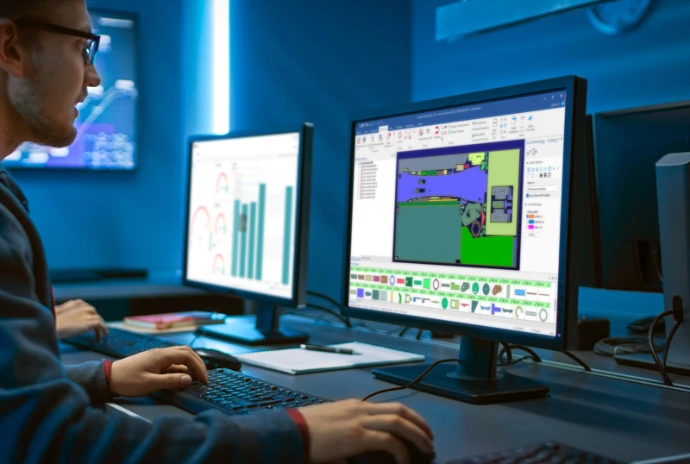
Engineer nesting a part

In many industrial sectors (such as machine shops, boiler making, industrial refrigeration, energy, shipyards, elevators, or agricultural machinery) finished products or complex components are manufactured. This implies production chains with multiple linked processes such as cutting, bending, welding, machining, assembly, quality control, and internal logistics. For this reason, companies typically rely on corporate ERPs to manage cross-functional areas such as accounting, inventory, purchasing, sales CRM, MRP, quality, or asset management.

For this reason, many companies use corporate ERP systems to manage cross-functional areas such as accounting, inventory, purchasing, CRM, MRP, quality, and asset management.

However, when sheet metal and metal processing is a critical part of production, additional needs appear that generic systems do not cover well. These include multi-brand CAD/CAM, advanced nesting, technical quoting for non-standard products, detailed machine scheduling, intermediate stock control, automation links, and capture of real production data.

This is where the difference between horizontal software and specialized vertical software becomes important. Lantek addresses this need across three main industrial manufacturing models, supports the complete cycle from design and planning to production and logistics, optimizing material, synchronizing procurement, and controlling costs and quality. In subcontract manufacturing, it helps manage high job turnover, multiple customers, priority changes, and full traceability from order to delivery.

In own-product manufacturing, it supports the full process from design and planning to production and logistics, helping control material usage, supply coordination, costs, and quality.

In project-based manufacturing, it supports complex jobs with multiple phases, milestones, partial deliveries, and ongoing cost control from the initial quote to final completion.
Horizontal Software

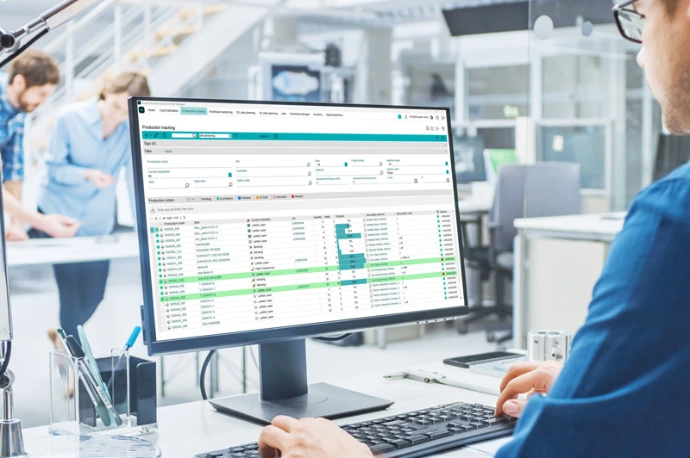
Engineer planning metal sheet production

Horizontal software aims to unify the company's overall management. Its primary function is to coordinate financial, logistics, commercial, and administrative information.

Its main functions are:

  • Centralize business data in one system.

  • Standardize company-wide processes.

  • Support overall resource planning.

  • Maintain administrative traceability and financial control.

It is built to serve many industries. It does not address the technical logic of specific production processes.

Vertical Software

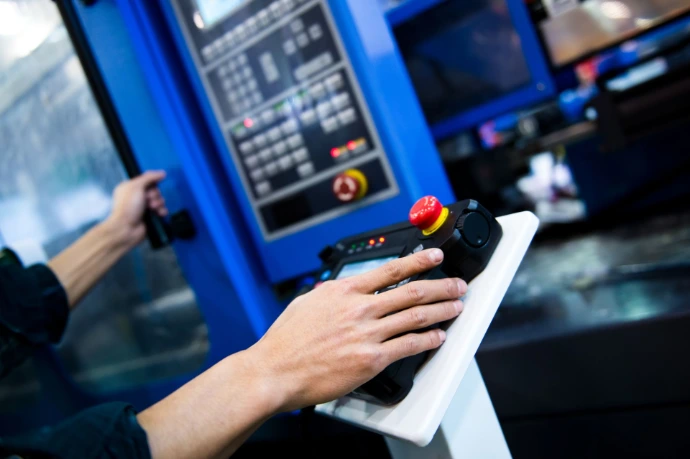
operator controlling a sheet cutting machine

Vertical software has a different objective: improving a specific industrial process. In this case, sheet metal, tube, and structural steel processing.

Its main functions are:

  • Improve material usage through advanced nesting.

  • Increase the actual performance of CNC machines.

  • Turn orders into executable production programs.

  • Manage multi-technology and multi-machine environments.

  • Control real production times, efficiency, and manufacturing quality.

  • Support make-to-order production and non-standard products.

This is not just about managing information. It is about controlling the technical core of production. When metal processing is a strategic part of the business, relying only on generic tools usually leads to: 

  • Material loss and lower production efficiency.

  • Manual work on the shop floor.

  • Lack of real production data.

  • Poor connection between planning and execution.


Lantek software fits different manufacturing models. Lantek software can work as the main management system for subcontract manufacturers specialized vertical software in companies where metal processing is one stage within a broader industrial process.

Why integrate Lantek into your industrial ecosystem


Direct cost savings

Less waste. Better machine use.


Connected production 

Real shop floor data connected to the corporate ERP.


Executable planning 

Orders converted into real production jobs.


Multi-technology environment

Laser, plasma, oxy-fuel, waterjet, bending, and automation managed in one system.


Growth for industrial operations

Ready to support new machines, more production capacity, and more automation without rebuilding processes.

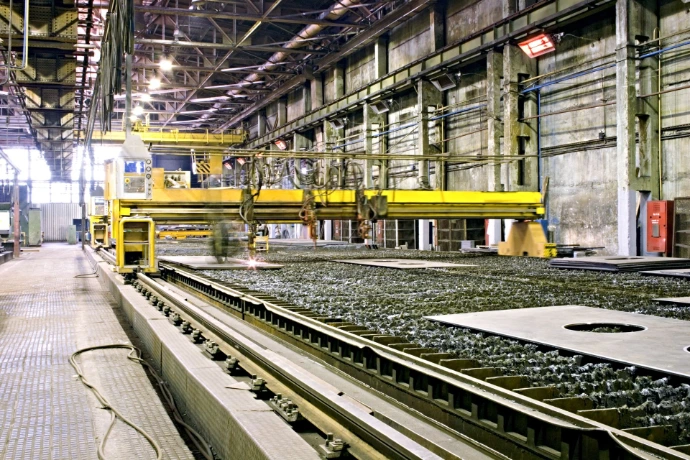
metal sheet cutting plant

Proven results. Multisector. Multivendor. Multiplant.


  • More than 38,000 active installations in factories worldwide.
  • Compatibility with more than 4,500 CNC machine models, from legacy equipment to current machinery.
  • Presence in more than a dozen industrial sectors, including automotive, aerospace, energy, shipbuilding, boilermaking, agricultural machinery, appliances, and more.

Companies of different sizes and from many countries use Lantek to improve production efficiency, reduce errors, and expand capacity while maintaining process control.

​

Read real success stories from different sectors

Ready to digitalize your production?

We help you identify the right software solution for your business.


Talk to an expert

Frequently asked questions about industrial software for sheet metal manufacturing

These are some common questions about our company.

A standard ERP is built for business management, not for the technical needs of sheet metal manufacturing. This is especially clear in quoting, where the real cost of a job depends on actual material usage and production times.

When a generic ERP tries to cover these functions, it usually does so at a basic level. The result is lower accuracy and more dependence on manual work on the shop floor. Specialized software covers the production tasks that ERP systems do not manage in depth.

Nesting determines how parts are placed on each sheet. Poor nesting increases material waste, sheet changes, machine time, and handling.

An advanced nesting system can reduce material consumption by several percentage points on every order. In high-volume environments, that can represent significant annual savings. It also helps reduce setup times and supports a more stable production flow.

Many manufacturers run machines from different brands and technologies. If each machine depends on separate software, companies end up with information silos, duplicated work, and less control.

A multi-brand system centralizes programming, planning, and analysis. It reduces training needs, lowers operating errors, and decreases dependence on specific suppliers. It also makes future machine investments easier to absorb.

Specialized software connects directly to machines and records real production data, including cycle times, downtime, incidents, and efficiency.

This makes it possible to measure OEE by machine, line, or plant. Management can see not only how much is produced, but also how and why production performs the way it does.

Automation is not only about hardware. Without software that coordinates machines, automated storage, loading and unloading, scheduling, and sequencing, automation loses effectiveness.

Specialized software coordinates the flow of data from the order to the machine, including nesting, planning, internal logistics, and execution control.

Lantek includes standard interfaces and APIs to connect with corporate systems. It can receive production orders, bills of materials, and job data, and return real manufacturing information such as consumption, times, and production status.

This helps maintain a connected software environment without duplicating information or changing existing processes unnecessarily.

Many companies combine metal cutting with assembly, welding, painting, or final assembly. When the sheet metal stage is not well controlled, the bottleneck affects the whole production flow.

By improving the source of production, the rest of the operation becomes more stable. Delays are reduced, assembly planning improves, and delivery performance becomes more consistent.

The difference is process coverage. Lantek is not limited to CAD/CAM. It also includes planning, execution, plant control, automation links, production analysis, and business system connection.

This allows companies to work with one consistent platform instead of using separate tools that create errors, manual dependencies, and loss of traceability.

Yes. Lantek provides a modular platform that connects CAD/CAM with MES, ERP, traceability, and stock control through a single environment.

Contact us


I have read and accept the Legal Notice and the Privacy Policy

Thank you for your feedback!

Our team will get back to you as soon as possible.

In the meantime, we invite you to visit ourwebsite.