
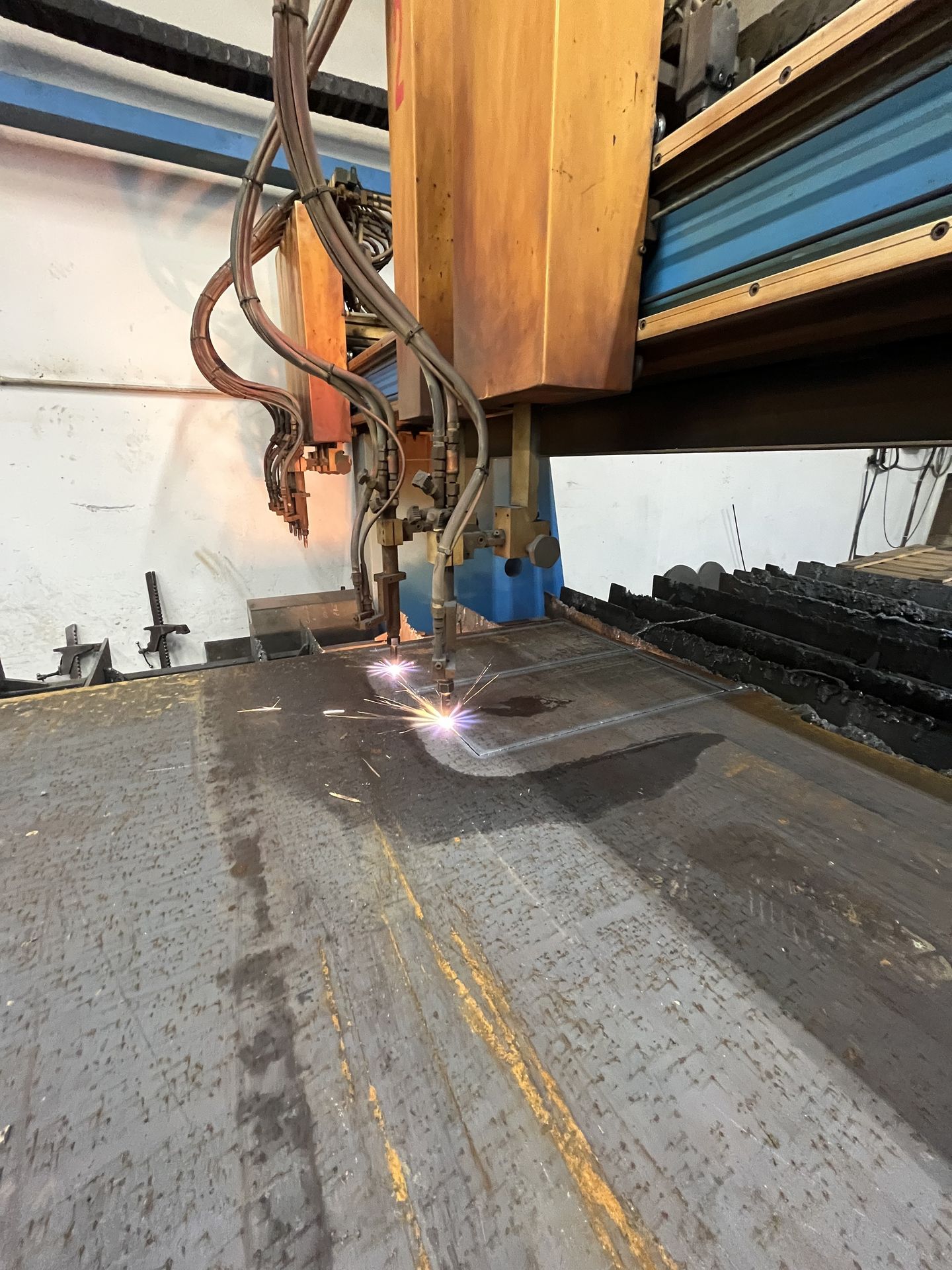
For Gaspari, changes in production technology tell much of the company’s story. It began in 1965 with an oxy-fuel cutting machine. Plasma cutting followed in 1996, and in 2024 the plasma system was replaced by a 12 kW fiber laser.
Valter Gaspari founded the company as a metalworking business producing semi-finished parts. Today, his son Gabriele Gaspari runs the company, while Sebastiano Gaspari represents the third generation of the family in the business. Gaspari has seven employees and operates from a single production site, serving mainly regional and national customers in sectors including earthmoving equipment, automatic machinery and construction.
Much of its business comes from subcontracting, although Gaspari also manufactures its own machine, the Buratto M1200. The equipment cleans sheet metal parts after cutting by using mechanical friction inside a rotating drum to remove cutting burrs and mill scale.
Most production processes are carried out in-house, including cutting, bending, grinding and shot blasting. Certain operations, such as painting, turning and milling, are occasionally handled by external suppliers.
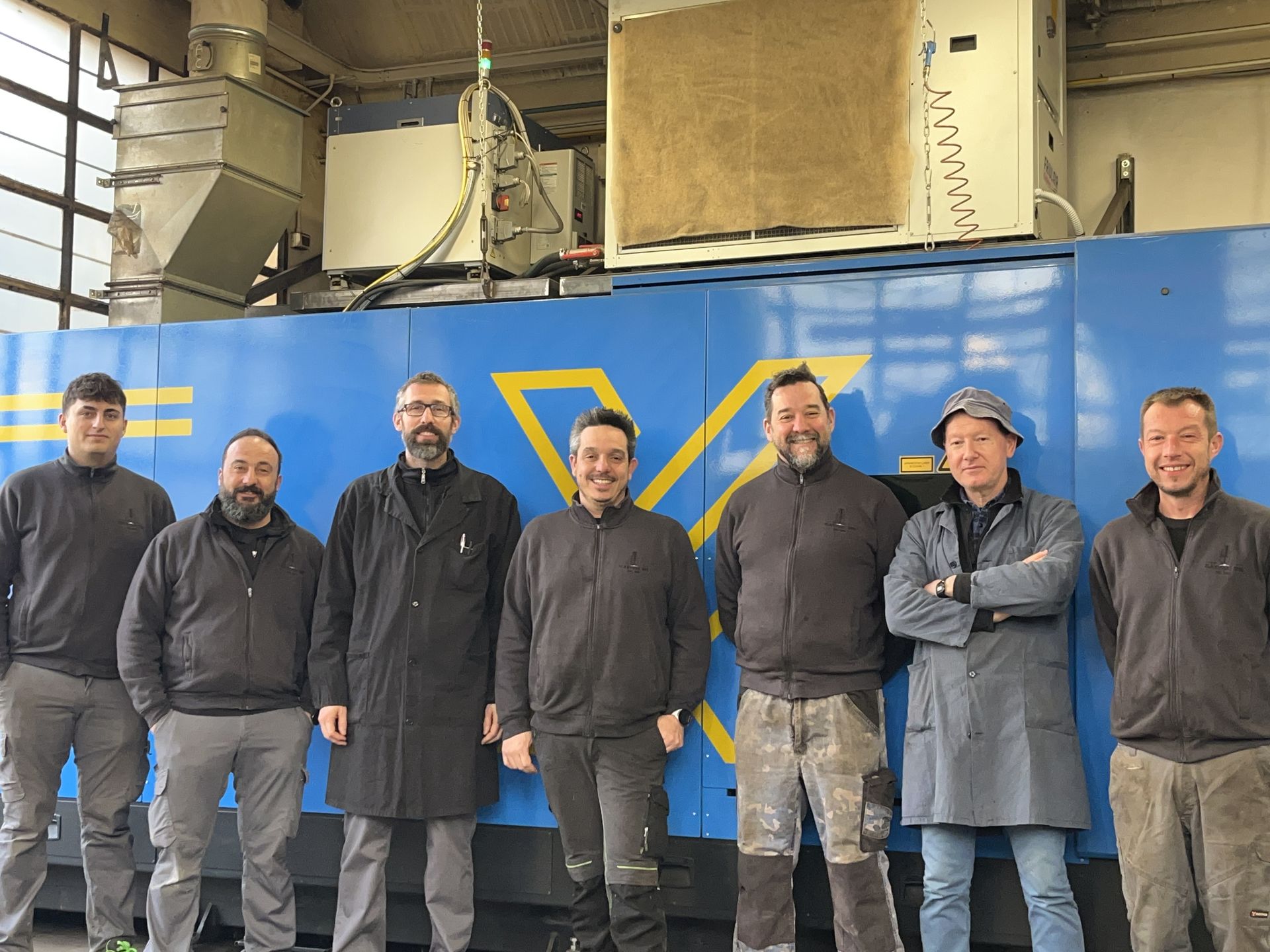
Working with Lantek since 1999
Gaspari began using Lantek in 1999 after experiencing problems with its previous software supplier. More than two decades later, Lantek is part of the company’s day-to-day production management, supporting a manufacturing operation that has changed considerably in terms of technology, volume and customer requirements.
The plant currently operates a Dami oxy-fuel cutting machine and a 12 kW Cutlite fiber laser. Gaspari has two Lantek Expert Cut Plus licenses, one Lantek Expert 2D license and two Lantek MES Manager licenses. Matteo Vannini, a technician at the company, and Sebastiano Gaspari are the main users.
Approximately 60 metric tons of sheet metal pass through the company’s cutting machines each month. Around 95% of customer projects arrive as 2D files, while the remaining 5% come from 3D models. Only occasionally does the team need to draw a part from scratch.
Once the geometry has been imported, Lantek Expert is used to prepare jobs for the different cutting technologies. Gaspari particularly values the geometry and nesting tools, as well as the ability to manage machines using different cutting technologies within the same software environment.
As a subcontractor, Gaspari regularly has to combine work from different customers. Its nesting process can place parts from several customers on the same sheet to make better use of the available material. The company also manages usable remnants and returns them to production when suitable for future jobs.
The arrival of the fiber laser in 2024 represented a major change on the shop floor, but it did not require the company to change its programming environment. The team could continue working with Lantek while managing both oxy-fuel and laser cutting within the same system.
Keeping track of production
Lantek Expert is used to prepare cutting jobs, while Lantek MES Manager gives Gaspari the information it needs once orders move into production.
“With the speed our customers require and the number of parts we have to manage, we could no longer work without Lantek,” says Gabriele Gaspari, owner of the company.
MES Manager allows the team to locate and track parts using different search criteria, including date and order number. This makes it easier to check the status of individual parts and gives the team the information needed to manage delivery commitments.
Cutting times from the laser are also returned directly to MES Manager, giving Gaspari production information from the machine itself. This has become an essential part of its working process. The company says that without MES Manager, maintaining the same level of control over cutting production would no longer be possible.
MES Manager has also changed a less visible but very practical task: the annual sheet metal inventory. With more precise records of available material, the year-end inventory can now be completed much faster.
Almost six decades after it was founded, Gaspari remains a seven-person family business, but its production technology bears little resemblance to the workshop that started with a single oxy-fuel cutting machine. Oxy-fuel was followed by plasma, and plasma by fiber laser cutting. The way the company prepares, organizes and monitors production has developed alongside those changes.
Lantek has been part of that development since 1999. Gaspari values its geometry and nesting tools, the ability to manage different cutting technologies within one system and the convenience of Lantek’s ticket-based support service when assistance is required.
For Gabriele Gaspari, the role of the software is best understood through the daily workload of the shop floor: around 60 metric tons of sheet metal processed each month, a large number of parts to keep track of and customers expecting increasingly fast responses. Knowing what is being cut, what material remains available and where each order stands has become part of how Gaspari runs its production.