Now more than ever, the health crisis brought about by Covid-19 has forced us to move the office into our homes, but the workshops can’t be moved. Staying connected to factories is necessary in order to guarantee the safety of companies’ main asset, their human capital, along with providing continuity for plants.
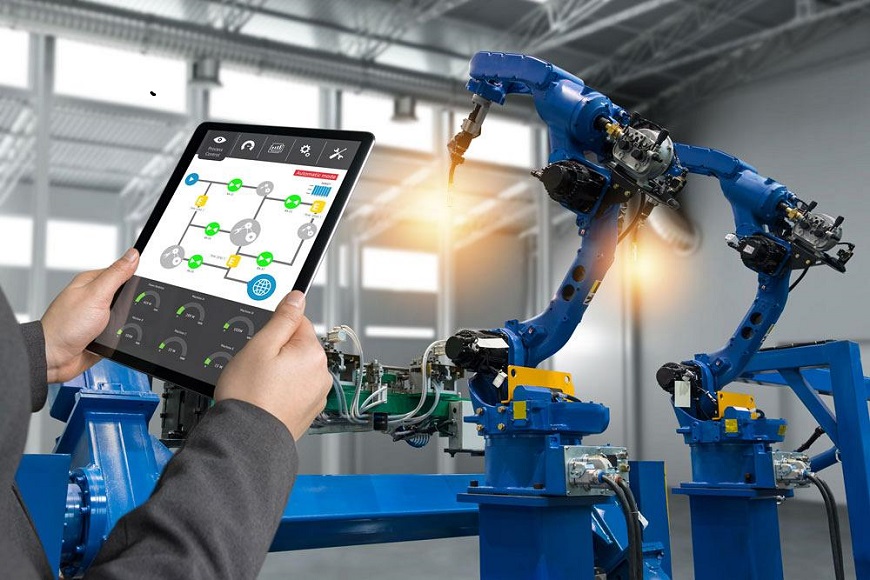
Thanks to connectivity, mobile devices, the sensorization of factories, the Internet of Things (IoT), Cloud and, of course, the telecommunications network, we can work from anywhere and at any time, being able to respond, in real time, to orders, reconfigurations of workloads and possible setbacks such as collisions in the cutting process or lack of stock. Furthermore, integration and communication with different solutions make it possible to perform several tasks with just one click allowing you to carry the factory around in the palm of your hand.
As a result, our plant gains in productivity and efficiency, two essential strengths to make us competitive in Industry 4.0.
Software for working remotely
Given that we have efficiency and productivity in our DNA, at Lantek, we are relentless in our determination to innovate by developing new software or implementing improvements and updates in our solutions in an aim to increasingly optimize manufacturing. Subsequently, the 2020 version of our whole range of programs features improvements in the support, installation and configuration of machines without it being absolutely necessary for the technicians to travel, as well as in design, production management or business management software.
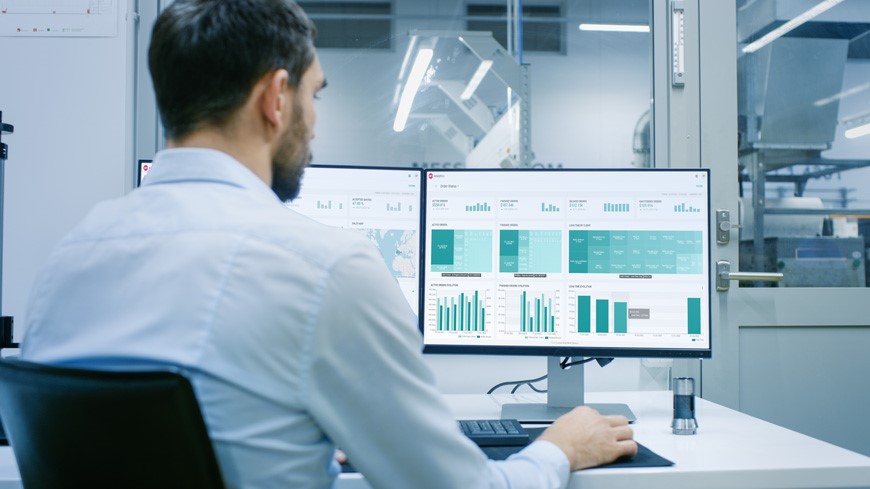
Equally, with the Digital Factory, we’re working on the development of services in the cloud that facilitate telecommuting such as Lantek iQuoting, for drawing up quotes, Lantek Analytics, to analyze all of the data provided by the plant, Lantek MES, to manage manufacturing, and Lantek Control Panel, to view the workload, stock capacity or orders in real time, among others.
In order for the user to be able to make the most of these services remotely, they need to work with the hybrid cloud model: Cloud and plant, which means bringing the two worlds together. This integration is possible with the Sherlock solution which we also use to bring automation to software updates, be they universal or personalized, subsequently working with the latest versions.
The architecture offered by Sherlock rests on two pillars. Sherlock Edge is a local software that is installed at the plant with low latency and has a certain degree of intelligence. It collects the data generated in the workshop and stores them. It is able to work independently from its counterpart in the cloud, Sherlock Cloud, located in the main node. This solution receives the data from the plant, processes them, analyzes them and stores them, offering fast and smart responses for improvements in decision-making. Both communicate to transfer data, either in real time or in batches on a periodic basis. This data-based communication is not only from machine and sensors to the Cloud, but also from CAD/CAM, MES or ERP software.
However, the technology in the workshop has Edge capabilities, allowing data to be processed before sending them to the cloud. Although speed in the Cloud is immediate, it’s subject to the connectivity at the time, which means that by processing the information closer to where it was created instead of sending it through the network to the cloud, you overcome that possible barrier, as well as saving on costs. However, sending information to an external space is not only significant in terms of time and money, but also security.
One thing’s for sure, Cloud Computing is one of the technologies with the greatest potential for growth and has a powerful security layer, much greater than that of a local server. The other industry 4.0 enablers are based around the cloud (Artificial Intelligence, Big Data, Analytics, Blockchain, IoT) and operate with maximum security thanks to data encryption, communication isolation and user authentication. This way, advanced solutions can be provided to increase the plant’s much-needed profitability and competitiveness. What’s more, in the not too distant future, the most in-depth version of Artificial Intelligence, Machine Learning, will provide the factory with the intelligence that is nowadays required in order to compete in a digitized world.
Undoubtedly, the flexibility and agility provided by remote working software are key in today’s manufacturing, something that requires speed in delivery, customization and innovation, which inexorably involves the Digital Factory. A way of working that, in our culture, that has been around since remote times.