
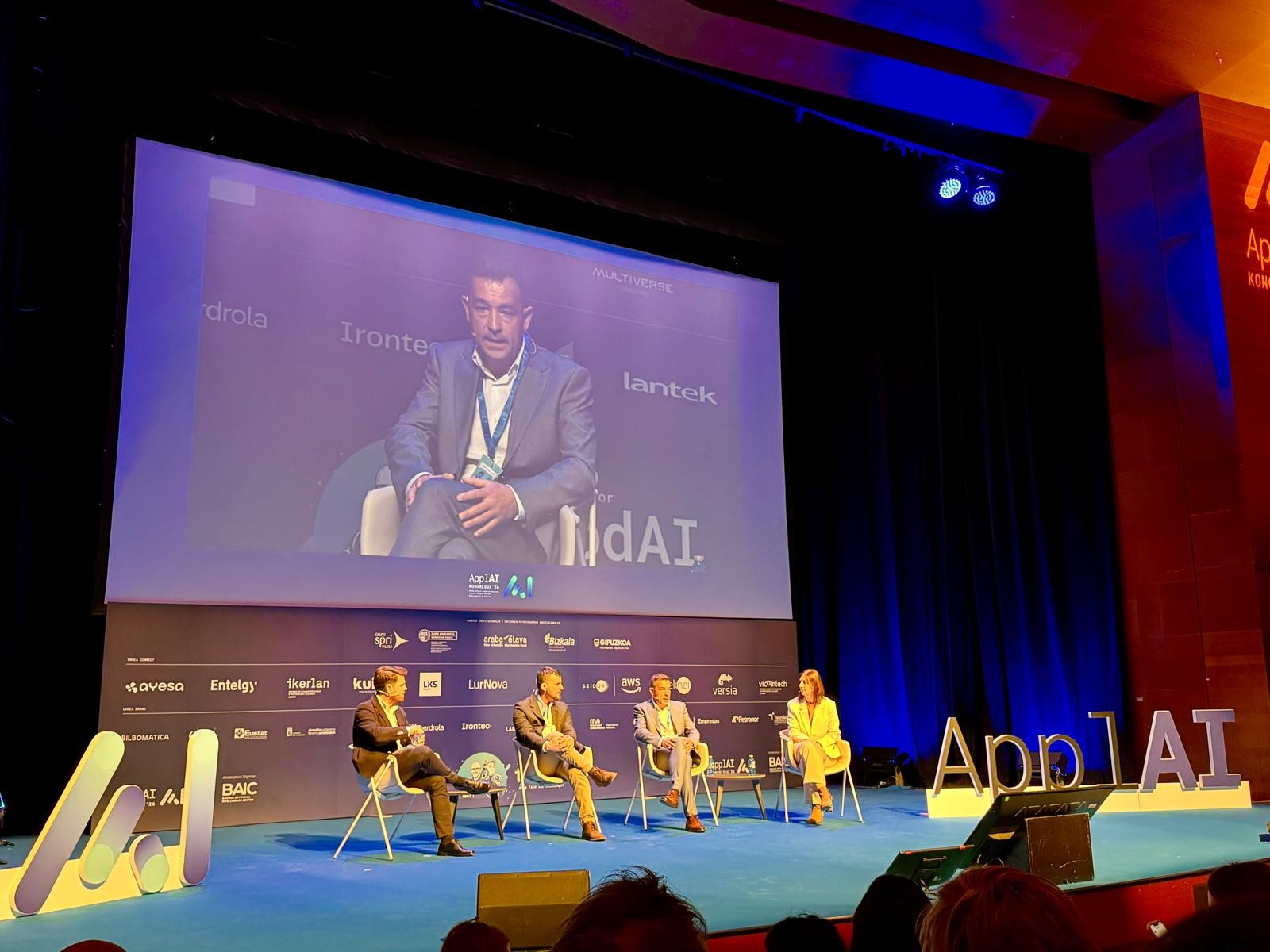
Over the past few years, many companies have explored use cases, pilot projects and proof-of-concept initiatives. That stage has helped us understand where AI can provide practical value and where it still struggles to fit industrial requirements. In 2026, the conversation is becoming much more focused on integration, operational continuity and long-term use inside real manufacturing environments.
The difference between those stages is significant. In a demo, the environment is controlled and the scope is limited. In production, companies face much more demanding conditions: legacy systems, incomplete data, changing priorities, operational incidents and the need to react quickly to what is happening on the shop floor.
At Lantek, we have been working on that transition for some time. During the roundtable, I shared two practical examples that are already generating positive results for our customers.
Smart Quotation: improving quoting accuracy and response times
Smart Quotation was one of the first projects where we clearly started to see how artificial intelligence could support very specific manufacturing processes. Today it is already part of Lantek iQuoting, our cloud-based quoting solution.
The work focused on improving the speed and accuracy of quotation calculations, something particularly important for manufacturers where small variations in material consumption, processing times or production costs can directly affect profitability.
To support this, we developed two complementary predictive models:
The practical impact is closely connected to daily operations. Users can work with more accurate estimates, answer RFQs faster and reduce deviations between the initial quotation and the final manufacturing cost.
One of the main lessons we learned during this process is that AI only becomes useful when it is part of the real workflow. Information has to appear within the tools already used by production, sales and quoting teams, without forcing users to work separately from their normal processes.
Smart Production: production planning connected to the reality of the shop floor
The second example is Smart Production, a project focused on advanced production planning and scheduling.
Traditional nesting systems are mainly focused on material usage and part placement. Manufacturing environments today require a much broader view. Machine availability, operators, energy consumption, incidents on the shop floor and changing commercial priorities all influence production decisions continuously.
With Smart Production, we are working on models capable of managing those variables together and adjusting planning according to what is happening in real time.
Some of these models are designed to support multi-day planning using information generated by systems such as ForeScrap and ForeTime. Others are focused on daily scheduling and on connecting planning decisions with actual shop floor conditions.
Our objective is to help manufacturers keep planning and execution more closely connected and react faster when production conditions change.
The future role of AI in manufacturing
One idea came up repeatedly during the discussion and I fully agree with it: AI only makes sense when it addresses a specific business need.
In manufacturing, this means there is much more work involved than simply developing predictive models. Data collection, data quality, system integration, traceability, cybersecurity and continuous maintenance all play an important role in whether a solution can operate consistently over time.
The Basque industrial sector already has extensive experience in automation and process digitalization. That background provides a strong foundation for this next stage of AI applied to manufacturing.
The challenge is not only technical. It also affects organization, processes and the way companies incorporate these tools into daily operations. When AI becomes part of normal industrial activity, its impact on competitiveness can be significant.