Furthermore, for software products it makes updating them much simpler. Rather like the updates to your laptop and phone, it all happens automatically, you just pick a convenient time. In the past engineers had to load up new versions themselves which inevitably led to a surge in support queries and downtime for the customer as misunderstandings and errors in the update process made it impossible to work.
Now, there is a move towards a hybrid approach which uses Edge technology, where some of the processes take place locally, yet still sends the processed data to the cloud. One of the drivers for this change is the new possibilities created by communication protocols such as UMATI for machinery.
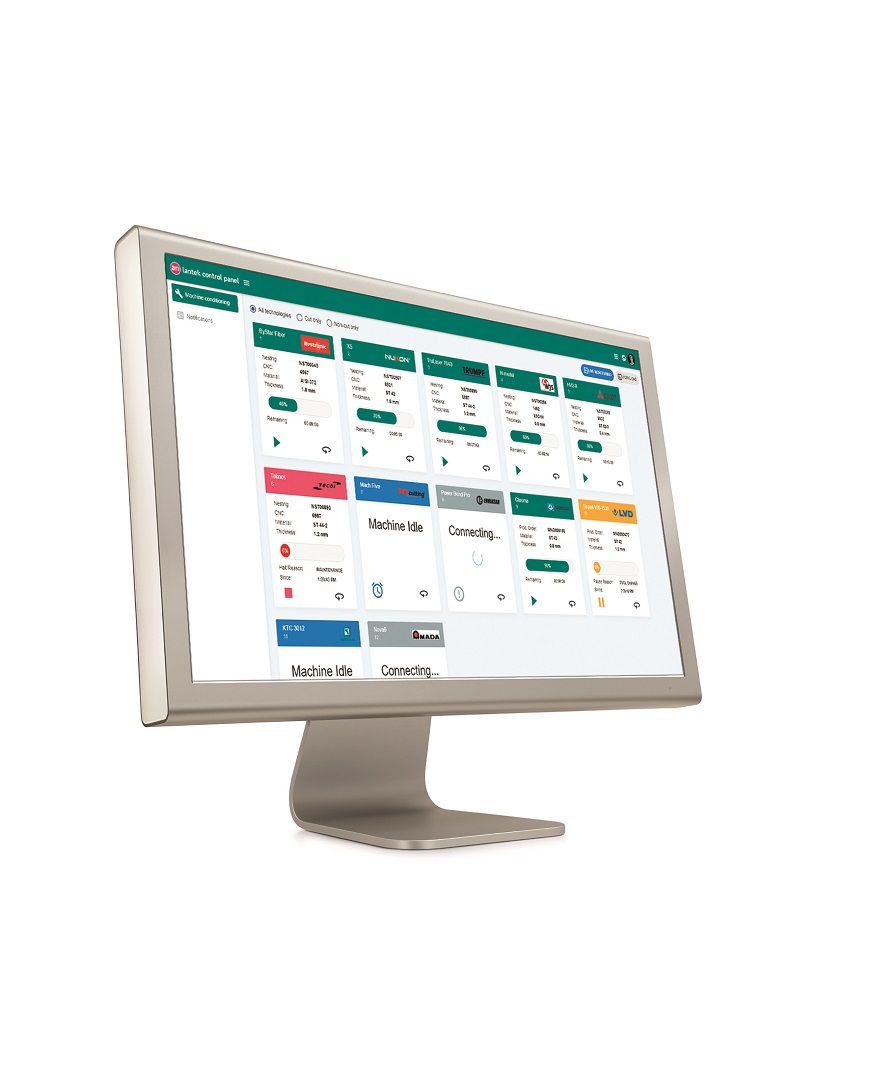
With UMATI, there is a common communication system for transferring data which is being developed and rolled out for not just CNC cutting machines, but for any machine or piece of equipment in the factory. The main difference about this data, is the volume being generated as it is coming from sensors on the machine rather than from human input. Trying to send all this to the cloud with all the other data from MES, accounting, stock control etc., will result in unacceptable lag in response times and overloaded bandwidth.
The objective of Edge technology is to process the data from these sensors locally and then to send the aggregated results in batches up to the cloud. There, it is combined with other cloud data already being processed to produce useful information to optimize the operation of the factory.
The potential of being able to extract vast amounts of data from sensors has massive implications in the factory for improving efficiency, reliability, customer service and, delivery and quality performance and hence profitability.