Francisco Pérez, OEM Channel Director
PCB is a revolutionary advancement that is not only possible in exterior bevels, but also in interior ones. In addition, there is another new development with which it is possible to draw the bevel in 3D – increasing precision even more.
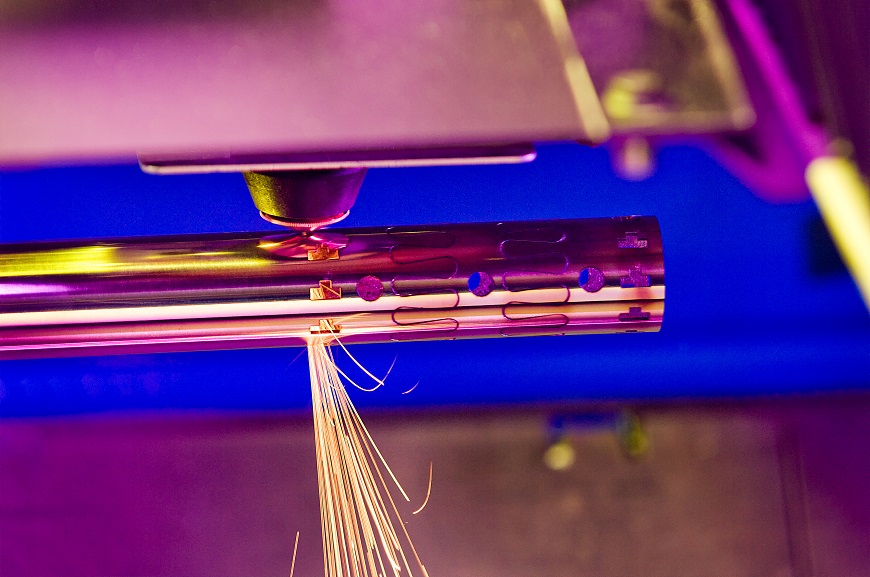
Up until now, technology for cutting bevels has evolved from the triple blowtorch to a proliferation of cutting machines with 5-axes heads. This solution has made it possible to produce countless shapes thanks to the interpolated movements of the axes. In the case of plasma machines, angle corrector and compensation tables are used for the calculation of the trajectory for each angle defined in each edge, depending on the material, thickness, type of bevel and angle. These different trajectories will affect the nesting of these parts. On the other hand, in water jet cutting the 5-axes capacity is taken advantage of to provide a better finish in the straight cut. By slightly modifying the angle of incidence on the material, we can minimize the delay in the cutting between the top and bottom of the sheet, inherent to this technology, as well as the taper angle.
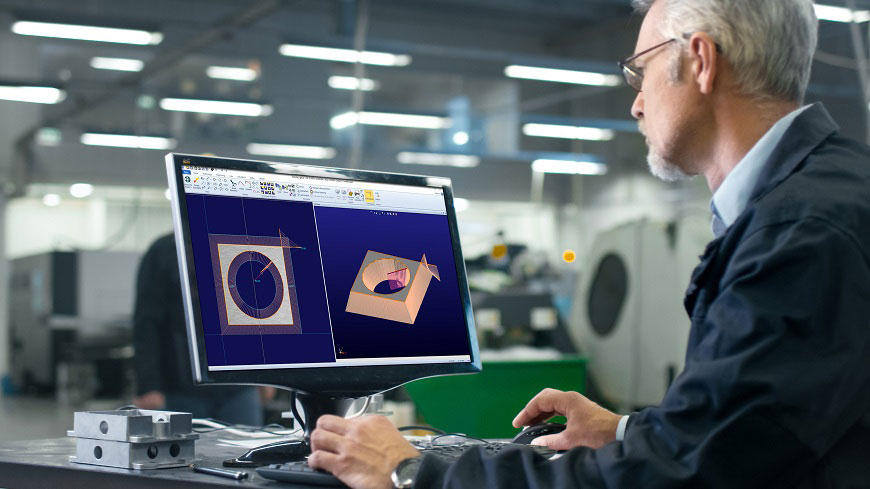
Designing progressive bevels can be a problem if there are no semiautomatic tools available that, based on the definition of the top and bottom geometries, are capable of calculating the transitions between the different angles of the bevel necessary to connect them in the desired way, making possible a design process that up until now was exclusive to other more expensive 3D software.
It is the CAD/CAM software which provides an answer for the different goals by designating what cutting technology to use with the least possible programming time.
The introduction of 5 axes was a landmark in bevel cutting; we’re facing a turning point with the development of Progressive Corners Beveling. The factory that decides to commit to this technology will experience a substantial increase in the profitability of the plant.