Why use project-based management?
At Lantek, we’ve established a project-based methodology that is comprised of a specific set of operations designed to achieve a common goal with a defined scope, set of resources, costs, and timeline.
Phases of a Lantek project
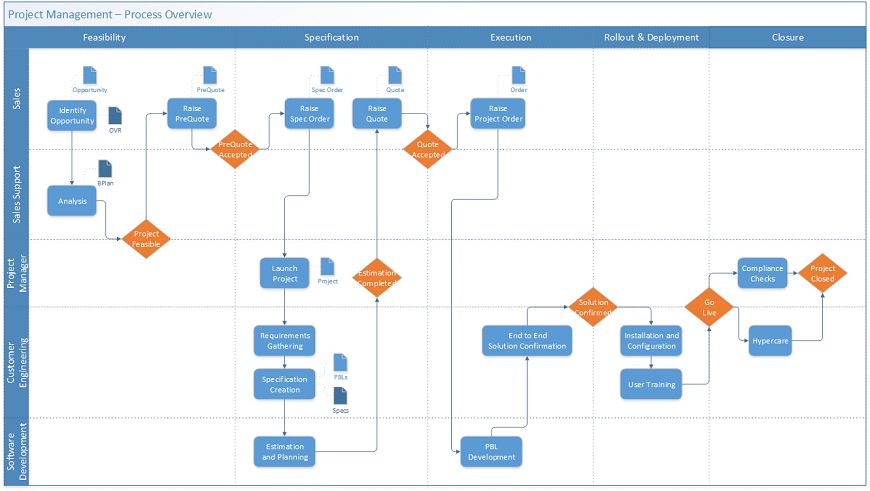
The methodology we apply at Lantek is not exceedingly different from any other on the market. Our projects are divided into three main phases that provide structure to the final planning of the project.
1- Project viability phase
In the first phase, the sales department, in collaboration with the pre-sales department and the project office, sketch out a first draft of the scope of the project and attempt to use the available information to determine whether the needs expressed by the customer will be covered.
The first phase is based on analyzing whether the opportunity incorporates all of the determining factors to be able to proceed. The aim is to manage initial expectations and carry out a high-level analysis of how Lantek products fit into the customer’s workflows.
2- Determination of functional requirements
Once this phase is complete, the specification of functional requirements begins. This phase is crucial to the future development of the project, as the customer’s needs are identified and the future functioning of the system is set out in detail through an iterative process. This document will set out the real scope of the project and serve as a supporting document for the project’s major players in the event of any issues.
The importance of managing expectations
Managing customer expectations with regard to the way the system will actually function is one of the most difficult tasks the project team faces. Our consultants try to clearly explain to customers the functionality of the solution, its limitations, and the scope of all the business processes supported by the products. The purpose of the scoping document and definition meetings is to achieve this goal.
The customer plays a fundamental role in this phase and must internally manage the change within their organization. Implementing a comprehensive solution like the ones Lantek offers requires change management to come from the customer’s predisposition to change their current way of working. The scoping document provided by the consultant proposes workflows based on best practices, which often entail changes that improve productivity and affect the current way of working.
Thus, the customer’s true desire to change is one of the key factors to guarantee any project’s success.
3-Implementing the solution and closing the project
Finally, the project ends with the implementation phase and closure of the project. In this phase, training and post-installation support play a very important role and personalized training sessions always seek to mitigate the "impact" of the new solution on the company’s ecosystem. Once the solution has been implemented, the project is formally closed with the signing of a Statement of Compliance, which provides a checklist of all the points set out in the scoping document.
In conclusion, as has been stated repeatedly throughout this article, the importance of the requirement specification phase must be underscored. This phase requires the most time and dedication from both parties, as all other activities hinge on it and it facilitates the success of the project for all parties involved.