However, with recent breakthroughs in the laser world of fiber cutting technology, there is technological competition taking place between high definition plasma, CO2 laser, and the aforementioned fiber laser.
Which is the most economical? The most accurate? For what kind of thickness? How about material? In this post we will explain the characteristics of each, so that we are best able to choose the one that best suits our needs.
Waterjet
This is an interesting technology for all those materials that might be affected by heat when performing cold cutting, such as plastics, coatings or cement panels. To increase the power of the cut, an abrasive material may be used that is suitable for working with steel measuring greater than 300 mm. It can be very useful in this manner for hard materials such as ceramics, stone or glass.
Punch
Although laser has gained popularity over punching machines for certain types of cuts, there is still a place for it due to the fact that the cost of the machine is much lower, as well as its speed and its ability to perform form tool and tapping operations that are not possible with laser technology.
Oxycut
This technology is the most suitable for carbon steel of greater thicknesses (75mm). However, it is not effective for stainless steel and aluminum. It offers a high degree of portability, since it does not require a special electrical connection, and initial investment is low.
Plasma
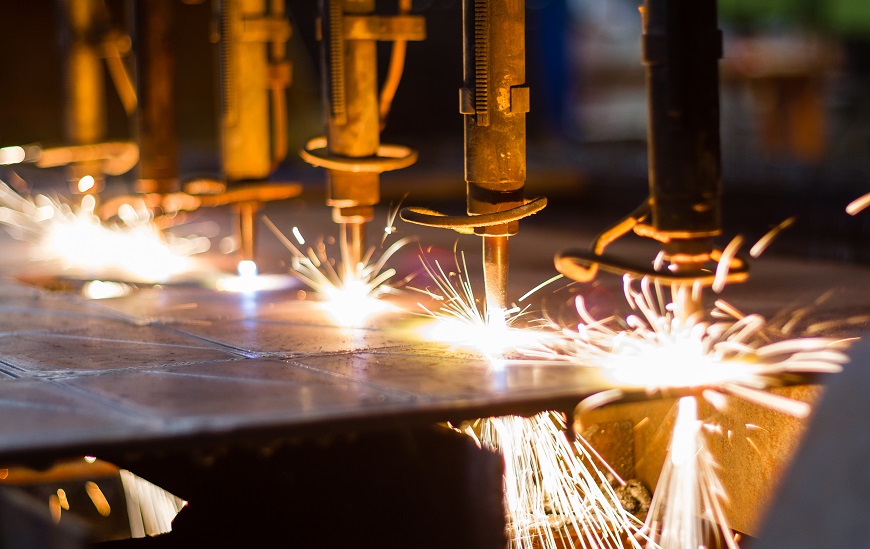
High-definition plasma is close to laser in quality for greater thicknesses, but with a lower purchase cost. It is the most suitable from 5mm, and is practically unbeatable from 30mm, where the laser is not able to reach, with the capacity to reach up to 90mm in thickness in carbon steel, and 160mm in stainless steel. Without a doubt, it is a good option for bevel cutting. It can be used with ferrous and non-ferrous, as well as oxidized, painted, or grid materials.
CO2 Laser
Generally speaking, the laser offers a more precise cutting capability. This is especially the case with lesser thicknesses and when machining small holes. CO2 is suitable for thicknesses between 5mm and 30mm.
Fiber Laser
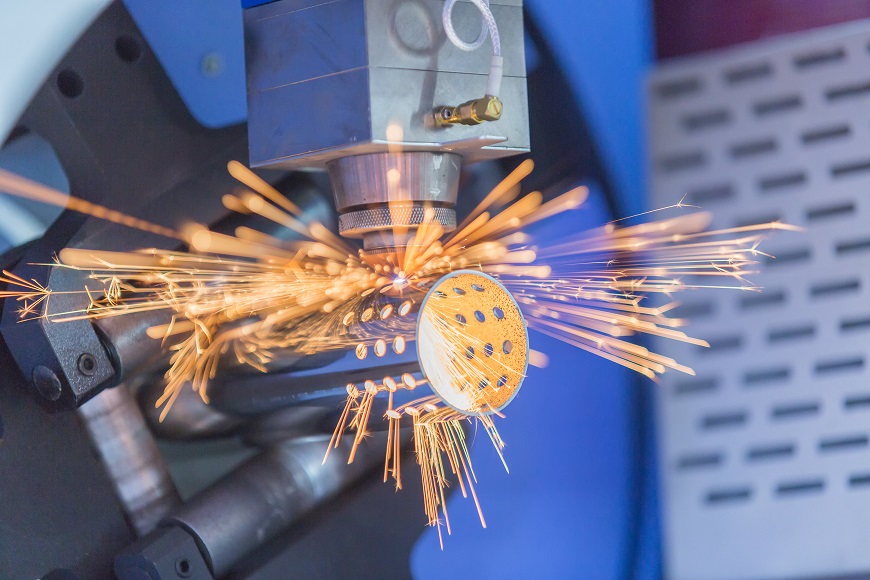
Fiber laser is proving itself to be a technology that offers the speed and quality of traditional CO2 laser cutting, but for thicknesses less than 5 mm. In addition, it is more economical and efficient in terms of energy usage. As a result, investment, maintenance and operation costs are lower. In addition, the gradual decrease in the price of the machine has been significantly reducing differentiating factors in comparison to plasma. Due to this, an increasing number of manufacturers have begun to embark on the adventure of marketing and manufacturing this type of technology. This technique also offers better performance with reflective materials, including copper and brass. In short, the fiber laser is becoming a leading technology, with an added ecological advantage.
So then, what can we do when we are carrying out production in thickness ranges where several technologies might be suitable? How should our software systems be configured in order to obtain the best performance in these situations? The first thing we must do is to have several machining options depending on the technology used. The same part will require a specific type of machining that ensures the best use of resources, depending on the technology of the machine where it will be processed, thus achieving the desired cutting quality.
There will be times when a part can only be executed using one of the technologies. Therefore, we will require a system that uses advanced logic to determine the specific manufacturing route. This logic considers factors such as the material, the thickness, the desired quality, or the diameters of the internal holes, analyzes the part that we want to manufacture, including both its physical and geometric properties, and deduces which is the most suitable machine to produce it.
Once the machine has been selected, we may encounter overload situations that prevent production moving forward. Software that features load management systems and allocation to work queues would have the capacity to choose a second machining type or a second compatible technology to process the part with another machine that is in a better situation and that allows manufacturing in time. It may even allow for work to be subcontracted, in the event that there is no excess capacity. That is, it will avoid idle periods and will make manufacturing more efficient.
As we can see, the cutting specialization and the use of different cutting technologies for each particular case also involves having CAD/CAM software that is able to address the use and combination of these machines within a single system. In addition, it must include the possibility of assigning and managing the ideal machine, combining both technology and the workload situation. It should also always allow us to manufacture with the quality that is needed, in the most economical manner possible, and respecting delivery times.