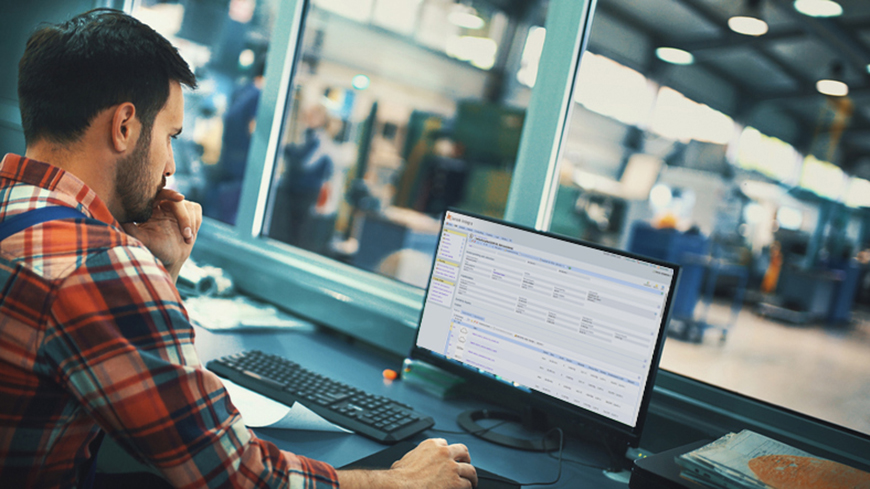
Lantek Integra is an ERP MRP platform that manages key metrics for the fabrication process, such as sales, manufacturing, purchasing and inventory.
Manufacturing recognizes this interconnectedness through a network known as the Industrial Internet of Things (IIoT). In any given factory worldwide, there is an endless amount of data available for collection, storage and analysis—from supply chain logistics to machine cut times and beyond.
How MES and ERP systems use IIoT data
When viewed in bulk, this data can be overwhelming. To digest and utilize this valuable data, it’s critical for manufacturers to implement smart systems such as manufacturing execution systems (MES) and enterprise resource planning (ERP) systems.
MES offers decision makers pertinent information related to factory floor conditions in accordance with work performance. The best of these systems display information in real-time, exposing bottlenecks, urgent issues and opportunities for optimization. The combination of real-time information and flexible execution control allows fabricators to maximize every aspect of their production routing. You can meet and exceed deadlines and collect critical data—all at the same time.
MES tracks and documents the transformation of raw materials to finished goods, providing information about many areas. Such information could relate to product life cycle, resource scheduling, order execution and dispatch, overall equipment effectiveness (OEE), product quality, or materials track and trace.
Achieve next-level manufacturing with MES
Committing to customer deadlines has never been more accurate for the digital fabricator. MES systems built on the latest development platforms are the most efficient at integrating with other software systems and machinery. With tracking devices and sensors becoming more affordable, MES allows for next-level manufacturing. From inputting raw material inventories to shipping finished products, you have complete control, flexibility and traceability.
ERP brings everything together
Ultimate cohesion is available through an integrated ERP system. ERP connects the core business processes of the company, such as customer relationship management (CRM), to the shop floor in real-time. In this environment, it’s possible to reserve and order material, replenish stocks, and generate invoices automatically.
The ability to know and further analyze resources (cash, raw material and production capacity) and business commitments (orders, purchase orders and payroll) make these systems invaluable to today’s digitalized fabricator.
The best MES and ERP systems offer metric comparisons in an easy to understand dashboard. The dashboard will send notifications based on user-set parameters. Wherever they are in the world, the dashboard will alert the user to specific events, such as low stock levels, machines that are down or job-completion times. This minimizes downtime and business disruptions.
MES and ERP systems store disruption data and use it in the future to quote more accurately and plan for required maintenance. Collecting this data also allows for required maintenance scheduling, as opposed to routine maintenance scheduling. This saves time and money by replacing parts only when they’re absolutely needed.
No matter the size of the business, data helps improve operations and speeds the production process. Is your shop ready to become more digital? A great starting point is to make note of your digital assets (machines, computers, software, etc.). Next, create a workflow of your process from request for quote to shipment of part. Doing these assessments will provide insights into steps you can eliminate through use of an MES and/or ERP system.
Predictive analytics is the future. Manufacturers who use MES and ERP have data at their fingertips and are better positioned to support their customers.