Companies in our industry are more conscious everyday about their need to digitally transform. However, they are facing the challenge of how it is to be adopted in their organization.
Article by Juan José Colás, Chief sales and Marketing Officer
The same questions are present: Is my company ready and sufficiently mature to make the necessary changes for digital transformation? What are the initial barriers and challenges we will face? Will we access quality data and will these data allow us to identify patterns that lead to better decision-making?
According to a report from Forbes Insights and consulting firm Ernst & Young, based on feedback from 1,500 executives from large corporations worldwide, 66% of companies with a well-defined analytics strategy improve their operation margins and profits by more than 15%.
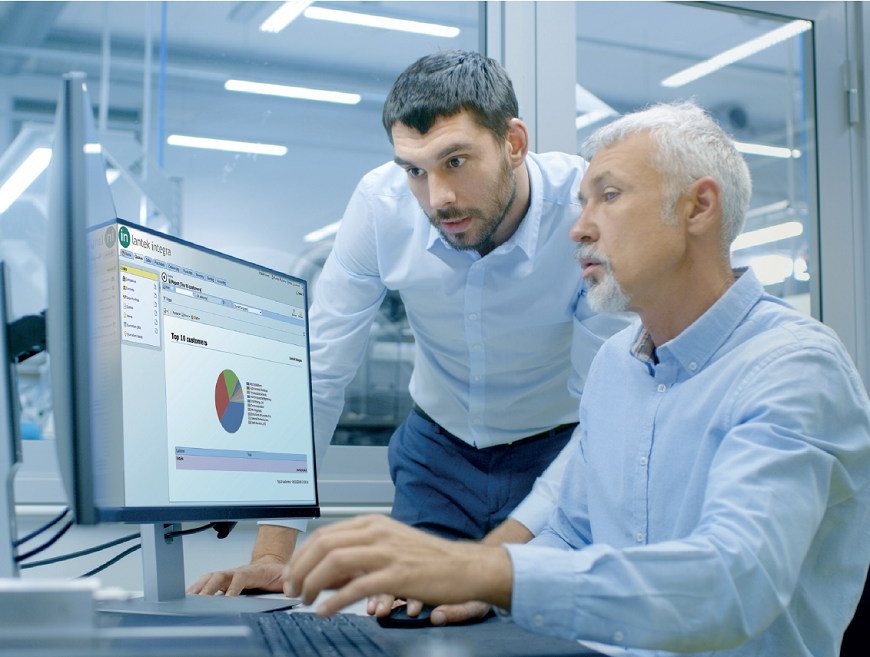
Regardless of the degree of digitalization of a plant, it is imperative to have data on each of its processes to have a clear vision that enables better decision-making.
For the data to be useful, it will be necessary to count on a well-defined selection criterion and quality data. Data Analytics will then be critical to enable future-looking decision-making processes.
In this process, aided by specific software and other technology tools, management will be able to make the best decisions at all times in terms of production schedules, maintenance, processes, inventory management, and prevention of potential scenarios that could delay production and hence correct these issues.
There is no excuse for our industry, and every company in it, not to adopt the digital transformation and take a step forward.
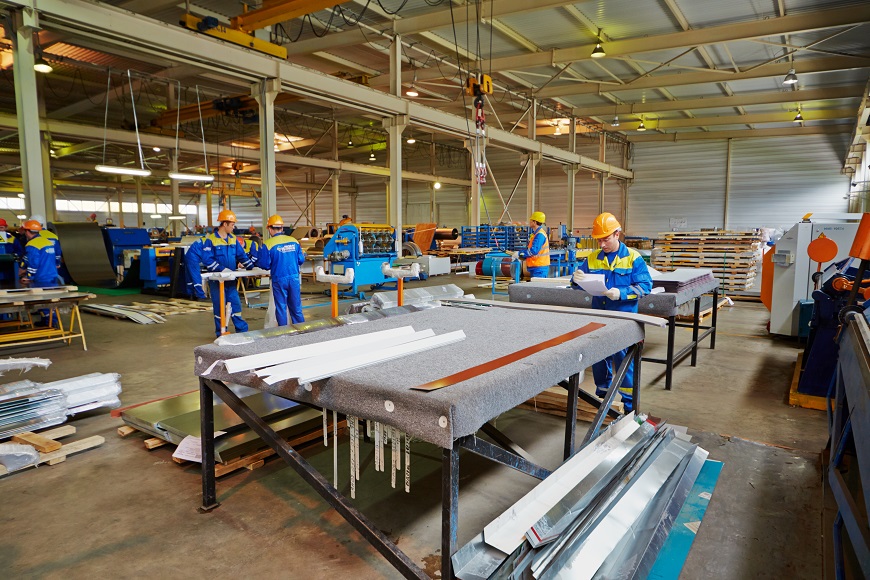
Manufacturers in the metal and sheet metal industry need technological solutions to improve and optimize their production, making it fundamental to have tools that make the automation of tasks and remote working possible.
It’s the new manufacturing paradigm developed thanks to the possibilities offered by connectivity and the cloud. An increasing number of companies are offering their software associated with Cloud Manufacturing, such as ERP, CRM, MES.
We keep reading about digitization in manufacturing. But are we there yet? We might be closer than you think. Success now relies on efficiency and productivity to drive down operational costs. Companies that will be successful now, and in the future, understand the role digitization plays in optimizing efficiency and are transforming their businesses right now.