More than 10 years ago Lantek set out to go further in solving the needs of companies in the metal sector. An example of this is Opentalk, which allowed Lantek to progress with the development a many different systems by enabling machines to inform software when they were ready to start or when they had finished in the case of unattended production lines.
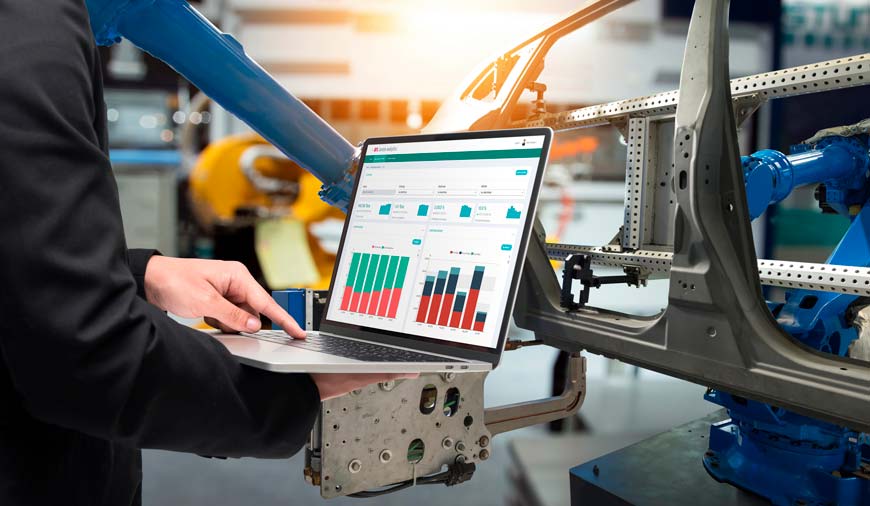
The emergence of new technologies along with the development of communication protocols and standards (OPC-UA, etc.) has endowed machines with the necessary resources to establish a fluid communication with software systems: IoT, CPS, sensorization, security, 5G, etc.
In recent years, Lantek has been working hard on developing a secure connection mechanism that enables cooperation between machines, local software systems, applications and systems located in the cloud.
The merging of machines and software, two elements which were traditionally isolated is unstoppable and technology is relocating the different functions, either locally or in the cloud. The interconnection between the two worlds (local and cloud) is already possible. Machines started to “talk” some time ago and they are learning more “vocabulary” and “languages”.
A strategic approach for collaboration between machine tool builders, software developers and system integrators will be essential to unleash the amazing potential of concepts yet to be imagined.
By all working together, we will define the Smart Sheet Metal Factory of the future.